
BLOG
Knowledge
Technology and Services
Experience in industrial tank and vessel fabrication for international EPC projects
2026-09-24
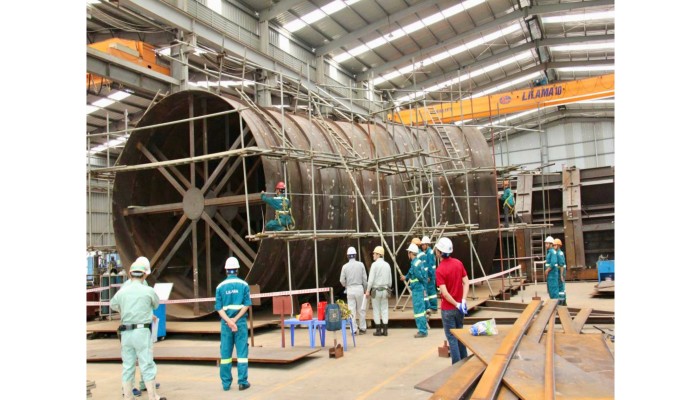
In energy, oil & gas, chemical, and heavy industry projects, tank and vessel fabrication is not merely the process of cutting, rolling, and welding steel plates into a complete structure. For international EPC (Engineering, Procurement and Construction) projects, the fabricator must also simultaneously meet requirements for materials, traceability, welding procedures, non-destructive testing, distortion control, heat treatment, coating, quality documentation, and delivery schedule.Therefore, the capability of a tank and vessel fabricator for international EPC projects is not solely assessed by workshop size or thick plate processing capability. The ability to control the entire fabrication process and demonstrate quality through documentation is the decisive factor in whether a product can be accepted and integrated into a project.
What do international EPCs typically control when ordering tank and vessel fabrication?
Depending on the type of tank/vessel, medium, operating conditions, and specific project requirements, the scope of control may vary. However, an EPC project typically focuses on the following groups of requirements:
| Item | Commonly Controlled Content |
| Design Standards | API, ASME, EN or project-specific standards |
| Materials | Steel grade, material certificates, heat number, and traceability |
| Fabrication | Cutting, beveling, plate rolling, assembly, and dimensional tolerances |
| Welding | Welding procedures, procedure qualification, and welder qualifications |
| Inspection | Dimensional inspection and NDT (Non-Destructive Testing) |
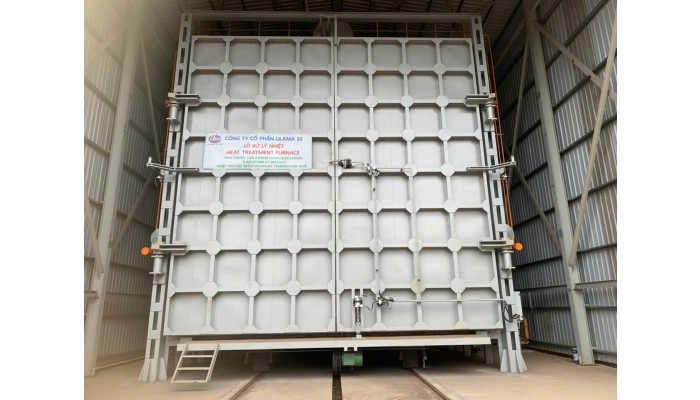
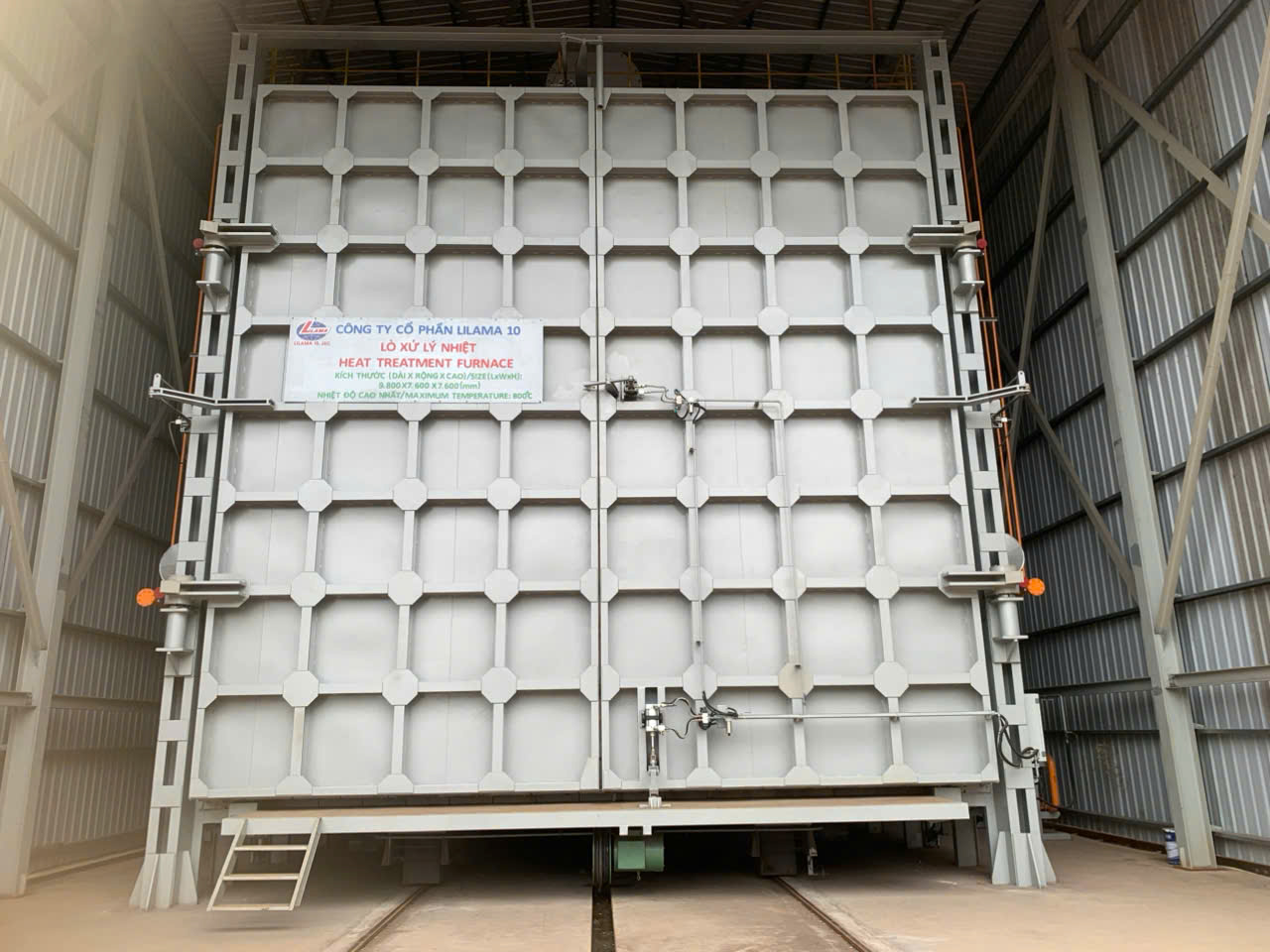
| Heat Treatment | PWHT (Post Weld Heat Treatment) when required |
| Surface | Cleaning, shot/sand blasting, coating system, and dry film thickness |
| QA/QC | Quality control, inspection points, and deviation handling |
| Documentation | Material, welding, NDT, heat treatment, painting, and acceptance documentation |
| Delivery | Module breakdown, packaging, lifting, and transportation plan |
1. Clarify technical requirements right from the RFQ stage
RFQ (Request for Quotation) is the first step but also the stage where discrepancies are most likely to arise if the fabricator only considers dimensions and steel weight for pricing. Before quoting, at least the following documents need to be confirmed:
- general arrangement drawings;
- fabrication drawings;
- technical data sheets;
- material type and standards;
- design standards;
- welding requirements;
- NDT scope;
- PWHT requirements;
- painting and corrosion protection requirements;
- inspection requirements from the owner or third-party inspection agency;
- module breakdown and transportation plan;
- list of documents to be submitted after fabrication.
For international EPCs, drawings are often continuously updated during implementation. Therefore, managing revision (document version) is also particularly important.If the workshop mistakenly uses an outdated drawing version, the product, even if mechanically fabricated accurately, may not meet the final design.
An experienced fabricator needs to establish a clear process from receiving documents, confirming versions, issuing to production, to updating changes.
2. Material control and traceability
For large industrial tanks and vessels, materials not only need to be of the correct steel grade but also must be traceable throughout the fabrication process.
MTC (Material Test Certificate) typically shows information such as chemical composition, mechanical properties, material standards, and heat number.When a large steel plate is cut into multiple parts, material identification information must also be managed for each part after cutting.
A typical traceability chain can be understood as follows:
Steel plate → part cutting → forming/rolling → assembly → welding → inspection → finished product
At each stage, the fabricator must be able to identify which material a part was produced from and where the corresponding certificate is located.
This is a major difference between general structural fabrication and equipment manufacturing for international EPC projects. If a finished product cannot prove its material origin, the acceptance process may be affected.
3. Dimensional and distortion control during large tank and vessel fabrication
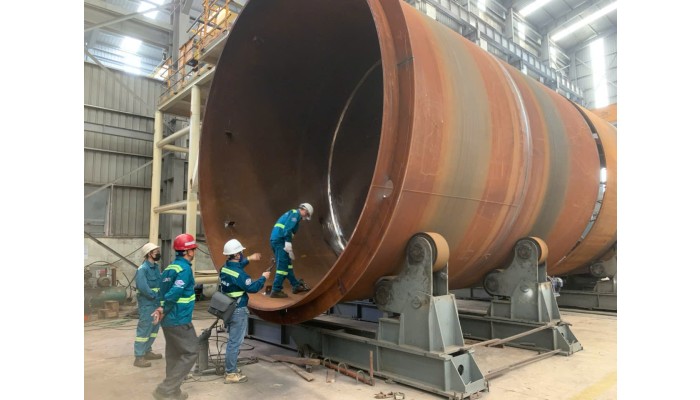
Industrial tanks and vessels are typically fabricated from large-sized and thick steel plates, undergoing cutting, beveling, rolling, assembly, and welding stages. Deviations arising at one stage can accumulate and affect the roundness, verticality, concentricity, or assembly capability of the entire structure.
Especially during welding, uneven heating and shrinkage can cause warping, misalignment, or local distortion. Therefore, for EPC projects, dimensional control needs to be performed throughout the fabrication process, rather than only after the product is completed.Commonly applied measures include:
- dimensional inspection after cutting and forming;
- radius and roundness control after rolling;
- fit-up inspection (pre-weld assembly);
- selecting appropriate welding sequence;
- controlling heat input;
- using jigs/fixtures when necessary;
- measurement and inspection at intermediate stages.
For EPCs, parameters such as roundness, verticality, alignment, and local deformation must be controlled according to the design standards and specification of each project.
Distortion Control in Industrial Oil Storage Tank Fabrication
4. WPS, PQR, and welder qualifications determine joint quality
For industrial tanks, vessels, and equipment, weld quality directly affects leak-tightness, durability, and long-term operational capability.
Therefore, EPCs often require fabricators to strictly manage three important sets of documentation.
- WPS (Welding Procedure Specification) specifies how a particular weld is to be performed, including welding method, filler material, thickness, welding position, preheat temperature, and related parameters.
- PQR (Procedure Qualification Record) is evidence that the welding procedure has been tested and meets the specified mechanical or technical requirements.
- WPQ (Welder Performance Qualification) confirms that the welder is qualified to perform the type of weld within the certified scope.
During production, having complete WPS, PQR, and WPQ is only an initial condition. Actual parameters such as welding materials, interpass temperature, and welding sequence must also be controlled.
This is why international projects often require welding documentation to be managed in parallel with the production process, rather than just inspecting the product after completion.
5. NDT and PWHT must be applied according to design requirements
Not all types of tanks and vessels apply the same NDT (Non-Destructive Testing) methods or are required to undergo PWHT (Post Weld Heat Treatment).
The scope of inspection depends on:
- equipment type;
- material;
- thickness;
- weld type;
- operating conditions;
- design standards;
- specific project requirements.
NDT allows for the evaluation of weld quality without affecting the product. Methods may include:
- VT (Visual Testing);
- UT (Ultrasonic Testing);
- RT (Radiographic Testing);
- MT (Magnetic Particle Testing);
- PT (Penetrant Testing);
- TOFD (Time of Flight Diffraction).
For thick steel structures or pressure equipment, projects may require PWHT to control residual stress and stabilize material properties.
However, the decision to perform PWHT must be based on design standards, material type, thickness, and technical requirements of each project, rather than being applied by default to all tanks.
6. ITP helps EPCs control quality at each stage
ITP (Inspection and Test Plan) is one of the important documents when a fabricator works with an EPC.
ITP defines:
- items to be inspected;
- acceptance criteria;
- reference documents;
- party responsible for inspection;
- which stages require witnessing by the EPC or owner;
- which stages cannot proceed without approval.
For example:
| Stage | Inspection Content | Typical Document |
| Material Receiving | Steel grade, certificates, heat number | Material Inspection Report |
| Cutting | Dimensions | Dimensional Inspection Report |
| Assembly | Gap, alignment | Assembly Inspection Report |
| Welding | WPS and welding parameters | Welding Log |
| NDT | Weld defects | NDT Report |
| Dimensional Inspection | Roundness, straightness, tolerances | Measurement Report |
| Painting | Surface preparation, DFT | Painting Report |
| Final Acceptance | Overall condition | Acceptance Report |
In particular, some stages may be designated as Hold Points.
In such cases, the fabricator is not allowed to proceed to the next step until approval from the inspecting party is received.
If the ITP is not integrated into the production plan from the outset, the factory might complete a stage but then have to stop or re-inspect due to the absence of witnessing by the EPC or inspection agency.
7. Fabrication documentation is as important as the actual product
One of the major differences in international EPC projects is the very high requirement for documentation. MDR (Manufacturing Data Record) may include:
- material certificates;
- material list;
- WPS;
- PQR;
- welder qualifications;
- weld map;
- welding log;
- NDT reports;
- dimensional inspection reports;
- heat treatment charts;
- painting reports;
- calibration certificates for measuring equipment;
- deviation records and corrective actions;
- final acceptance report.
A product may be mechanically complete but still not eligible for handover if the documentation is incomplete.Therefore, the fabricator should organize the collection and control of documents in parallel with the production process, instead of waiting until the end of the project to compile them.
This approach is particularly important for projects lasting many months, involving multiple drawing revisions and numerous inspecting parties.
8. Painting, module breakdown, and transportation need to be considered from the fabrication stage
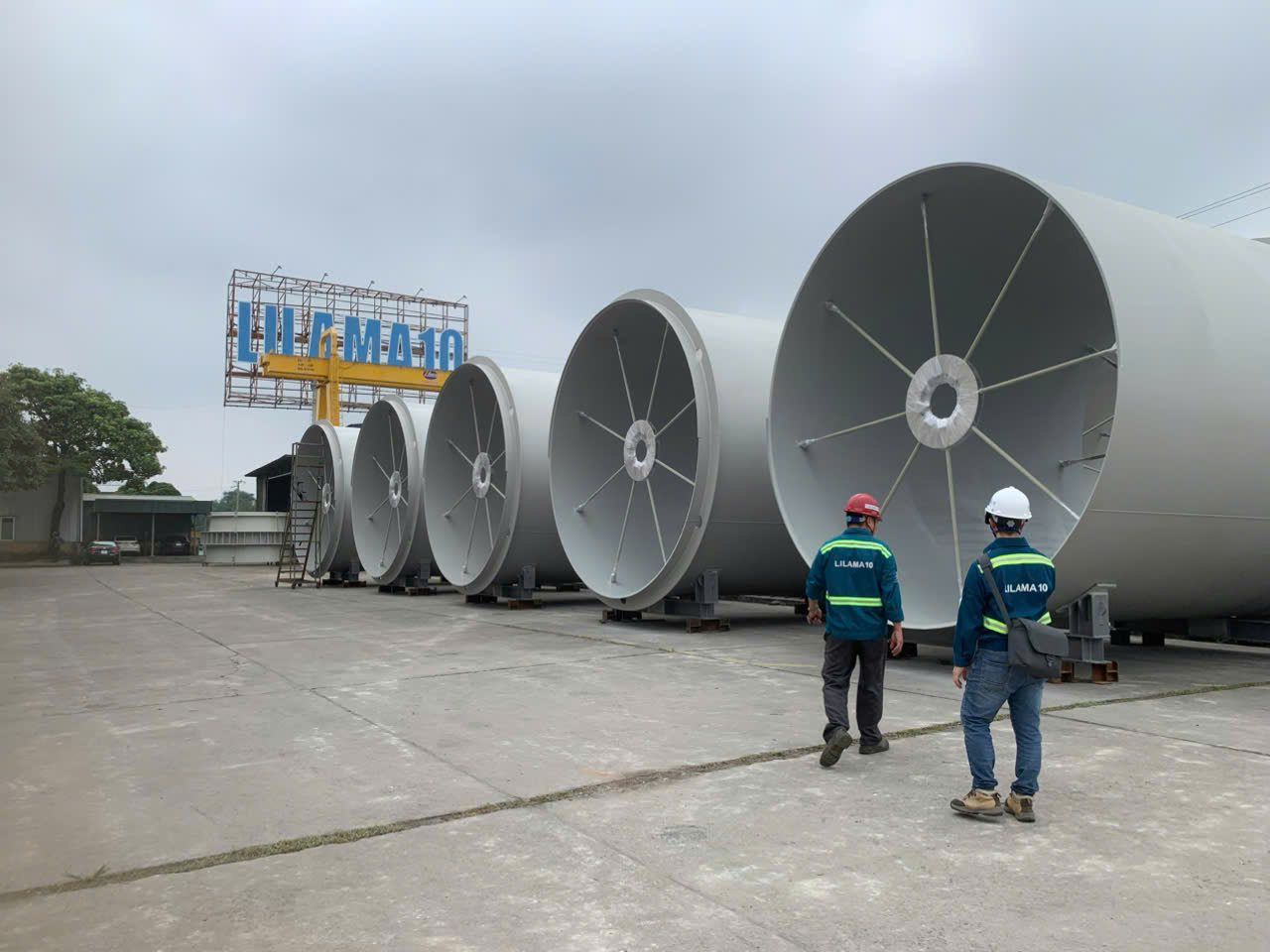
For large industrial tanks and vessels, the question is not just "can it be fabricated" but also "how will it be transported to the site after fabrication".
The dimensional limits of transportation routes, lifting equipment, and site conditions can determine how the structure is broken down into modules from the outset.
The fabricator needs to consider simultaneously:
- size and weight of each module;
- lifting point locations;
- rigidity during transport;
- surface protection requirements;
- re-assembly capability at the site;
- packaging method;
- oversized cargo transportation plan if needed.
Similarly, the painting system must be managed from surface preparation to final acceptance. DFT (Dry Film Thickness) needs to be checked according to the coating system requirements and project specifications. For equipment requiring long-distance transport or outdoor storage, post-painting protection plans also need to be considered.
9. An EPC-compatible fabricator needs to manage the entire work chain
A typical cooperation process between an EPC and a fabricator can follow this chain:
RFQ (Request for Quotation) → technical clarification → order placement → drawing approval → material procurement → fabrication → inspection → FAT (Factory Acceptance Test) → packaging → delivery → on-site installation
Each step involves different input documents, control criteria, and approval responsibilities.Therefore, the ability to work with an EPC does not solely depend on the production department's capabilities. It requires coordination among engineering, procurement, production, QA/QC, document control, logistics, and project management.
This is also why large projects often evaluate suppliers based on both fabrication capabilities and project management capabilities.
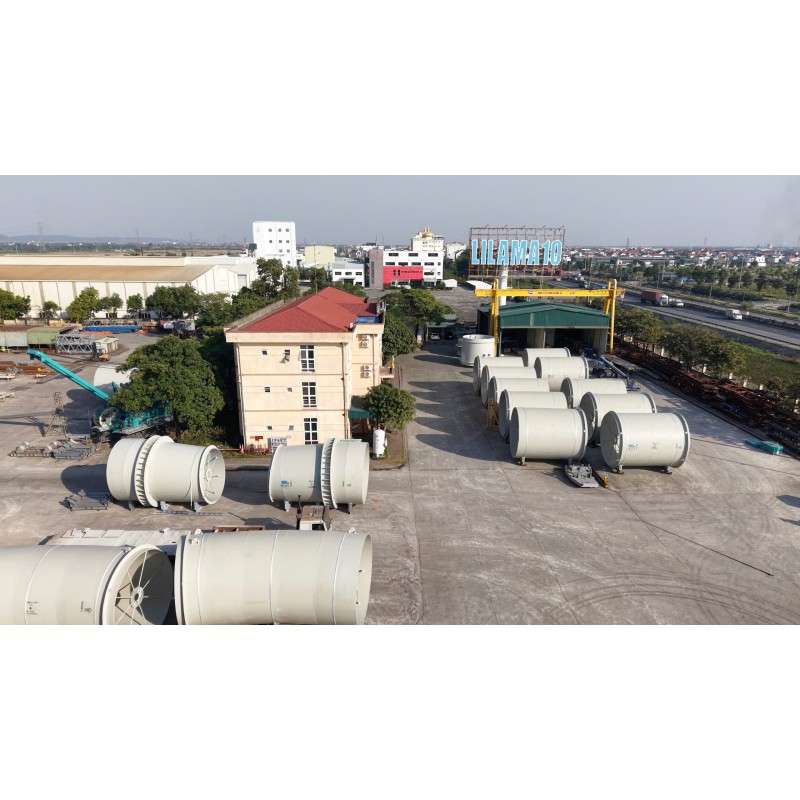
LILAMA 10 has experience in fabricating and installing heavy mechanical equipment and structures for numerous large-scale energy and industrial projects, both domestically and internationally. Some typical projects include:
- Pumped Storage Hydropower Project - Australia: fabricated export penstock, applying NDT/TOFD and PWHT. (Details here)
- Ialy Expansion Hydropower Project: fabricated pressure pipelines and hydraulic equipment. (Details here)
- Song Hau 1 Thermal Power Plant: structures and equipment for a large-scale thermal power project.
- Southern Vietnam Petrochemical Complex: experience in industrial/petrochemical projects, closer to the target EPC client group of this article.
This experience, combined with capabilities in thick plate fabrication, welding, NDT (non-destructive testing), PWHT (post-weld heat treatment), and quality control, forms the foundation for LILAMA 10 to meet the technical and documentation management requirements of international EPC projects.
Company Information
Construction Installation / Office Rental
LILAMA10 Joint Stock Company is a leading enterprise in manufacturing, installation, and technical services for civil, industrial, transportation, and infrastructure projects.To meet the demands and c ...
PICKUP
Technology & Services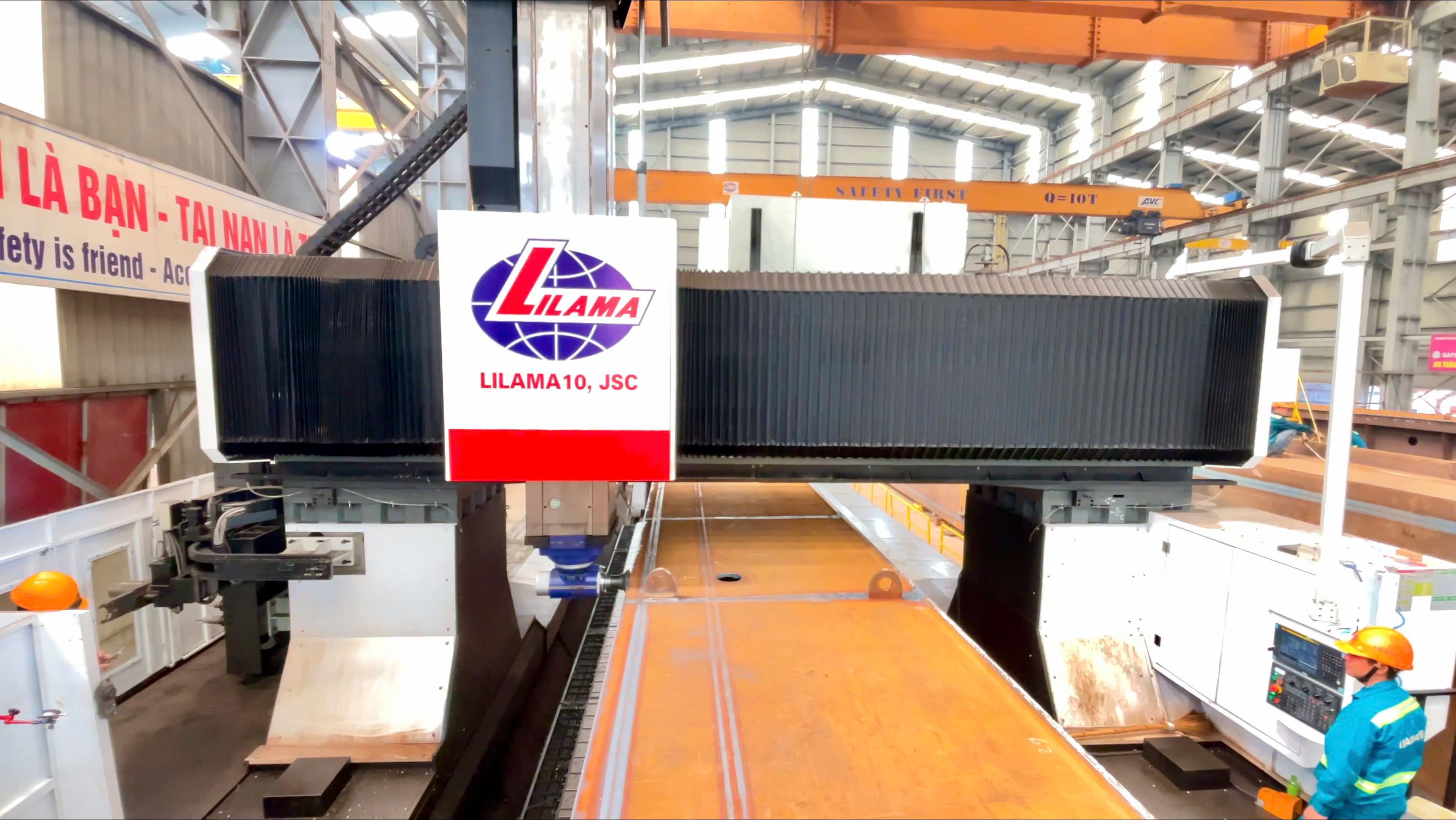
CONTACT
Contact