
SERVICES
Technology & Services
Fabrication Process of Oil Storage Tank from Thick Steel Plate | LILAMA 10
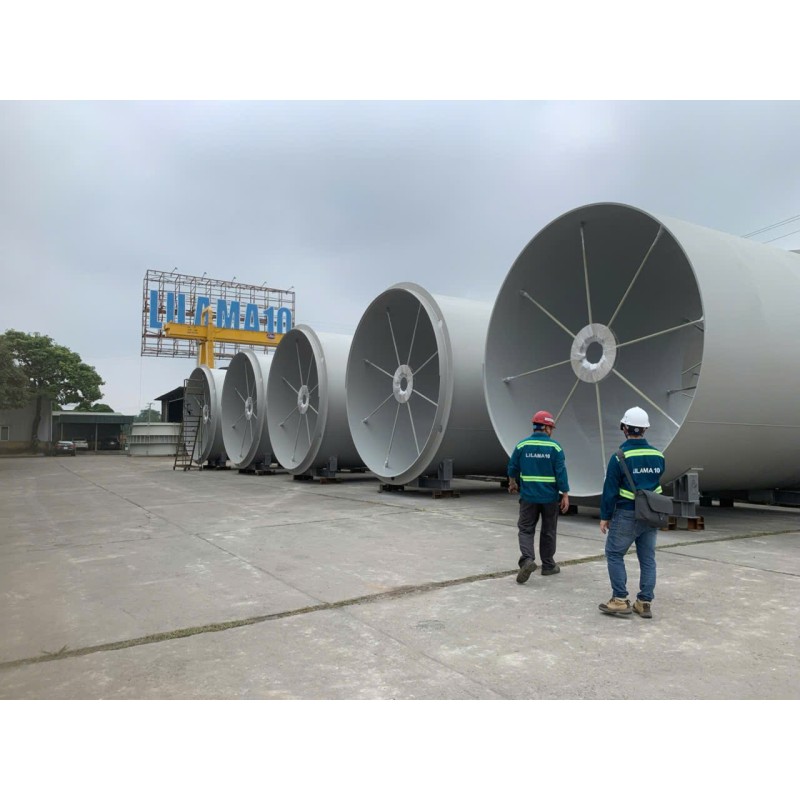
What is an Oil Storage Tank?
Oil Storage Tank, or industrial oil storage tank, is equipment used to store crude oil, fuel oil, industrial oil, or other liquids related to the energy, petrochemical, and industrial manufacturing sectors. Depending on the intended use, oil storage tanks can be designed as vertical tanks, horizontal tanks, flat-bottom tanks, low-pressure tanks, or tanks with special requirements for corrosion resistance, leak prevention, and operational safety.
In oil refineries, chemical plants, thermal power plants, fuel ports, or heavy industrial zones, oil storage tanks are not merely storage devices but also critical components within the entire technological system. Therefore, the manufacturing process for oil storage tanks requires strict control from material selection, thick plate processing, plate rolling, welding, non-destructive testing, to leak testing and surface finishing.
Why is thick steel plate processing capability required for manufacturing oil storage tanks?
Industrial oil storage tanks typically have large dimensions, large diameters, and high capacities. To ensure structural integrity, hydrostatic load bearing capacity, operational pressure resistance, and long-term stability, the tank body is often fabricated from thick steel plates.
Processing thick steel plates for oil storage tanks is significantly more challenging than processing conventional thin steel plates. As thickness increases, so do cutting forces, rolling forces, welding energy, and the risk of deformation. If not properly controlled, the product may encounter defects such as diameter deviation, ovality, warping, weld cracks, porosity, lack of penetration, or leaks during hydrostatic testing.
Therefore, an oil storage tank manufacturing unit needs to possess the following capabilities simultaneously:
| Required Capability | Role in Oil Storage Tank Manufacturing |
|---|---|
| Engineering Design | Calculating structure, thickness, welds, loads, and applicable standards |
| Steel Plate Cutting | Ensuring precise blank dimensions before rolling |
| Thick Steel Plate Rolling | Forming the tank body to the designed diameter |
| Large Structure Welding | Ensuring tank strength, tightness, and stability |
| NDT Inspection | Detecting weld defects before acceptance |
| Leak Testing | Ensuring the tank does not leak during use |
| Surface Treatment and Coating | Corrosion protection and extending product lifespan |
Manufacturing Process for Thick Steel Plate Oil Storage Tanks
The manufacturing process for oil storage tanks from thick steel plates typically involves many closely linked stages. Each stage directly impacts the final quality of the product.
1. Receiving Technical Requirements and Oil Storage Tank Design
Before manufacturing, the engineering department needs to receive complete information from the customer or project documentation, including:
Tank capacity
Tank diameter and height
Type of liquid to be stored
Operating temperature and conditions
Fabrication material
Steel plate thickness
Design and acceptance standards
Requirements for corrosion protection, coating, or internal lining
Requirements for NDT inspection, leak testing, pressure testing, or hydrostatic testing
For industrial oil storage tanks, the design must consider not only capacity but also hydrostatic loads, wind loads, seismic loads (if applicable), foundation conditions, corrosion potential, and installation methods.
2. Thick Steel Plate Material Selection
Steel used for oil storage tanks must have suitable mechanical properties, good weldability, and meet the project's technical standards. Some factors to control include:
Material yield strength
Tensile strength
Impact toughness if operating under special conditions
Chemical composition
Weldability
Material certificates
Plate thickness and dimensions
For thick steel plates, material selection directly affects cutting, rolling, welding capabilities, and deformation control. The higher the material's yield strength, the greater the rolling force and processing energy required. Therefore, before rolling steel, the company needs to calculate equipment capacity based on material type, thickness, plate width, and rolling diameter.
3. Cutting Steel Plate Blanks According to Drawings
After design completion, steel plates are divided into blanks according to sizes suitable for each tank shell course, tank bottom, tank roof, and auxiliary components.
The cutting stage needs to ensure:
Blank dimensions are correct according to drawings
Clean cut edges with minimal thermal distortion
Tolerances are within permissible limits
Rational blank division to minimize material waste
Clear marking of part codes for convenient assembly
For thick steel plates, common cutting methods include CNC cutting, plasma cutting, or oxy-fuel cutting, depending on thickness, material, and cut surface requirements.
4. Weld Edge Preparation and Joint Edge Preparation
After cutting, weld edges need to be processed according to the designed joint configuration. Beveling helps ensure proper weld penetration, especially with thick steel plates.
Common types of weld edge preparation include:
| Weld Edge Type | Application |
|---|---|
| V-groove | Used for medium thickness |
| X-groove | Used for thick steel, welding from both sides |
| K-groove | Used for structures requiring deformation control |
| Square edge | Used for thin parts or fillet welds |
If weld edges do not meet requirements, the weld may suffer from lack of penetration, improper gap, undercut, or internal defects. Therefore, before rolling and assembly, the cleanliness, bevel angle, gap, and straightness of the blank edges must be thoroughly checked.
5. Steel Rolling Technology in Large Tank Manufacturing
Steel rolling is the process of forming flat steel plates into circular arcs or cylindrical shells according to the tank's designed diameter. This is one of the most critical stages in manufacturing the body of an oil storage tank.
When rolling thick steel plates, the following factors need to be controlled:
Steel plate thickness
Steel plate width
Inner diameter of the tank body
Material yield strength
Springback after rolling
Number of rolling passes and correction methods
Roundness after rolling
Straightness along the tank body height
Springback is a common issue in steel rolling. After leaving the rolling machine, the steel plate tends to open up slightly compared to the formed diameter. Therefore, engineers and operators need experience in adjusting the rolling radius, number of passes, and diameter inspection methods to achieve the precise shape.
6. Assembling Steel Plates into the Tank Body
After rolling, the steel plates are moved to the assembly stage. Depending on the tank size, the tank body can be assembled course by course or ring by ring.
Important requirements for tank body assembly include:
Ensuring the roundness of each shell course
Controlling the gap between weld edges
Controlling edge misalignment between two plates
Temporary fastening using jigs, braces, or tack welds
Checking dimensions before final welding
Ensuring proper assembly sequence to limit deformation
If the assembly stage is inaccurate, subsequent welding will be difficult to control, easily leading to deformation or overall dimensional deviations.
7. What Technical Requirements Does Oil Storage Tank Welding Entail?
Welding is the stage that directly determines the strength and tightness of an oil storage tank. Welds on oil storage tanks must simultaneously meet requirements for mechanical properties, tightness, shape, and defect resistance.
Key technical requirements for oil storage tank welding include:
Welding Procedure Control
Before welding, a suitable welding procedure must be determined based on the material, thickness, welding position, and applicable standards. The welding procedure needs to clearly specify:
Welding method
Welding material
Current, voltage, welding speed
Preheating temperature if required
Interpass temperature
Number of weld passes
Welding sequence
Cleaning requirements between passes
Welder Control
Welders must have skills appropriate for the weld type, welding position, and project standards. For industrial oil storage tanks, many welds have long lengths, complex welding positions, and high-quality requirements, making welder experience a very important factor.
Welding Deformation Control
When welding thick steel plates, concentrated heat at the weld can cause shrinkage and deformation. Without control measures, the tank body may suffer from ovality, warping, or dimensional deviations.
Symmetrical welding
Dividing weld sections appropriately
Welding sequentially from inside out or from the center outwards
Using jigs and braces
Controlling heat input
Checking dimensions after each stage
8. NDT Inspection in Oil Storage Tank Manufacturing
Non-destructive testing, or NDT, is a crucial stage for detecting internal or surface defects in welds without damaging the product.
Common NDT methods applied include:
| Method | Purpose |
|---|---|
| VT – Visual Testing | Visual inspection of welds |
| PT – Penetrant Testing | Detecting surface cracks or defects |
| MT – Magnetic Particle Testing | Detecting surface and near-surface cracks in magnetic materials |
| UT – Ultrasonic Testing | Inspecting internal weld defects using ultrasound |
| RT – Radiographic Testing | Inspecting internal defects using radiography |
Depending on project standards, weld locations, and tank criticality, the NDT inspection rate may vary. For high-requirement oil storage tanks, critical welds often require more thorough inspection to ensure safety before leak testing or operation.
9. Leak Testing Procedure for Industrial Oil Storage Tanks
After completing welding and NDT inspection as required, the oil storage tank needs to undergo leak testing to ensure no leakage occurs during use.
A typical leak testing procedure includes:
Step 1: Visual Inspection
Inspect all welds, the surface of the tank body, tank bottom, tank roof, nozzles, manholes, flanges, and auxiliary components. Defects such as cracks, undercuts, surface porosity, or incomplete welds must be addressed before leak testing.
Step 2: Dimensional Inspection
Measure diameter, height, roundness, inclination, tank bottom flatness, and other critical dimensions. Dimensional inspection helps ensure the tank is not only leak-tight but also conforms to the designed shape.
Step 3: Weld Leak Testing
Depending on the tank type and technical requirements, oil testing, vacuum testing, low-pressure air testing, or local leak detection methods at the welds may be used.
Step 4: Hydrostatic Testing or Water Filling Test
For many industrial storage tanks, water testing is a crucial step to check overall tightness and stability. During the test, water level, tank body deformation, and leakage at welds, tank bottom, and connection points must be monitored.
Step 5: Preparing Acceptance Documentation
After successful leak testing, inspection results must be recorded in the quality documentation, including dimensional inspection reports, NDT results, leak test reports, water test reports (if applicable), and relevant material certificates.
10. Surface Finishing and Anti-Corrosion Coating
Oil storage tanks often operate in environments with high corrosion risk, especially in outdoor areas, coastal regions, chemical plants, or areas with oil vapor, salt spray, and high humidity. Therefore, the surface cleaning and coating stage plays a very important role.
The finishing process typically includes:
Cleaning weld slag, burrs, grease
Shot blasting or sand blasting for surface cleaning
Checking surface roughness
Anti-corrosion primer application
Intermediate coat application if required
Final topcoat application
Checking paint film thickness
Checking adhesion if required
A suitable coating system helps extend the lifespan of oil storage tanks, reduce maintenance costs, and ensure operational safety.
Advantages of LILAMA 10 in Industrial Oil Storage Tank Manufacturing
With experience in heavy industrial projects, LILAMA 10 has an advantage in manufacturing and installing tanks, steel structures, and non-standard equipment for the energy, oil refining, chemical, and thermal power industries.
Key strengths include:
Experience in manufacturing steel structures and industrial equipment
Capability to participate in oil refining, chemical, thermal power, hydropower, and cement projects
Factory system for manufacturing equipment and steel structures
Capability for thick steel plate processing, plate rolling, assembly, and large structure welding
Experienced team of welders, engineers, QA/QC, and construction personnel
Capability for quality control at each stage
Experience in on-site equipment and structure installation
Capability to meet technical requirements for domestic and international projects
For customers seeking an oil storage tank manufacturing unit in Vietnam, LILAMA 10 is a potential choice due to its combined capabilities in design, manufacturing, quality inspection, and industrial installation.
Company Information
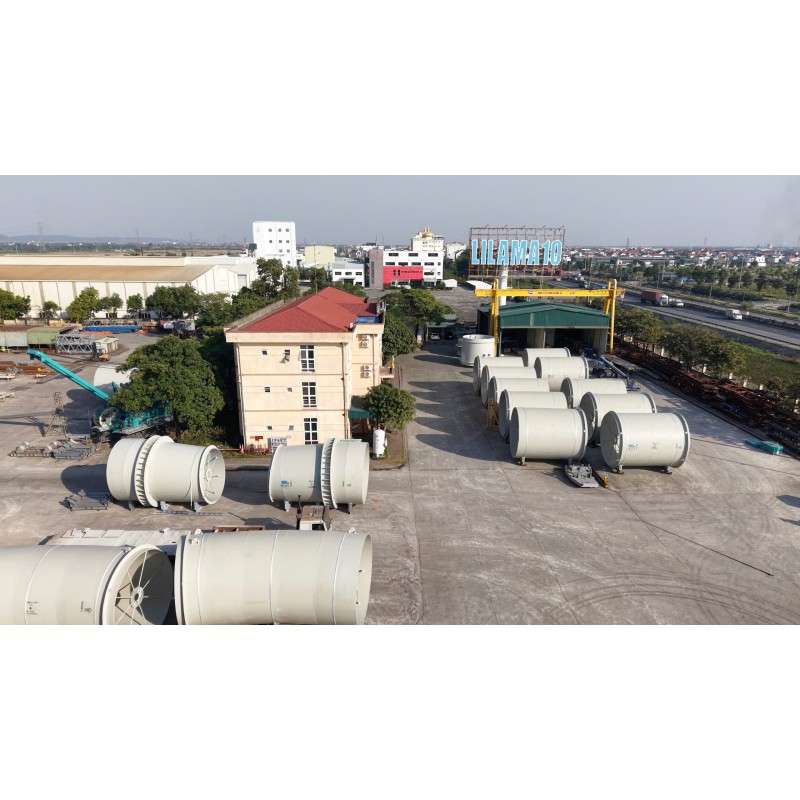
Construction Installation / Office Rental
LILAMA10 Joint Stock Company is a leading enterprise in manufacturing, installation, and technical services for civil, industrial, transportation, and infrastructure projects.To meet the demands and c ...
CATALOG
Related Catalogs
PICKUP
Technology & Services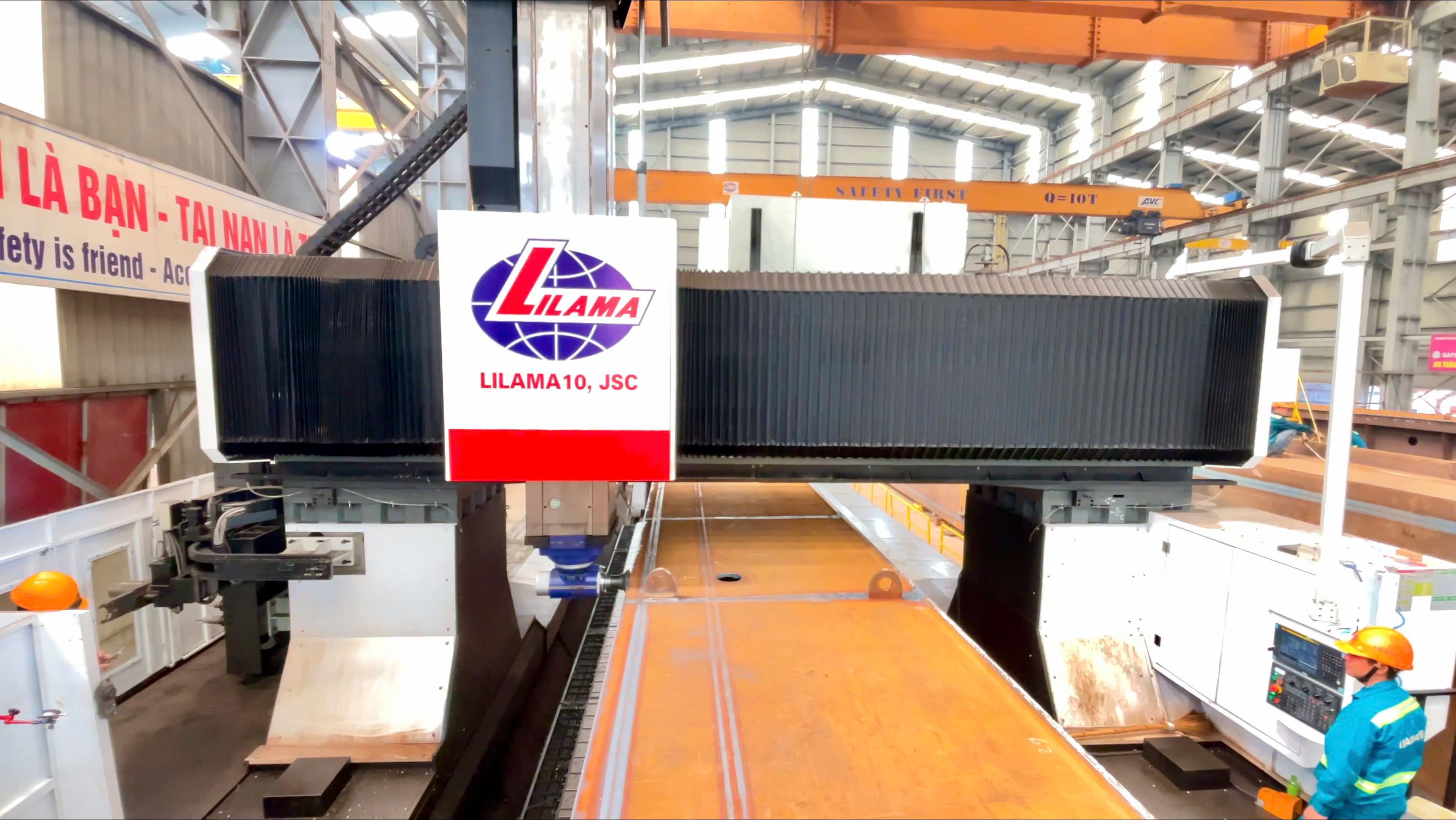
CONTACT
Contact