
BLOG
Knowledge
Technology and Services
Sintered Component Manufacturing Process: From Metal Powder to Finished Product
2026-08-26
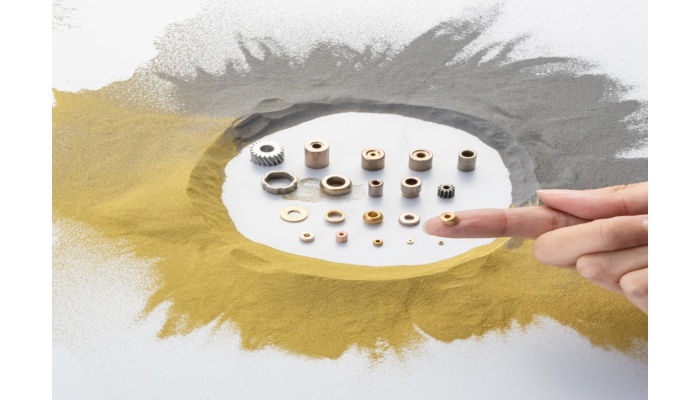
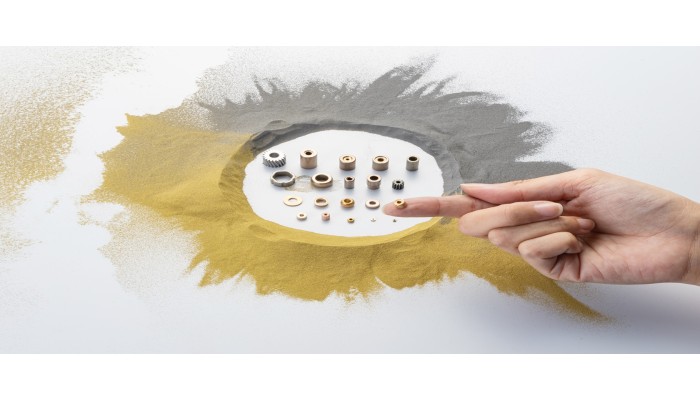
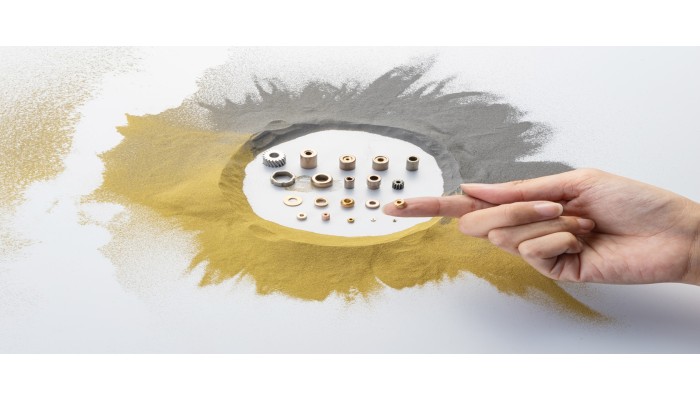
Sintered components are used in various types of machinery, electrical equipment, automobiles, and precision mechanisms. Unlike machining from solid metal blanks, powder metallurgy technology forms products from metal powder, followed by sintering to bond the material particles and create the necessary properties for the part. Essentially, the production process for sintered components includes the following stages: metal powder selection → material mixing → compacting → sintering → sizing → post-sintering machining and treatment → quality inspection. Each stage plays a unique role and affects the size, density, mechanical properties, and surface characteristics of the finished product.
What are Sintered Components?
Sintered components are metal parts primarily produced using Powder Metallurgy (PM). Instead of starting with a solid block of metal and removing material to form the shape, this method uses metal powder as the raw material. The powder is fed into a mold, pressed under pressure to form a shape, and then heated under controlled temperature and atmospheric conditions. During the sintering process, metal particles bond together, thereby increasing strength and forming the necessary properties of the part. The material typically does not need to melt completely as in casting. A characteristic of powder metallurgy technology is its ability to create products with shapes close to the final dimensions directly from the compacting and sintering stages. However, depending on requirements for tolerance, hardness, wear resistance, corrosion resistance, or functional use, the product may still require additional post-sintering finishing steps.
What are the Stages in the Sintered Component Production Process?
A basic production process can be summarized as follows:Metal Powder Selection → Powder and Additive Mixing → Compacting → Sintering → Sizing → Post-Sintering Machining and Treatment → Quality Inspection. Depending on the material, shape, and function of the product, the conditions at each stage will be set differently.
Step 1: Metal Powder Selection
Raw material is the first factor to consider when producing sintered components. Depending on requirements for mechanical properties, friction, load-bearing capacity, wear resistance, corrosion resistance, or other functional characteristics, the manufacturer will select the appropriate material system. Factors to consider include not only chemical composition but also:
- powder particle size;
- particle shape;
- flowability and die filling capability;
- compressibility;
- achievable density after compaction.
Iron powder, copper powder, and various alloy systems can be used depending on the type of component to be produced. Therefore, selecting the right material from the outset is a crucial step to control the properties of the product after sintering.
Step 2: Mixing Metal Powder and Additives
After material selection, the metal powders and necessary components are mixed in specified proportions. Depending on the material, the mixture may include base metal powder, alloying elements, and lubricants for the compaction process. The goal of the mixing stage is to create a highly homogeneous raw material mixture before feeding it into the mold. If the powder components are not evenly distributed, the density and properties of the product after sintering may also be inconsistent across different locations. Therefore, the mixing stage is not merely about combining different powders but also plays a role in creating stable conditions for the subsequent compacting and sintering steps.
Step 3: Compacting
The prepared powder mixture is fed into a die and pressed under pressure to form the initial shape of the component. The product at this stage is often referred to as a green compact. The compact already has a shape close to the final product, but the metal particles are not yet sufficiently bonded as they will be after sintering. During the compacting stage, factors such as:
- amount of powder fed into the die;
- compaction pressure;
- density distribution within the part;
- ejection capability from the die;
- dimensional stability of the compact.
The density of the compact is a notable parameter as it is closely related to the porosity, strength, and properties of the product after sintering. For parts with complex shapes or significant thickness variations, controlling the density distribution during compaction becomes even more critical.
Step 4: Sintering
After compacting, the green compact is transferred to a furnace for sintering. This is one of the most crucial stages of the entire process. During sintering, the part is heated at an appropriate temperature for a specified duration. Under the effect of heat, bonds between metal particles form and develop, transforming the green compact into a part with the necessary strength and mechanical properties. Sintering should therefore not be simply understood as “heating metal powder.” The quality of the process also depends on various conditions such as:
- sintering temperature;
- holding time;
- furnace atmosphere;
- heating rate;
- cooling conditions.
Controlling the furnace atmosphere is also significant for surface reactions of the material and product quality. After the sintering process, the part achieves significantly higher strength compared to the initial green compact. However, the product is not necessarily finished at this step. Depending on usage requirements, the component may further undergo sizing, machining, heat treatment, or surface treatment.
Step 5: Post-Sintering Sizing
During the sintering process, the dimensions of the part may change compared to the initial green compact. For products requiring strict dimensional control, an additional stage of sizing or calibration may be performed after sintering. The part is placed into a sizing die to readjust its shape and dimensions as required. Depending on the product, this stage can help to:
- improve dimensional accuracy;
- adjust shape;
- control certain tolerances;
- enhance consistency among products in mass production.
In some cases, methods such as coining may also be used depending on the purpose and requirements of the part.
Step 6: Post-Sintering Machining and Treatment
Not all components conclude the process after sintering and sizing. Depending on the product's function, additional post-sintering machining or treatment stages may be required.
Post-Sintering Machining
One of the advantages of powder metallurgy is its ability to create parts close to the final shape. However, areas with special requirements for tolerance, shape, or surface may still require additional machining. Methods may include:
- turning;
- drilling;
- tapping;
- grinding;
- machining surfaces or areas requiring high precision.
Whether additional machining is needed depends on the specific design and technical requirements of each product.
Post-Sintering Heat Treatment
For some types of materials and applications, heat treatment may be performed after sintering to adjust the properties of the part. Purposes may include:
- increasing hardness;
- improving mechanical properties;
- enhancing wear resistance.
Heat treatment conditions must be selected based on the material composition and the actual function of the component.
Post-Sintering Surface Treatment
Sintered components, especially iron-based materials, may require further consideration for rust and corrosion resistance in high-humidity environments. Due to the porous structure of sintered materials, water, moisture, or environmental agents can penetrate the material. Therefore, depending on usage conditions, surface treatment may be applied to:
- improve corrosion resistance;
- increase wear resistance;
- enhance surface properties;
- meet specific environmental usage requirements.
The selection of the treatment method should be considered along with the material, part density, usage conditions, and desired properties, rather than solely based on the coating name.
Step 7: Product Quality Inspection
After completing the necessary production and treatment stages, the components are inspected before shipment. The inspection content is determined based on the drawing, function, and technical requirements of each product. Items may include:
- dimensions and tolerances;
- appearance;
- density;
- hardness;
- mechanical properties;
- surface condition;
- specific functional characteristics of the product.
Because each component has different operating conditions, not all sintered products apply the same inspection method or set of criteria. It is crucial to establish an appropriate control process from raw materials, compacting, sintering, to the final finishing stage.
Peace-Lon's Sintered Component Production Capability
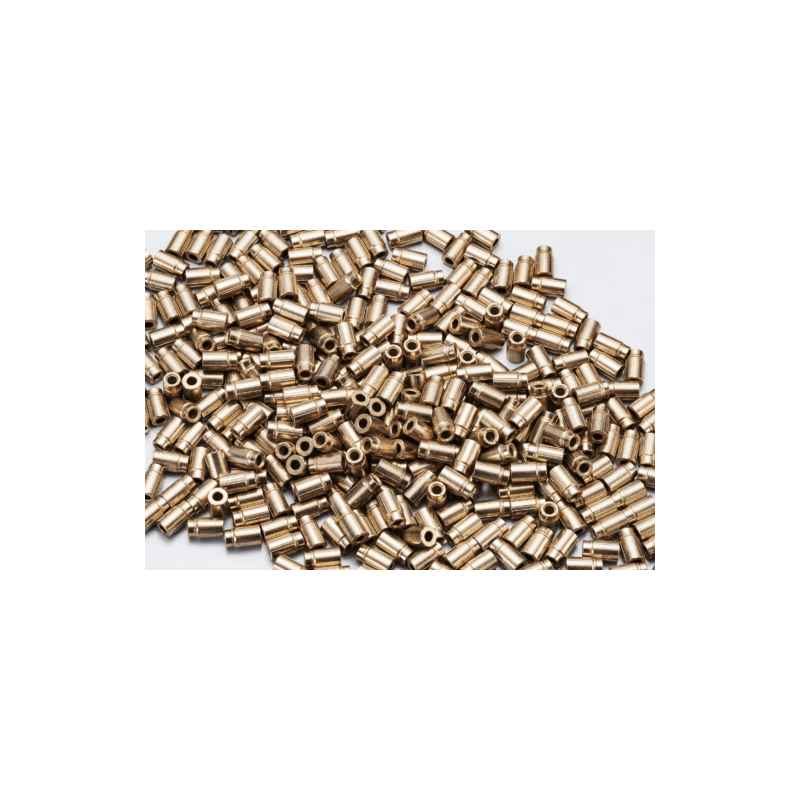
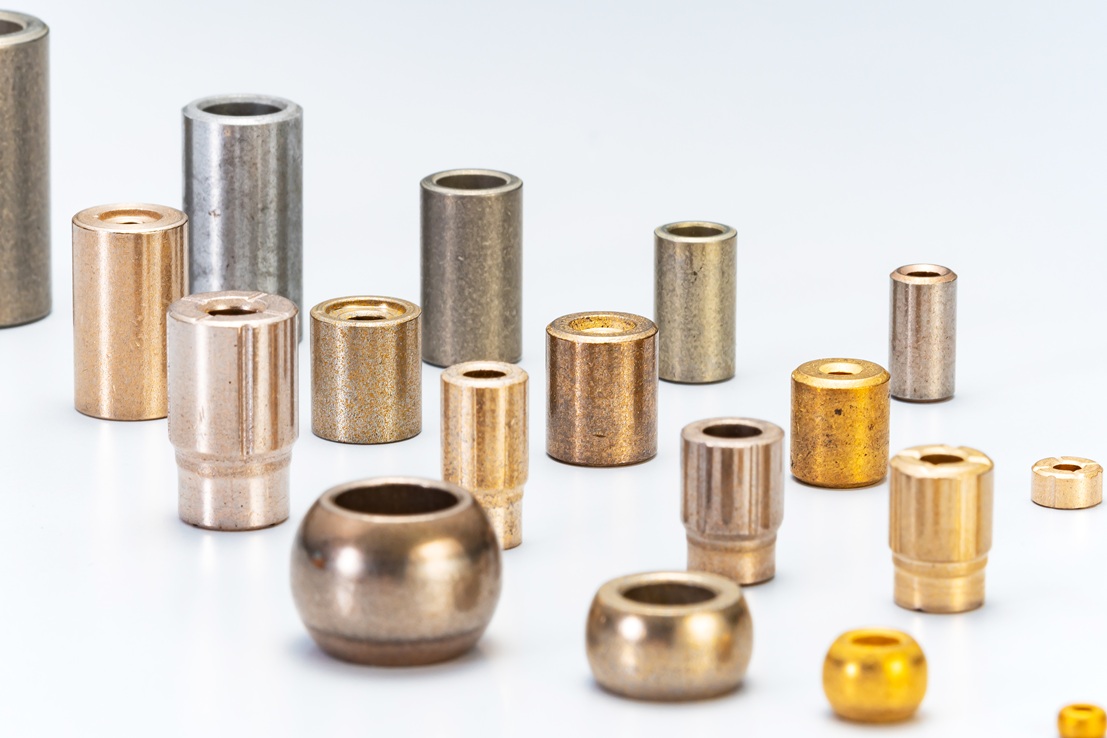
Peace-Lon Vietnam is a company specializing in the production of sintered components using powder metallurgy technology, inheriting the experience and technology of Heiwa Sangyo Co., Ltd. – a Japanese company operating in the field of oil-impregnated bearings and sintered components since 196. Peace-Lon particularly focuses on small-sized oil-impregnated bearings, with diameters ranging from 0.5–22 mm, while also supplying gears, pulleys, and other sintered mechanical components. The company states it has over 60 types of raw materials and carries out all stages from material selection, mixing, mold design, compacting, sintering, sizing, oil impregnation, to final inspection. Based on usage conditions such as load, speed, temperature, lifespan requirements, noise level, or wear resistance, Peace-Lon can recommend suitable materials and bearing specifications for each application. If your business is looking for sintered components, self-lubricating oil-impregnated bearings, or wishes to discuss the applicability of powder metallurgy technology for a specific product, you can send drawings and technical requirements to Peace-Lon for discussion on suitable solutions.
Company Information
Electronic parts
Oil-impregnated sintered bearing / Gears, pulleys, and other mechanical parts / Powder Metallurgy
Peace-Lon is a brand of Heiwa Sangyo Co., Ltd., a Japanese company that has manufactured self-lubricating oil-impregnated plain bearings and sintered mechanical parts utilizing powder metallurgy and s ...
PICKUP
Technology & Services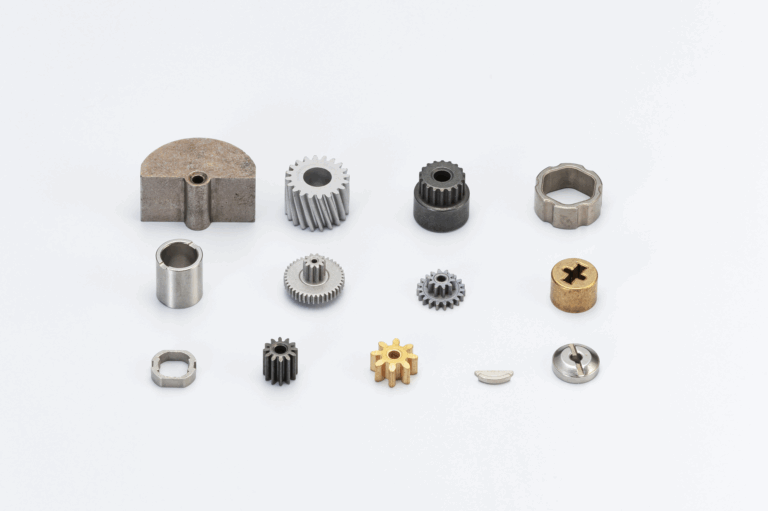
CONTACT
Contact