
BLOG
Knowledge
Technology and Services
How to reduce the cost of self-lubricating slide bearings while maintaining quality?
2026-07-21
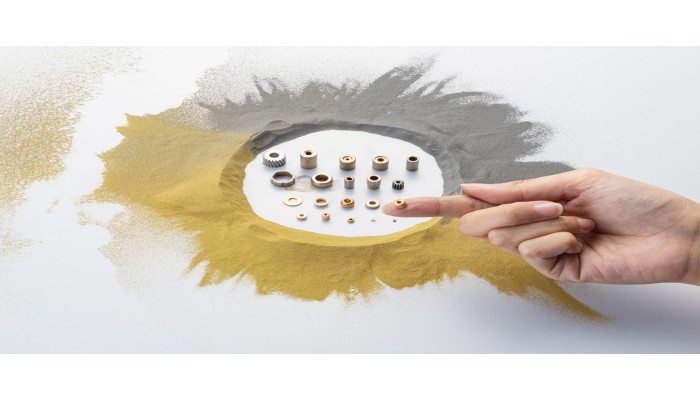
Rising prices of copper and various raw materials are making the production cost of self-lubricating bearings a significant concern for manufacturing businesses.
However, reducing bearing costs is not simply about switching to a lower-priced material. If the wrong material is chosen, the product may experience rapid wear, reduced lifespan, or quality complaints.
Therefore, the appropriate solution is to reduce costs while maintaining the truly essential features of the bearings.
Why are self-lubricating bearing costs increasing?
The price of self-lubricating bearings depends on several factors, such as:
Type and proportion of raw materials
Product size and shape
Production volume
Accuracy requirements
Type of impregnating oil
Processing and inspection steps
Required quality and lifespan conditions
Among these, material is one of the major factors affecting cost.
Copper-based materials have good sliding properties, adapt easily to shafts, and are suitable for applications requiring smooth operation. However, as copper prices rise, the production cost of copper-based bearings also increases.
Can costs be reduced by changing materials?
Material replacement is one of the common VA/VE methods for reducing the cost of self-lubricating bearings.
For example, businesses can consider switching from copper-based materials to iron-based or iron-copper-based materials. Reducing the copper ratio can help control raw material costs and stabilize procurement costs.
However, not all applications can be replaced in the same way.
Before changing materials, it is necessary to identify which features are truly important for the product:
Load capacity
Mechanical strength
Sliding properties
Wear resistance
Smooth operation
Corrosion resistance
Service life
Target cost
Risks of only choosing low-cost materials
If focusing solely on material unit price, businesses may encounter the following issues:
Rapid bearing wear
Materials unsuitable for load or rotational speed can increase the wear rate on the contact surface.
Reduced product lifespan
Material costs may decrease, but replacement and maintenance frequency increase, leading to higher total cost of ownership.
Increased friction and noise generation
If the compatibility between the bearing and the shaft is poor, vibrations or abnormal noises may occur during operation.
Quality complaints arise
Changing materials without full evaluation can alter product features and lead to failures during actual use.
Therefore, it is necessary to evaluate total cost and performance, not just compare raw material prices.
Factors to check before changing materials
1. Load
The material must have sufficient strength to withstand the load applied to the bearing during operation.
For high-load applications, iron-based or iron-copper-based materials may be suitable choices.
2. Rotational speed
Rotational speed affects friction, temperature, and the ability to form an oil film on the sliding surface.
It is necessary to select materials and impregnating oil suitable for the actual operating speed.
3. Noise requirements
For small motors, audio equipment, or products requiring low noise, sliding properties and compatibility with the shaft should be prioritized.
In these cases, copper-based materials may have an advantage.
4. Environmental conditions
If bearings are used in high-humidity environments or where there is a risk of rust, the material's corrosion resistance should be considered.
Iron-based materials may require more thorough evaluation regarding storage and usage conditions.
5. Lifespan requirements
Replacement materials must meet the product's required lifespan. Cost reduction will be meaningless if the lifespan is significantly reduced.
6. Production volume
For high-volume products, a small reduction per component can also yield significant VA/VE effectiveness.
Therefore, material costs, production costs, and projected production volume must be evaluated simultaneously.
Approaches to reducing self-lubricating bearing costs
Businesses can consider one or more of the following approaches:
Material replacement
Switch from copper-based materials to iron-copper-based or iron-based materials if usage conditions permit.
Product shape optimization
Consider reducing the amount of material used, adjusting thickness, or simplifying the shape without affecting functionality.
Leveraging the advantages of sintering technology
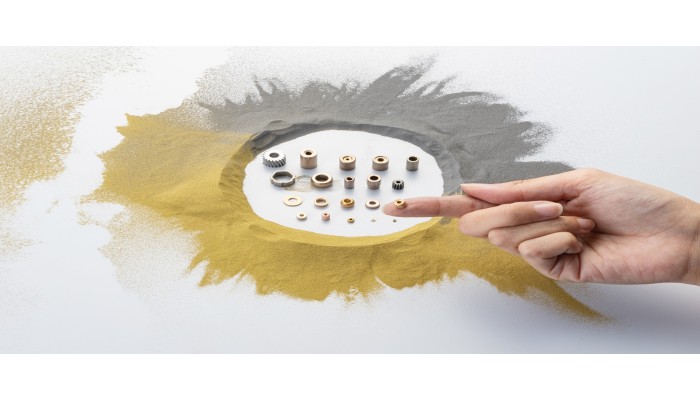
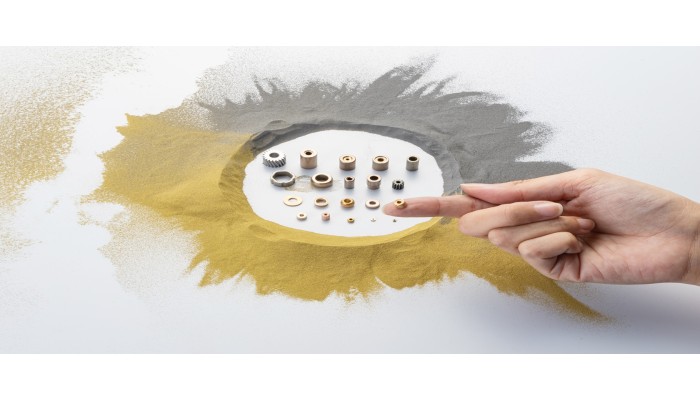
Powder metallurgy technology can form shapes close to the finished product, thereby reducing turning, reaming, or additional machining steps.
Technical requirement optimization
Review tolerances, accuracy, surface roughness, and inspection requirements to avoid setting standards higher than truly necessary.
Selecting appropriate impregnating oil
The right type of oil helps maintain performance and lifespan, limiting risks arising after material changes.
Iron-copper-based materials: a solution for balancing cost and performance
Iron-copper-based materials use iron as the main component to provide mechanical strength and load capacity, while adding copper to improve sliding properties.
Compared to conventional copper-based materials, iron-copper-based materials typically have the following characteristics:
| Category | Iron-copper-based material | Copper-based material |
|---|---|---|
| Cost | Good | Higher |
| Mechanical strength | High | Good |
| Load capacity | High | Good |
| Sliding properties | Good | Very good |
| Smooth operation | Good | Very good |
Therefore, iron-copper-based materials are suitable for applications aiming to reduce costs while still needing to maintain mechanical strength and sliding properties at the necessary level.
FCS-200A – An option for VA/VE activities
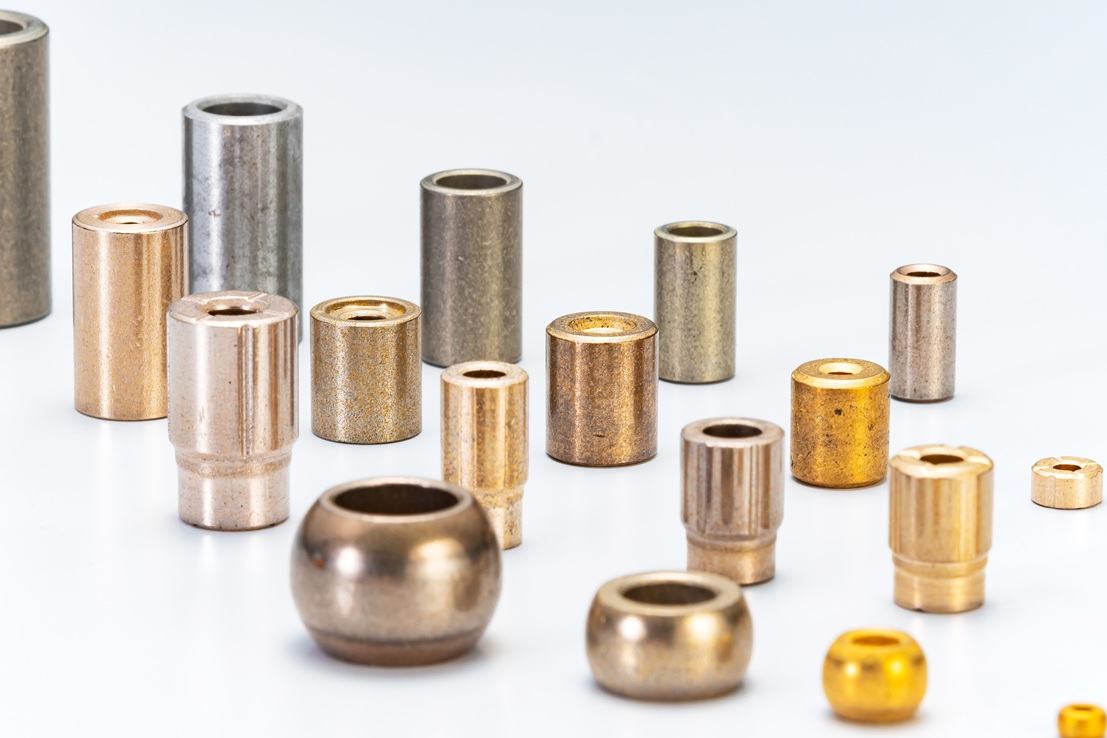
Peace-Lon's FCS-200A is a versatile iron-copper-based self-lubricating bearing material.
The material uses iron as the main component and blends copper in an appropriate ratio, thereby balancing:
Material cost
Mechanical strength
Load capacity
Sliding properties
Durability
FCS-200A can be considered as a VA/VE proposed material for small motors, home appliances, office equipment, power tools, industrial machinery, and transportation equipment.
VA/VE support from Peace-Lon Vietnam
Peace-Lon Vietnam supports customers in selecting self-lubricating bearing materials and proposes material replacement options for VA/VE activities.
Based on actual usage conditions, Peace-Lon considers the balance between cost, durability, sliding properties, load capacity, and lifespan to propose suitable materials.
If you wish to reduce bearing costs while maintaining product quality, please provide information on current material, dimensions, load, rotational speed, and usage conditions for consultation.
Company Information
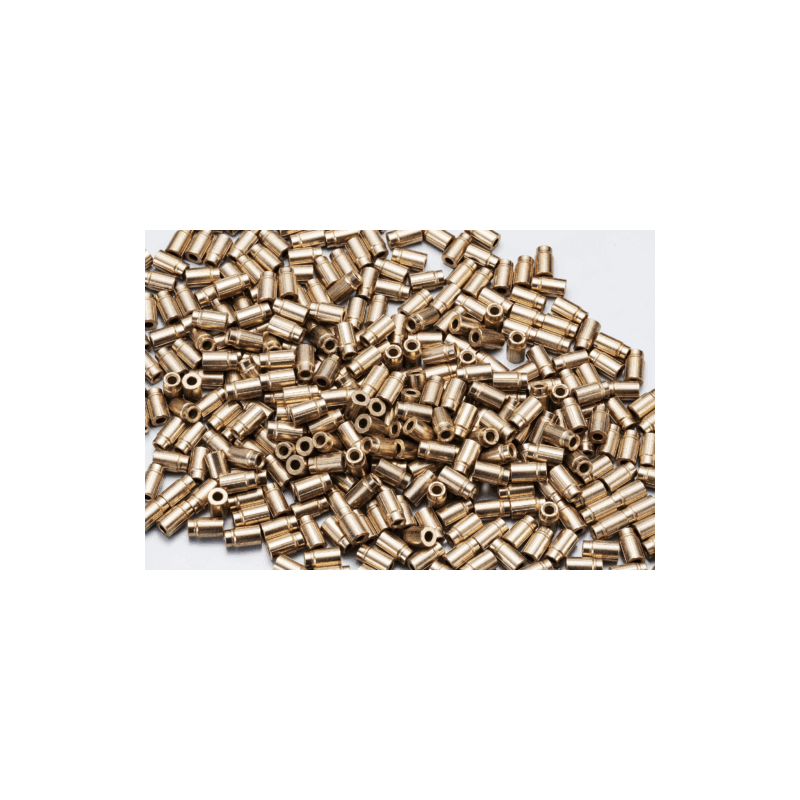
Electronic parts
Oil-impregnated sintered bearing / Gears, pulleys, and other mechanical parts / Powder Metallurgy
Peace-Lon is a brand of Heiwa Sangyo Co., Ltd., a Japanese company that has manufactured self-lubricating oil-impregnated plain bearings and sintered mechanical parts utilizing powder metallurgy and s ...
PICKUP
Technology & Services
CONTACT
Contact