
BLOG
Knowledge
Technology and Services
How to prevent wear and seizing in shaft bushings?
2026-07-21
Why do shaft bushings wear or seize?
Damage usually doesn't stem from a single cause but from a combination of factors. Common causes include:
- Load exceeding the material's load-bearing capacity
- Excessively high surface pressure
- Inappropriate sliding speed
- Insufficient lubrication
- Oil with unsuitable viscosity or properties
- Frequent starts, stops, or reversals
- High operating temperature
- Foreign matter entering the sliding surface
- Shaft too rough or unsuitable hardness
- Misalignment of shaft and bushing
- Clearance too small or too large
- Bushing material unsuitable for operating conditions
Therefore, before replacing the material, it is crucial to correctly identify the cause of wear or seizing.
How do wear and seizing differ in plain bearings?
| Content | Wear | Seizing and Galling |
| Concept | Is the gradual loss of material from the inner surface of the bushing due to friction, repeated contact, or foreign matter ingress. | Is the phenomenon where the oil film breaks down, causing direct contact between the shaft and bushing surfaces. High friction rapidly increases temperature, leading to localized adhesion or cold welding between the two metal surfaces. |
| Progression | Usually develops gradually over time. However, the rate of wear can accelerate if the load, lubrication conditions, or shaft surface are unsuitable. | Can occur in a short period and progress faster than normal wear. |
| Symptoms on bushing | The inner diameter of the bushing increases; the bushing surface gradually loses material. | The surface may show deep scratches, flaking, deformation, or localized metal adhesion. |
| Effect on clearance | The clearance between the shaft and bushing gradually increases. | Clearance can become unstable due to deformation, surface adhesion, or localized locking. |
| Effect on operation | Rotational accuracy decreases, vibration and noise increase, and shaft support capability diminishes. | Shaft rotation becomes difficult, movement is unstable, or it may stop completely. |
| Consequences | Reduces the lifespan of the bushing and the drive mechanism. | Can cause sudden equipment shutdown and severe damage to the shaft and bushing surfaces. |
Factors to check when plain bearings are damaged
Load and Surface Pressure
As the load acting on the shaft increases, the pressure at the contact area between the shaft and the bushing also increases. If the pressure exceeds the material's limit:
- The plain bearing surface can deform
- Wear rate increases
- The oil film is easily broken
- The risk of scratching and seizing increases
One should not only consider the total load but also convert it into the actual surface pressure acting on the bushing.
Rotational Speed and Sliding Speed
High sliding speed increases the heat generated by friction. However, excessively low speeds can also be detrimental because it is difficult to form a stable oil film, especially in mechanisms with:
- Frequent starts and stops
- Small angular rotation
- Oscillating motion
- Continuous reversals
This is why low-speed but high-load applications still carry a high risk of wear and seizing.
PV Value
PV is the product of:
- P: surface pressure
- V: sliding speed
This indicator is used to assess the severity of operating conditions for plain bearings. When the PV value increases:
- Frictional heat increases
- The oil film is difficult to maintain
- The risk of wear and seizing increases
- Requirements for material and lubricant are higher
Material selection should not be based solely on maximum load or maximum speed individually. Both the PV value and the recommended operating range of the material must be evaluated.
Lubrication Conditions
The oil film plays a role in preventing direct contact between the shaft and bushing surfaces. When evaluating lubrication conditions, the following should be checked:
- Oil type
- Viscosity
- Amount of oil in the bushing
- Ability to replenish oil
- Oil retention capability of the material
- Operating temperature
- Maintenance cycle
If the oil is too little, unsuitable, or degrades in performance at the operating temperature, the risk of direct metal-to-metal contact will increase.
Material and Shaft Surface
The effectiveness of a bushing depends not only on the bushing material but also on the mating shaft. The following should be evaluated:
- Shaft material
- Hardness
- Heat treatment or surface treatment method
- Roughness
- Roundness
- Concentricity
An excessively rough shaft surface can cause rapid bushing wear. Conversely, an unsuitable material combination can also increase the risk of stick-slip and seizing.
Clearance between Shaft and Bushing
The assembly clearance must be sufficient to maintain movement and form an oil film, but not excessively large. If the clearance is too small:
- Oil distribution is difficult
- Heat and friction increase
- Higher risk of seizing
If the clearance is too large:
- Shaft is prone to vibration and runout
- Load is unevenly distributed
- Noise is generated
- Rotational accuracy decreases
When the bushing wears, its inner diameter increases, and the clearance with the shaft also increases. One of the factors that needs careful consideration is the lubrication mechanism of plain bearings. With conventional bushings, oil needs to be supplied externally. In contrast, self-lubricating oil-impregnated plain bearings can retain oil within their material structure and supply oil to the surface during operation. Therefore, to understand why this type of bushing can reduce maintenance needs and help limit wear, it is necessary to examine the operating mechanism of the porous structure containing oil.
How do self-lubricating oil-impregnated plain bearings work?
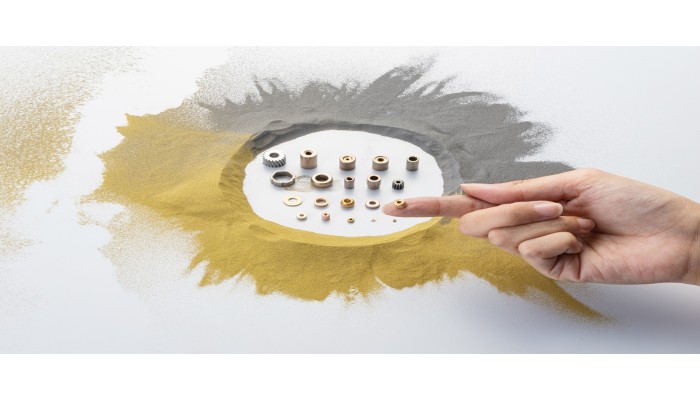
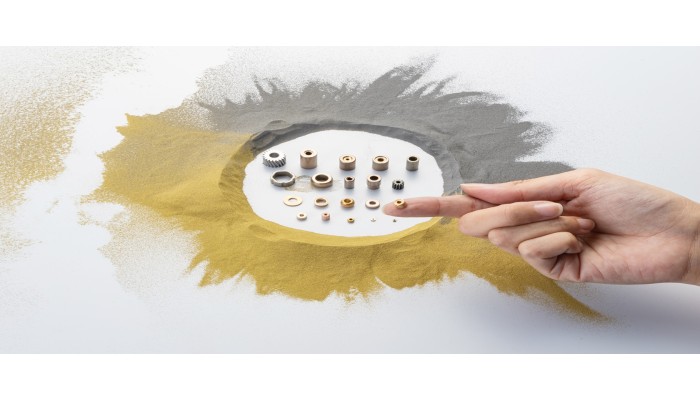
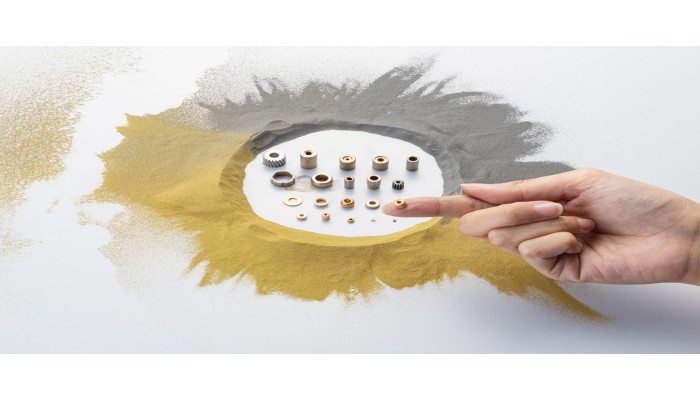
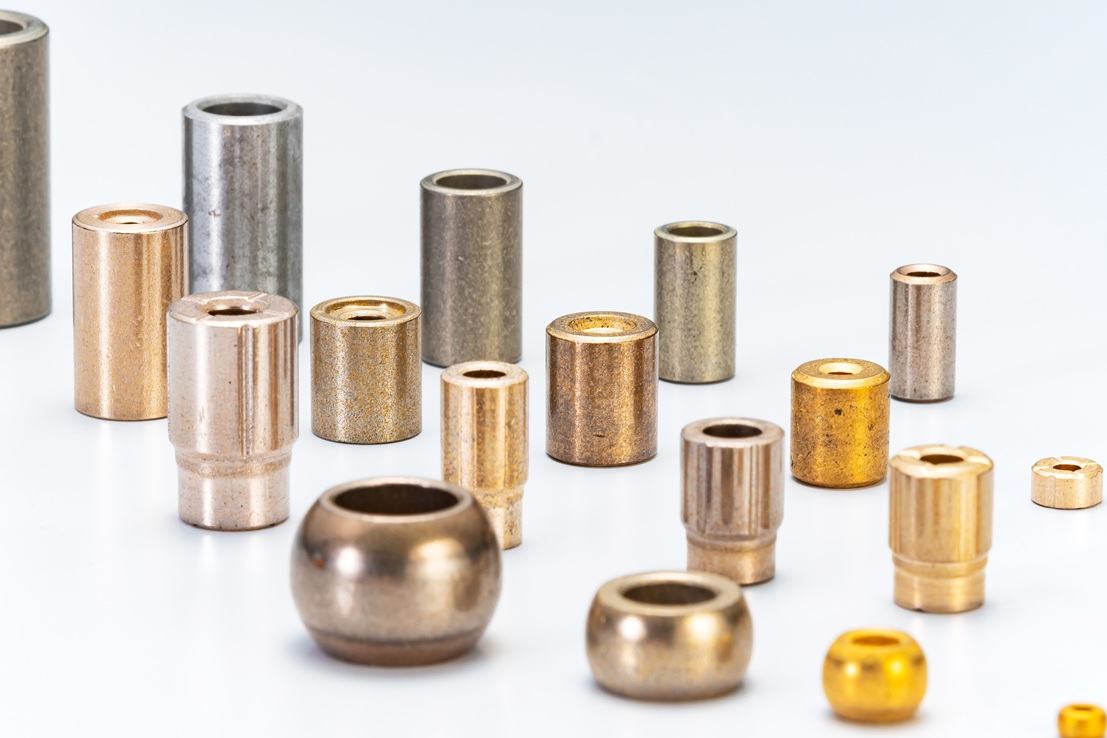
Self-lubricating oil-impregnated plain bearings are typically manufactured using powder metallurgy sintering technology. Inside the material, there is a porous system capable of holding lubricating oil. During operation:
- Oil is retained in the pores of the bushing.
- Movement and temperature help bring the oil to the inner surface.
- The oil forms a lubricating film between the shaft and the bushing.
- When the equipment stops and the temperature decreases, some oil is drawn back into the porous structure.
This mechanism helps oil-impregnated plain bearings maintain lubrication without continuous oil replenishment in many applications. However, the oil film is not always stably maintained. Under conditions of low speed, high load, frequent starts, stops, or reversals, the amount of oil supplied to the surface may not be sufficient to completely prevent direct contact between the shaft and the bushing. In such cases, in addition to the lubricating oil, the bushing material may require an additional support mechanism to reduce friction and limit seizing. This is why free graphite is added to some oil-impregnated plain bearing materials. While oil plays the primary role in forming the lubricating film, graphite acts as a solid lubricant, helping to maintain sliding performance when the oil film degrades. In other words, oil and graphite do not replace each other but complement each other: oil helps separate the two surfaces under normal operating conditions, while graphite helps reduce friction at times when lubrication conditions become unfavorable.
What role does free graphite play in plain bearing materials?
Graphite has a layered structure, allowing its crystalline layers to slide relative to each other. Thanks to this property, graphite can act as a solid lubricant at the contact surface between the shaft and the bushing. Graphite can help:
- Reduce friction between the shaft and the bushing
- Limit direct contact between two metal surfaces
- Reduce the risk of scratching
- Limit seizing
- Maintain sliding performance when the oil film is unstable
This role is particularly useful during:
- Startup
- Machine shutdown
- Reversal
- Oscillating motion
- Operation at low speed and high load
However, graphite does not completely replace lubricating oil. For plain bearings to operate stably, a comprehensive selection of bushing material, oil type, assembly clearance, shaft material, and operating conditions is still required.
FCS-20G – Material for shaft bushings requiring wear and seizing resistance
Peace-Lon's FCS-20G is an Fe–C based oil-impregnated plain bearing material, utilizing an iron matrix with a pearlitic structure and dispersed free graphite with an average particle size of approximately 40 μm. Through a special sintering method, the iron matrix structure is transformed from ferrite to pearlite, increasing surface hardness and wear resistance. Free graphite aids lubrication and limits scratching, stick-slip, or surface seizing. The specifications of FCS-20G include:
| Item | Value |
| Main composition | Fe–C |
| Permissible PV | 200 MPa·m/min |
| Maximum surface pressure Pmax | 4 MPa |
| Maximum sliding speed Vmax | 100 m/min |
| Surface hardness | 250–280 HV0.05 |
FCS-20G is developed for low-speed, oscillating motion, and high-load conditions. Typical applications include:
- Automotive seat slide motors
- Power window motors
- Automotive sliding door motors
- Various motors operating under high-load conditions
Technical support from Peace-Lon Vietnam
When shaft bushings experience wear or seizing, a comprehensive analysis of the material, load, speed, type of motion, shaft surface, and lubrication conditions is required. Peace-Lon Vietnam can provide support for:
- Evaluating usage conditions
- Selecting oil-impregnated plain bearing materials
- Checking PV range
- Trial production
- Evaluating wear resistance and sliding performance
- Developing mass production plans
Contact us for the fastest and most effective consultation on solutions to limit wear and seizing in plain bearings.
Company Information
Electronic parts
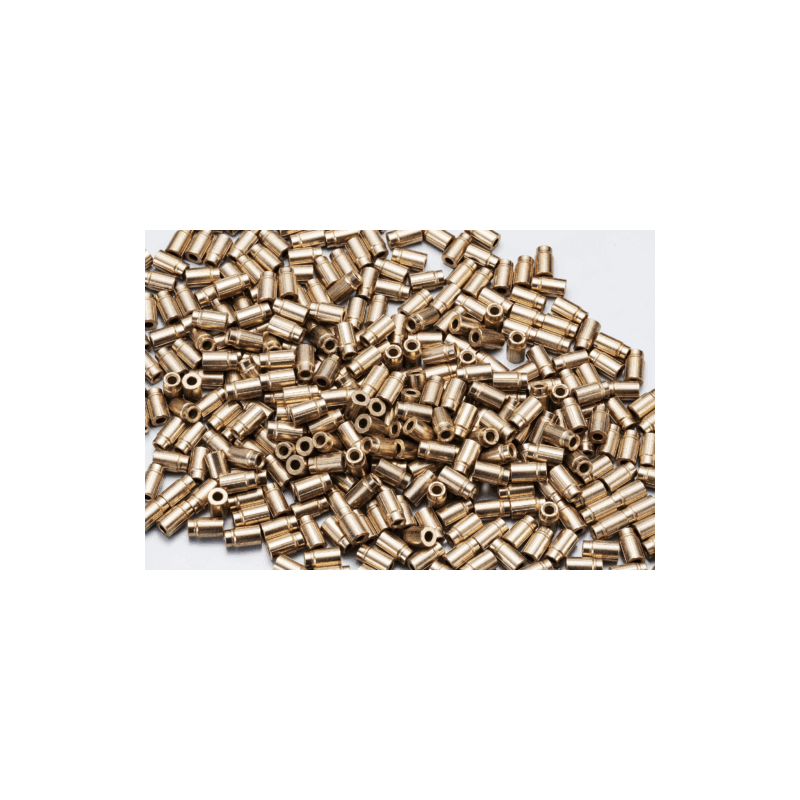
Oil-impregnated sintered bearing / Gears, pulleys, and other mechanical parts / Powder Metallurgy
Peace-Lon is a brand of Heiwa Sangyo Co., Ltd., a Japanese company that has manufactured self-lubricating oil-impregnated plain bearings and sintered mechanical parts utilizing powder metallurgy and s ...
PICKUP
Technology & Services
CONTACT
Contact