
BLOG
Knowledge
Technology and Services
How to prevent rust and corrosion for sintered parts?
2026-07-21
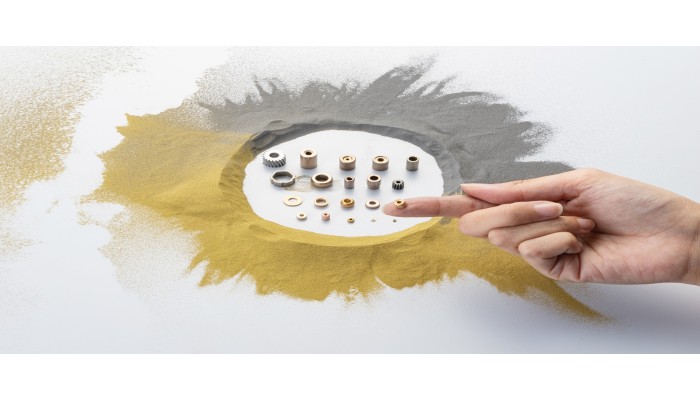
Sintered parts are widely used in automobiles, engines, gearboxes, industrial machinery, home appliances, and office equipment. Compared to parts machined from solid blanks, sintered materials have a porous structure containing many small pores. This structure offers advantages in forming and mass production but also makes it easier for water, moisture, and corrosive agents to penetrate. To prevent rust, it is necessary to simultaneously evaluate the material, sintering density, operating environment, storage method, and surface treatment.
Why do sintered parts rust easily?
Sintered parts are produced by compacting metal powder in a mold, then sintering to bond the metal particles. After the sintering process, a system of pores remains within the material. Water or moisture can penetrate these pores and come into contact with the iron matrix. In the presence of water and oxygen, the part is prone to:
- Oxidation
- Corrosion
- Red rust formation
- Degradation of appearance quality
- Reduced surface strength
The risk of rust increases under the following conditions:
- Hot and humid environment
- Outdoor use
- Contact with water or chemical vapors
- Long-term storage
- Inappropriate packaging or storage conditions
How does rust affect sintered parts?
Rust is not just an aesthetic issue. As the corrosion process continues to develop, the part may experience:
- Rough surface
- Increased friction and wear
- Reduced assembly precision
- Decreased strength
- Noise or vibration generation
- Shortened product lifespan
- Increased risk of customer complaints
For gears, bushings, or moving parts, a corroded surface can directly affect operational performance.
Factors to check when sintered parts rust
Before choosing rust prevention measures, it is necessary to identify the root cause.
Operating environment
It is necessary to clarify how the part is used:
- Indoors or outdoors
- At what temperature and humidity
- Whether it comes into contact with water, oil, or chemicals
- Whether it undergoes condensation cycles
Storage conditions
Rust can occur before the product is put into use. It is necessary to check:
- Storage duration
- Humidity in the warehouse
- Packaging condition
- Packaging method
- Use of desiccants
- Rust preventive oil and its protection period
Density and pore structure
Low sintering density often means a higher porosity ratio. This can increase the likelihood of water or moisture penetration. Therefore, corrosion resistance depends not only on the external protective layer but also on the material's structure.
Appearance and lifespan requirements
A part that only needs rust protection during transportation will have different requirements than a product that must operate for many years in a high-humidity environment. Therefore, it is necessary to clearly define:
- Target rust prevention period
- Permissible level of appearance change
- Lifespan requirements
- Wear resistance requirements
Rust prevention measures for sintered parts
| Measure | Protection Mechanism | Advantages | Limitations and Considerations | Suitable for |
| Rust Preventive Oil | Creates a temporary oil film, limiting water and oxygen contact with the metal surface | Easy to apply; relatively low cost; suitable for transportation and storage | Effectiveness depends on coverage, oil type, and storage conditions; may require cleaning before assembly; limited long-term protection capability | Short-term transportation or storage |
| Steam Treatment | Forms an Fe₃O₄ oxide layer on the surface and within a portion of the pores of iron-based sintered material | Helps enhance corrosion resistance; partially seals pores; improves surface hardness and wear resistance | Effectiveness depends on material, sintering density, and treatment conditions; not a substitute for all types of anti-corrosion coatings | Iron-based parts requiring moisture resistance, rust prevention, and improved surface properties |
| Metal Plating | Creates a protective metal layer such as zinc or nickel on the surface | Can achieve high corrosion resistance; plating layer can be selected according to the operating environment | Requires control over adhesion on porous surfaces, plating thickness, and impact on tolerances; may require pore sealing before plating | Parts requiring high corrosion resistance or metallic appearance |
| Painting or Surface Coating | Creates a film barrier separating the part from water, oxygen, and corrosive agents | Many options for features and appearance; suitable for parts not requiring direct friction surfaces | Coating may peel or wear; adhesion, thickness, and impact on assembly need to be considered | Housings, static parts, and products requiring surface protection |
| Pore Impregnation | Introduces sealing material into the pore system to limit water or liquid penetration | Reduces permeability through the porous structure; can support subsequent plating or coating steps | Does not directly create hardness or wear resistance; requires selecting an impregnant suitable for operating temperature and environment | Parts requiring sealing or subsequent surface treatment |
| Packaging and Storage Control | Limits moisture using sealed packaging, desiccants, rust-inhibiting paper, or warehouse environment control | Does not alter part dimensions and properties; can be combined with other measures | Only effective if packaging and storage procedures are properly maintained; does not improve the material surface itself | Transportation, storage, and preservation before assembly |
| Combination of Measures | Combines surface treatment with rust preventive oil, packaging, or additional coatings | Increases protection level in hot and humid conditions or for long storage periods | Increased cost and number of steps; compatibility between methods needs to be checked | Harsh environments or strict rust prevention requirements |
Criteria for selecting materials and rust prevention treatment
Corrosion Resistance
The level of rust prevention should be evaluated based on the actual operating environment, rather than solely on laboratory conditions.
Wear Resistance
If the part involves sliding motion or repeated contact, the rust prevention solution must also be compatible with friction and wear requirements.
Post-treatment Accuracy
Some plating or coating methods can alter surface dimensions. For gears or bushings with tight tolerances, the thickness of the treatment layer needs to be controlled.
Mass Production Capability
The solution needs to have consistency between batches, suitable for production volume and quality control processes.
SM-4 – Solution for sintered parts requiring rust prevention and surface durability
Peace-Lon's SM-4 is an iron-based sintered material equivalent to the old standard JIS SMF4030. The material can undergo steam treatment to form an Fe₃O₄ layer on the surface and within a portion of the pores. As a result, SM-4 is suitable for parts requiring:
- Enhanced rust prevention
- Improved corrosion resistance
- Increased surface hardness
- Support for enhanced wear resistance
- Maintenance of post-treatment accuracy
Applications may include gears, bushings, engine components, office equipment components, automotive components, and mechanical structural parts.
Technical support from Peace-Lon Vietnam
When sintered parts develop rust, it is necessary to analyze the cause from the perspective of material, environment, storage, and surface treatment. Peace-Lon Vietnam can provide support for:
- Evaluating operating conditions
- Selecting sintered materials
- Proposing steam treatment
- Trial production
- Evaluating dimensions and quality
- Developing mass production plans
For appropriate consultation, businesses should provide drawings, current materials, operating environment, storage duration, rust prevention requirements, tolerances, and target lifespan.
Company Information
Electronic parts
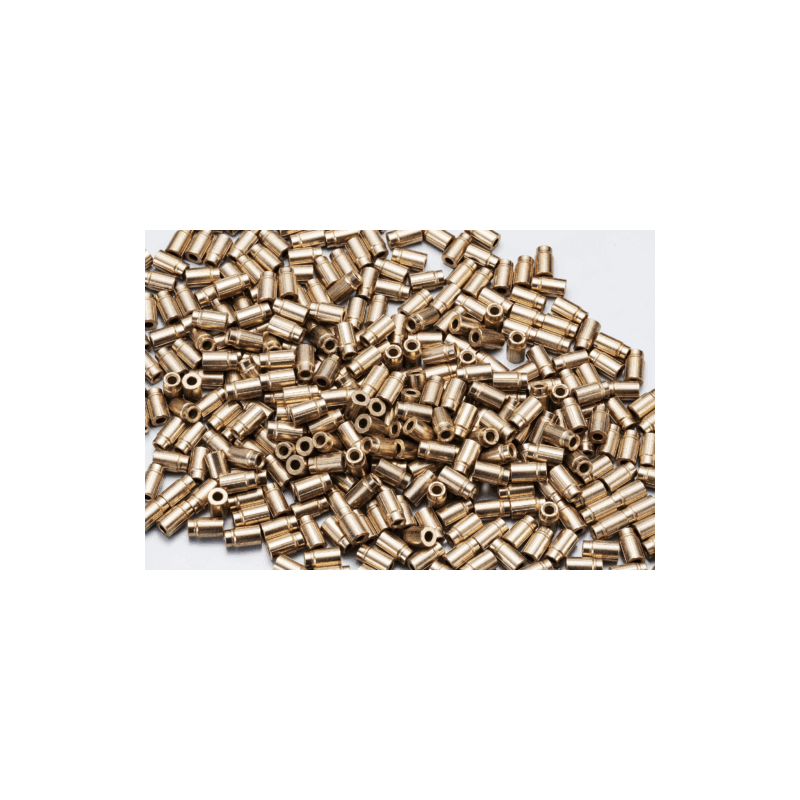
Oil-impregnated sintered bearing / Gears, pulleys, and other mechanical parts / Powder Metallurgy
Peace-Lon is a brand of Heiwa Sangyo Co., Ltd., a Japanese company that has manufactured self-lubricating oil-impregnated plain bearings and sintered mechanical parts utilizing powder metallurgy and s ...
PICKUP
Technology & Services
CONTACT
Contact