
BLOG
Knowledge
Technology and Services
How to enhance the wear resistance and service life of small gears?
2026-07-21
Why do small gears wear easily?
Small gears have a relatively limited contact area between teeth. Therefore, when transmitting force, contact pressure often concentrates on a smaller area compared to larger gears. Wear can result from various causes:
- Excessive contact pressure on the tooth surface
- Insufficient material hardness
- Lack of lubricating oil or grease
- Inappropriate lubricant
- Pitch deviation or tooth profile error
- High runout
- Eccentric assembly
- Foreign matter ingress into the meshing area
- Actual load exceeding design conditions
- Continuously changing load conditions
- Inadequate heat treatment method
If the root cause is not accurately identified, simply changing the material may not yield the desired results.
Factors determining the lifespan of small gears
Wear Resistance
During meshing, tooth surfaces are continuously subjected to contact and relative sliding. Therefore, the material needs appropriate surface hardness to limit wear caused by repetitive friction. This requirement is particularly important for gears that:
- Operate continuously
- Have high rotational speeds
- Bear heavy loads
- Require a long lifespan
- Are difficult to maintain or replace frequently
Mechanical Strength
Gears not only experience friction on their surfaces but also bending forces at the tooth root. The material needs sufficient strength to:
- Withstand transmission loads
- Limit deformation
- Reduce the risk of tooth cracking or breakage
- Withstand fluctuating or impact loads
If the material is too soft, the tooth surface will wear easily. Conversely, if the material is too brittle, the risk of cracking or breakage under impact loads may increase.
Heat Treatability
Heat treatment is one of the important methods to improve the wear resistance of gears. Some materials can be treated to create:
- A high-hardness surface layer
- A core that retains the necessary strength and toughness
This combination is particularly suitable for small gears, as the tooth surface must withstand repetitive contact while the core and tooth root must still bear transmission loads.
Gear Accuracy
Even with high-strength materials, gears can wear quickly if accuracy is not up to standard. Deviations such as:
- Pitch error
- Tooth profile deviation
- High runout
- Eccentric assembly
can cause the load to be unevenly distributed across the entire tooth surface. When the load concentrates at certain points, gears are prone to:
- Localized wear
- Vibration
- Noise
- Reduced transmission efficiency
- Shortened lifespan
Lubrication Conditions
Lubricating oil or grease plays a role in forming a separating film between tooth surfaces. If the lubrication is insufficient or the lubricant is unsuitable, friction and temperature at the meshing point will increase, accelerating the wear process. When selecting a lubrication method, consider:
- Type of oil or grease
- Viscosity
- Rotational speed
- Operating temperature
- Load
- Lubricant replenishment cycle
How does carburizing and quenching increase gear lifespan?
Carburizing and quenching is a heat treatment method used for low-carbon iron-based materials. This process typically involves three steps:
- Diffusion of carbon into the material's surface layer
- Hardening to form a high-hardness surface layer
- Tempering to reduce stress and adjust mechanical properties
For gears, this method can create a combination of:
- Hard surface layer: supports wear resistance and withstands contact pressure
- Core with appropriate strength: supports load bearing and limits the risk of brittle fracture
As a result, carburizing and quenching is often considered for gears requiring high wear resistance and long lifespan.
When should carburizable materials be considered?
Carburizable materials are suitable when:
- Tooth surfaces experience premature wear
- Gears operate at high frequency
- Large loads are applied to the teeth
- The product requires a long lifespan
- Plastic gears do not meet strength requirements
- Conventional materials lack sufficient wear resistance
- There is a need to increase surface hardness while maintaining core strength
However, heat treatment can alter dimensions or cause product deformation. Therefore, for small gears with tight tolerances, it is necessary to simultaneously control heat treatment conditions and post-treatment accuracy.
From material selection to gear manufacturing method
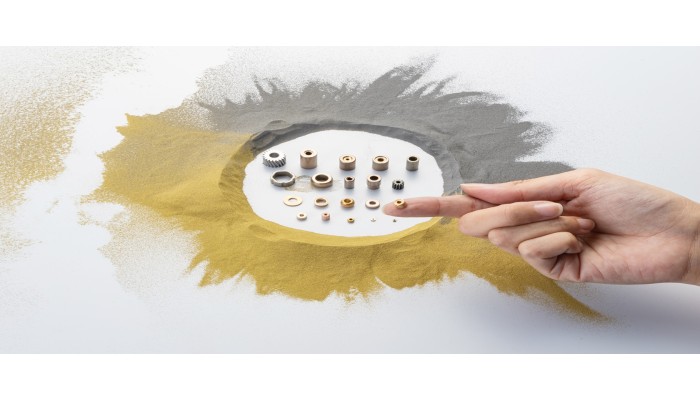
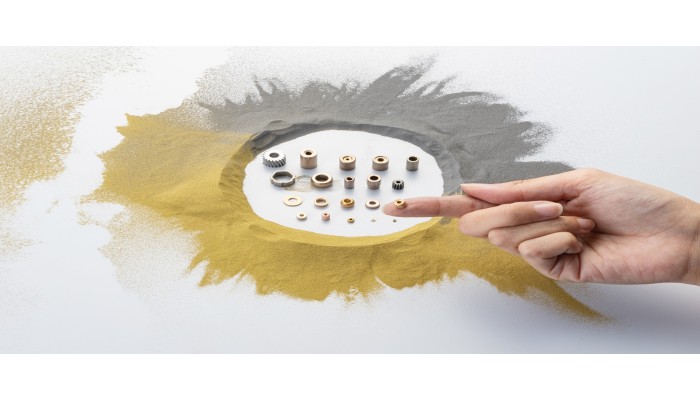
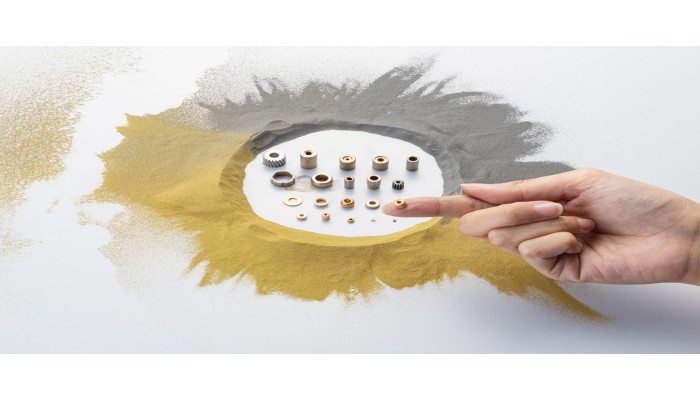
To enhance the wear resistance of small gears, merely selecting a heat-treatable material is not enough. The manufacturing method also affects the accuracy, uniformity, and cost of the component. For small gears produced in large quantities, powder metallurgy technology is a suitable option because it can form gears close to their finished dimensions, while also incorporating heat treatment steps such as carburizing, quenching, and tempering.
What are the advantages of sintered gears?
Sintered gears are produced by compacting metal powder in a mold, then sintering to bond the metal particles into a complete component. When combining suitable materials with heat treatment, this method can simultaneously meet requirements for wear resistance, accuracy, and mass production efficiency. The main advantages include:
- Forming gears close to the finished product
- Reducing material waste
- Limiting some machining steps
- Suitable for mass production
- Maintaining dimensional uniformity among products
- Capable of creating relatively complex shapes
- Can be combined with carburizing, quenching, tempering, and finishing processes
However, the load-bearing capacity and lifespan of sintered gears depend not only on the forming method but also on:
- Material composition
- Sintered density
- Tooth accuracy
- Heat treatment conditions
- Load and rotational speed
- Lubrication conditions
Therefore, material, sintering technology, heat treatment, and accuracy must be considered as a comprehensive solution.
SM-5 – Material Solution for Small Gears Requiring High Strength
Peace-Lon's SM-5 is a sintered material used for mechanical structural components, equivalent to the old standard JIS SMF5030. This is an iron-based sintered material that can be subjected to:
- Carburizing
- Quenching
- Tempering
- Steam treatment
Thanks to its heat treatability, SM-5 can be adjusted to enhance surface hardness, wear resistance, and service life. SM-5 is suitable for applications such as:
- Small module gears
- Motor gears
- Gearbox components
- Office equipment gears
- Automotive components
- Precision machine parts
- Mechanical structural components requiring heat treatment or wear resistance
Peace-Lon's Capability to Produce High-Precision Gears
Peace-Lon has experience manufacturing gears up to JGMA Class 2 precision, meeting applications such as:
- Small motors
- Office equipment
- Precision machinery
- Gearboxes
- Drive mechanisms requiring low noise
Peace-Lon can provide integrated support from:
- Material selection
- Sintered production
- Heat treatment
- Precision machining
- Dimensional inspection
- Quality evaluation
- Trial production
- Mass production
If your business is experiencing gear wear issues or needs to find heat-treatable sintered materials, please contact Peace-Lon Vietnam for timely support.
Company Information
Electronic parts
Oil-impregnated sintered bearing / Gears, pulleys, and other mechanical parts / Powder Metallurgy
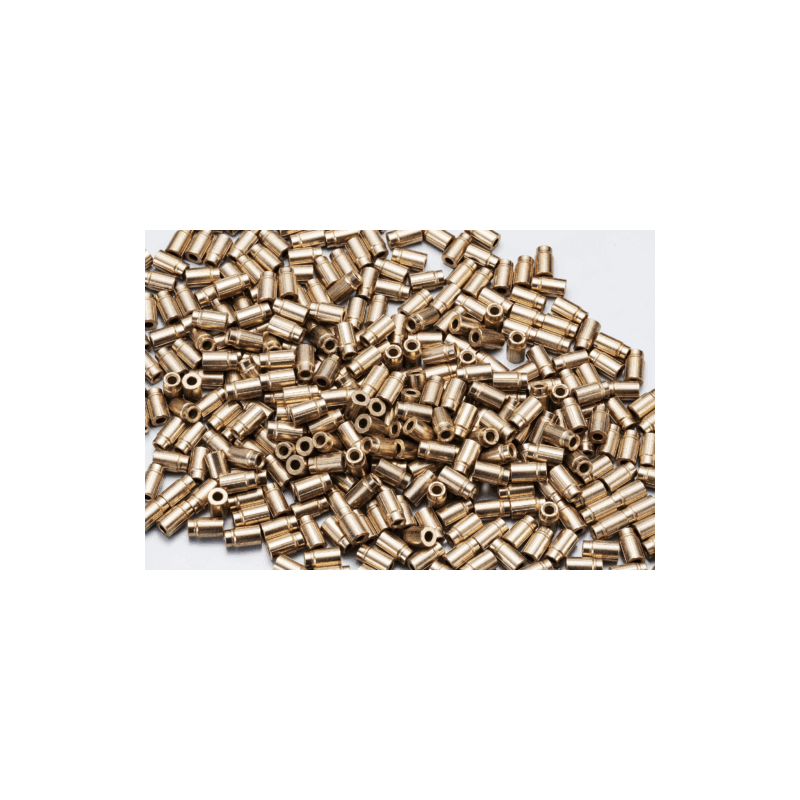
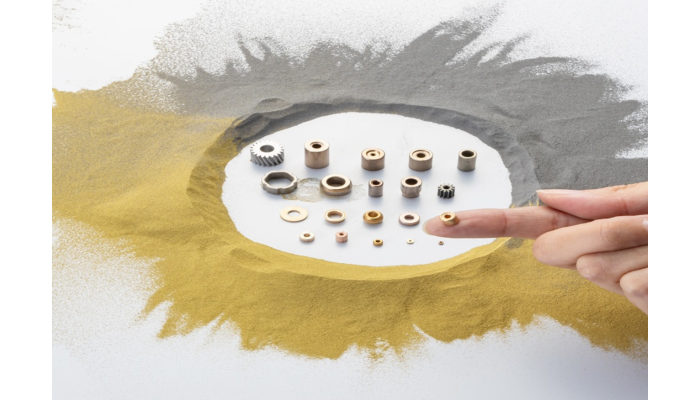
Peace-Lon is a brand of Heiwa Sangyo Co., Ltd., a Japanese company that has manufactured self-lubricating oil-impregnated plain bearings and sintered mechanical parts utilizing powder metallurgy and s ...
PICKUP
Technology & Services
CONTACT
Contact