
BLOG
Knowledge
Technology and Services
Comparison of Pressure Die Casting and Gravity Die Casting for Aluminum Components: How Do They Differ?
2026-07-15
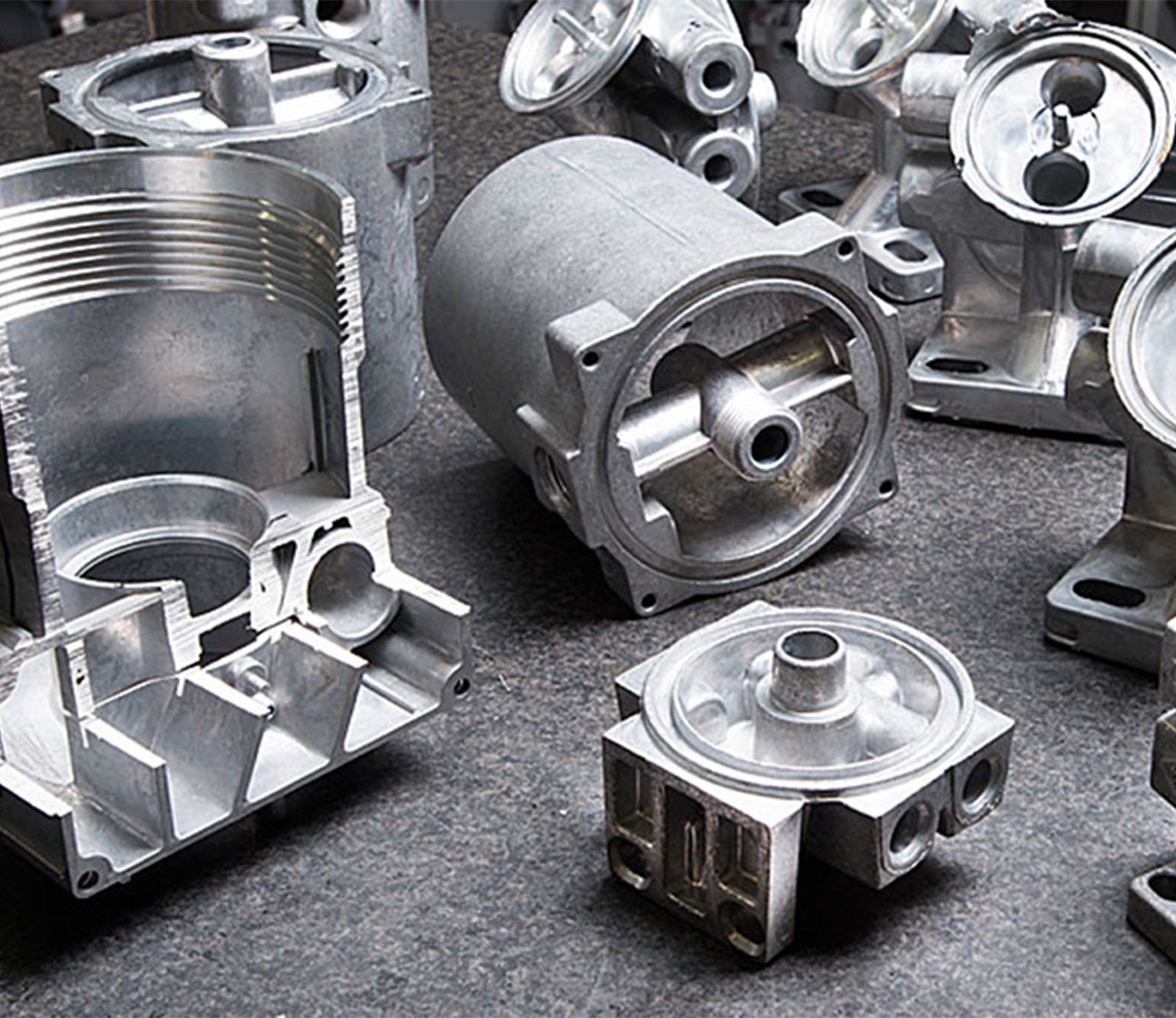
In aluminum component manufacturing, die casting and gravity casting are two common technologies, but they have different principles, advantages, and application scopes. Die casting is suitable for thin-walled products, complex shapes, and large production volumes. Meanwhile, gravity casting is often chosen for parts requiring high density, heat treatability, or internal cavities. In summary:
Die casting prioritizes productivity, precision, and the ability to create thin walls. Gravity casting prioritizes density, heat treatability, and internal cavity structures.
What is Aluminum Die Casting?
Aluminum die casting is a method that uses a piston to inject molten aluminum alloy into a metal mold at high speed and pressure. The basic process includes:
- Melting the aluminum alloy.
- Injecting a metered amount of molten aluminum into the shot chamber.
- The piston injects molten aluminum into the mold cavity.
- Maintaining pressure during solidification.
- Opening the mold and ejecting the part.
- Trimming the gating system, deburring, and finishing.
Thanks to the high filling speed, die casting can produce parts with:
- Thin walls
- Numerous small ribs
- Screw bosses
- Mounting lugs or pilot holes
- Complex shapes
- High repeatability requirements
This technology is particularly suitable for mass production due to short cycle times and good automation capabilities.
What is Aluminum Gravity Casting?
Aluminum gravity casting is a method where molten aluminum alloy is poured into a mold, and the metal fills the mold cavity primarily by gravity. Gravity casting can use:
- Sand molds
- Metal molds
- Metal molds combined with sand cores
In industrial aluminum component manufacturing, the term “gravity casting” often refers to gravity casting using metal molds. A typical process includes:
- Preheating the metal mold.
- Applying a mold release agent or heat-resistant coating.
- Inserting sand cores if the product has internal cavities.
- Closing the mold.
- Pouring molten aluminum into the gating system.
- The aluminum flows into the mold cavity by gravity.
- Waiting for solidification, then opening the mold.
- Ejecting the part, breaking out sand cores, and finishing.
Comparison of Aluminum Die Casting and Gravity Casting
| Criterion | Die Casting | Gravity Casting |
| Filling Mechanism | Piston injects molten aluminum into mold | Aluminum flows into mold by gravity |
| Mold Type | Metal mold | Sand mold or metal mold |
| Filling Speed | Very fast | Slower |
| Production Cycle | Short | Longer |
| Suitable Production Volume | Medium to very large | Low to medium |
| Thin-wall Capability | Very good | More limited |
| Small Ribs and Bosses | Easy to create | More difficult |
| Dimensional Accuracy | High | Medium to good |
| Surface Quality | Good | Good with metal molds, rougher with sand molds |
| Sand Core Capability | Limited | Favorable |
| Risk of Gas Entrapment | Higher | Usually lower |
| Heat Treatability | Limited with conventional die casting | More favorable |
| Initial Mold Cost | High | Low to medium |
| Post-casting Machining | Usually less | Usually more |
Applications of Aluminum Die Casting and Gravity Casting
Both die casting and gravity casting are used in many industries, but their application scopes differ significantly. Die casting is typically found in thin-walled components with many ribs and requiring mass production. Gravity casting is more suitable for parts with relatively thick walls, requiring sand cores, heat treatment, or high density.
| Application Group | Aluminum Die Casting | Aluminum Gravity Casting |
| Electrical, Electronic Components | Electronic enclosures, controller housings, power supply housings, telecommunication equipment housings | Housings with thick walls or requiring special structures |
| Automotive, Motorcycle Components | Gearbox housings, engine housings, brackets, supports, covers, and high-volume housings | Cylinder heads, intake manifolds, wheel rims, control arms, suspension system components |
| Industrial Equipment | Electric motor housings, machine housings, brackets, transmission components | Pump bodies, valve bodies, impellers, load-bearing housings |
| Heat Dissipation Components | LED lamp housings, heatsinks, components with many cooling fins | Heat dissipation components with thick walls or requiring mechanical properties |
| Components with Internal Cavities | Suitable for cavities created by metal core pins or slide mechanisms | Suitable for water, oil, air passages and complex cavities using sand cores |
| Heat Treatable Components | Limited with conventional die casting | More suitable for castings requiring T5 or T6 heat treatment |
| Thin-walled Products | Very suitable | More limited |
| Load-bearing Products | Suitable for conventional structures and large production volumes | Suitable for parts requiring high density and mechanical properties after heat treatment |
| Production Scale | Medium to very large | Low to medium |
| Typical Products | Electronic enclosures, engine housings, brackets, small gearbox housings, LED lamp housings | Pump bodies, valve bodies, cylinder heads, wheel rims, intake manifolds, impellers |
Overall, electronic equipment housings, engine housings, and components with many thin ribs are typically produced by die casting. Meanwhile, pump bodies, valve bodies, cylinder heads, and components with internal passages are generally more suitable for gravity casting.
How do Die Casting and Gravity Casting Costs Differ?
Die casting has higher mold and equipment investment costs. Molds must withstand high flow rates, high pressure, and continuous thermal cycling. However, for sufficiently large production volumes, short production cycles and high automation levels help reduce the cost per product. Gravity casting typically has lower mold costs, but longer production cycles. If sand cores are used, each cycle also involves additional steps for core manufacturing, installation, and breakout. Products may also require more CNC machining operations to achieve final tolerances. Therefore, cost comparison needs to be based on the overall picture:
- Mold cost
- Lifetime production volume
- Material volume
- Scrap rate
- CNC machining
- Heat treatment
- Surface treatment
- Leak testing
- Production time
Should You Choose Die Casting or Gravity Casting?
The choice of technology should be based on the blueprint, production volume, and actual application requirements.Die casting is more suitable when:
- Large production volume
- Thin product walls
- Many small ribs or bosses
- High precision is required
- Fast production cycles are needed
- Desire to reduce post-casting machining
Gravity casting is more suitable when:
- Products have complex internal cavities
- Sand cores are needed
- Heat treatment is required
- High density is needed
- Product walls are relatively thick
- Low or medium production volume
No single technology is superior in all cases. The appropriate technology is the one that best meets the technical requirements, production volume, and cost of the product simultaneously.
Yamaguchi Vietnam – Die Casting Combined with Precision Machining for Aluminum Components
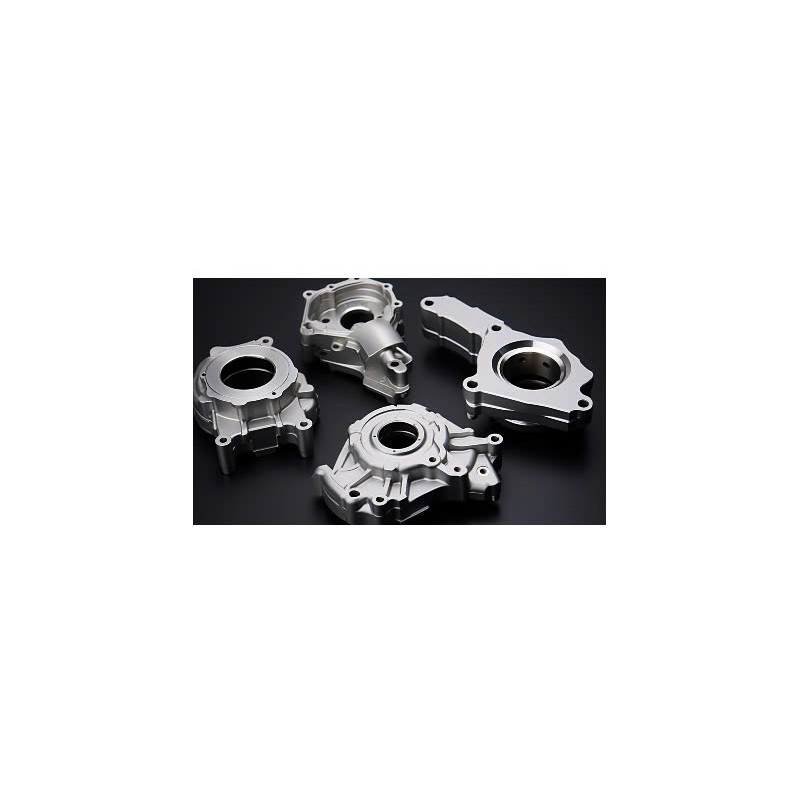
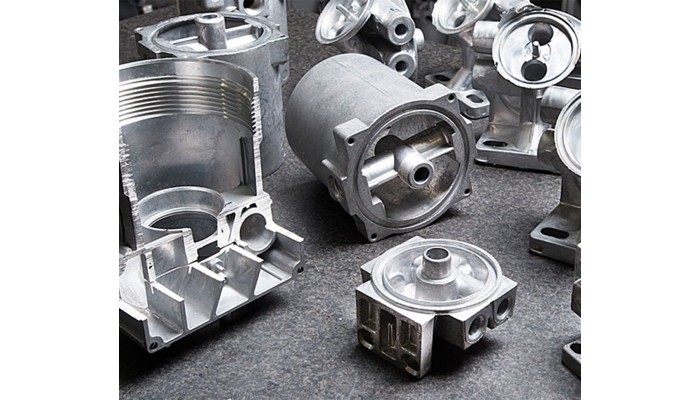
With a focus on providing solutions from blank formation to finished products, Yamaguchi Vietnam develops aluminum die casting capabilities combined with CNC machining for projects involving automotive, motorcycle, electronic, semiconductor, aerospace, energy, and industrial equipment components. Our 420-ton and 800-ton die casting machines are integrated with vacuum systems, spray robots, electric furnaces, shot blasting machines, and OES spectrometers, accommodating products weighing approximately 0.4–6 kg with a capacity of over 45,000 products per month. After the casting process, products can undergo further machining on a system of over 370 CNC machines and are inspected using 3D coordinate measuring machines (CMMs), vision measuring systems, roughness testers, profile projectors, and roundness testers. By combining die casting, precision machining, and quality control within the same system, Yamaguchi Vietnam can shorten supply chains, ensure consistency, and support customers in developing mass-produced aluminum components right here in Vietnam.
Company Information
Jigs and tools / Machine tools / Industrial machinery
Machining machine details / Jig design & fabrication / Aluminum die casting
Yamaguchi Vietnam Joint Stock Company is an engineering company that specializes in manufacturing of precision machined parts and components. We were founded in February 2011.
PICKUP
Technology & Services
CONTACT
Contact