
BLOG
Knowledge
Technology and Services
Die Casting Trends: From Giga Casting, AI to New Generation Aluminum Materials
2026-10-06
Die casting is evolving with the demands for product weight reduction, production automation, electric vehicles, and emission reduction targets in the supply chain.
In 2026, prominent die casting trends focus on 6 main directions: integrated casting of large structures, increased application of vacuum die casting, development of non-heat-treatable aluminum alloys, use of AI and data for process control, increased recycled aluminum content, and deeper integration between casting, post-casting machining, and quality inspection.The common thread among these trends is that the die casting industry is shifting from primarily focusing on formability and productivity to comprehensive control of casting quality, material efficiency, and post-casting processes.
Giga Casting: Integrating multiple parts into a single large casting
One of the most talked-about trends in the die casting industry today is Giga Casting, also known as large-scale integrated die casting.
Essentially, this is still high-pressure die casting – HPDC technology, but expanded to very large structures using machines with clamping forces up to thousands of tons.
Instead of producing dozens of separate parts and then welding or assembling them, manufacturers integrate multiple structural functions right from the design stage and cast them into a single large aluminum part in one go.
A typical application is the rear floor – the rear floor structure of an automobile.
According to research published in npj Computational Materials in February 2026, Tesla has applied integrated die casting for the rear floor since 2020, thereby replacing over 70 parts with a single integrated aluminum casting.
It can be visualized:Traditional Method
Many parts → separate forming → welding/assembly → inspectionIntegrated Die Casting
Integrated design of multiple functions → single casting → one large structureThe benefit of this method is reducing the number of components, welds, and assembly steps. However, the larger the casting, the higher the requirements for mold filling capability, runner design, temperature, material, and defect control.
Therefore, the Giga Casting trend is not simply about using “larger casting machines,” but entails simultaneous changes in product design, molds, alloys, and process control technology.
Vacuum Die Casting: Controlling gas porosity and internal casting quality
A significant challenge of high-pressure die casting is that molten metal is injected into the mold cavity at high speed. During the filling process, air can be entrapped in the metal flow. Simultaneously, oxide films on the surface of the molten aluminum can also be entrapped and folded within the casting.
A 2026 study on HPDC aluminum components in the automotive industry indicates that air entrainment and oxide bifilm are critical factors affecting the mechanical properties, fatigue life, and impact resistance of castings.
A common consequence is porosity – internal casting defects.
- gas porosity, due to air or gas trapped in the metal;
- shrinkage porosity, formed when the metal contracts in volume during solidification but is not adequately compensated.
For products requiring post-casting CNC machining, porosity is even more noteworthy because internal voids can be exposed after milling or drilling.
That is why vacuum die casting – pressure die casting with vacuum assistance continues to receive attention. The vacuum system helps reduce the amount of air in the mold cavity before and during the metal filling process. When combined with appropriate gate, runner, vent, overflow design, and injection conditions, manufacturers can limit gas porosity and increase the stability of the casting.
This trend is particularly important for: housing, motor housing, automotive components, electrical-electronic components, thin-walled parts, products with complex structures, and parts requiring precise post-casting machining.
Non-heat-treatable aluminum alloys for large die casting structures
The development of integrated die casting also places new demands on materials. When castings are very large, the molten metal flow must travel over long distances. This can create temperature differences, uneven solidification, and varying mechanical properties between different locations. Meanwhile, post-casting heat treatment not only increases production time and energy but can also cause deformation in large, thin-walled structures.
Therefore, a notable trend in 2026 is the development of non-heat-treatable die casting aluminum alloy – a die casting aluminum alloy that can achieve required mechanical properties immediately after casting without additional heat treatment.
2026 Research: From AI to full-size automotive rear floor
In February 2026, the research team of Dong Yang, Junying Min, and colleagues published the study “Ultra-fast design and application of non-heat-treatable integrated die casting aluminum alloys” in npj Computational Materials.
Notably, the research team used machine learning to establish the relationship between alloy composition and mechanical properties. From Al-Si alloy data, the system screened a very large composition space to find an alloy that simultaneously met three requirements:
- tensile strength UTS ≥ 290 MPa;
- yield strength YS ≥ 145 MPa;
- elongation ≥ 12%.
After three rounds of testing and calibration, the research team developed an alloy with: UTS 290.1 MPa – YS 146.2 MPa – elongation 12.5%, under representative HPDC conditions.
More remarkably, the alloy did not stop at small test samples.
The research team continued to test the filling capability on thin-walled castings with a flow length of up to 3,500 mm, then used this alloy to produce a full-size integrated rear floor for new energy vehicles.
The part has dimensions of approximately 1,460 × 1,565 × 655 mm, an average wall thickness of 4.5 mm, and was cast using a machine with a maximum clamping force of 9,100 tons.
The results showed that mechanical properties varied with location and flow length, but the areas inspected on the product still met the design requirements of the tested application.
This research demonstrates two important simultaneous development directions in die casting:AI supporting faster material development + aluminum alloys that can achieve required mechanical properties immediately after casting, without additional heat treatment, suitable for large-sized die casting parts.
The entire process from alloy design to industrial-scale validation was completed by the research team in approximately 5 months, whereas traditional alloy development methods can take many years.
AI and data shift quality control from “defect detection” to “defect prevention”
AI in die casting is not only used for alloy development.
A die casting cycle has many parameters that directly affect product quality, for example:
- metal temperature;
- mold temperature;
- piston speed;
- pressure;
- filling time;
- holding time;
- vacuum level;
- cooling process.
If products are only inspected after production, companies often discover problems after defects have already occurred.
The new trend is to collect data directly during the production process and analyze the relationship between machine parameters – mold conditions – casting quality.
The goal is to gradually shift from:Inspection → Detection → Prediction → Process Controlor:Defect inspection → defect detection → defect prediction → process control to prevent defects from occurring.
For mass production, the benefits lie not only in reducing the NG product rate but also in the ability to maintain stability between production lots.
Recycled aluminum and sustainable production are increasingly important
Another trend in the die casting industry is the requirement for sustainability – sustainable production.
In reality, sustainability is not just an environmental issue but directly relates to:
- material sources;
- energy consumption;
- CO₂ emissions;
- scrap rate;
- metal recovery capability;
- production efficiency per product.
For aluminum, recyclability is a major advantage.
Runners, overflows, and many excess material parts generated during the casting process can be recovered if the chemical composition is properly managed.
In parallel, the trend of shifting from primary aluminum to secondary aluminum – recycled aluminum is being more actively researched, although increasing the recycled material content also poses challenges regarding impurities and mechanical property control.
Therefore, sustainable die casting production is not just about “using recycled aluminum” but is a chain comprising:material control → optimizing the melting process → reducing the scrap rate → material recovery → reducing energy consumption per product.
From casting to finished product: The increasing role of post-casting machining
A die casting product is often not complete when it is just removed from the mold. Depending on technical requirements, the product may undergo:runner and flash trimming → shot blast → CNC milling → turning → drilling → tapping → grinding → surface treatment → dimensional inspection.
Especially for housings and assembly parts, features such as:
- bearing seat;
- mating surface;
- locating hole;
- threaded hole;
- sealing surface;
often require higher precision than what can be achieved directly by die casting.
Therefore, a notable trend is the shift from a model that only supplies casting parts to one that provides finished components.
A supplier that can perform casting, CNC machining, and quality inspection within the same system will help customers reduce the number of vendors, shorten the supply chain, and better control product consistency.
Aluminum Die Casting Capabilities at Yamaguchi Vietnam
In the context of customers increasingly demanding not only castings but also finished machining and post-casting quality control, Yamaguchi Vietnam has developed an integrated production system from mold to finished product.
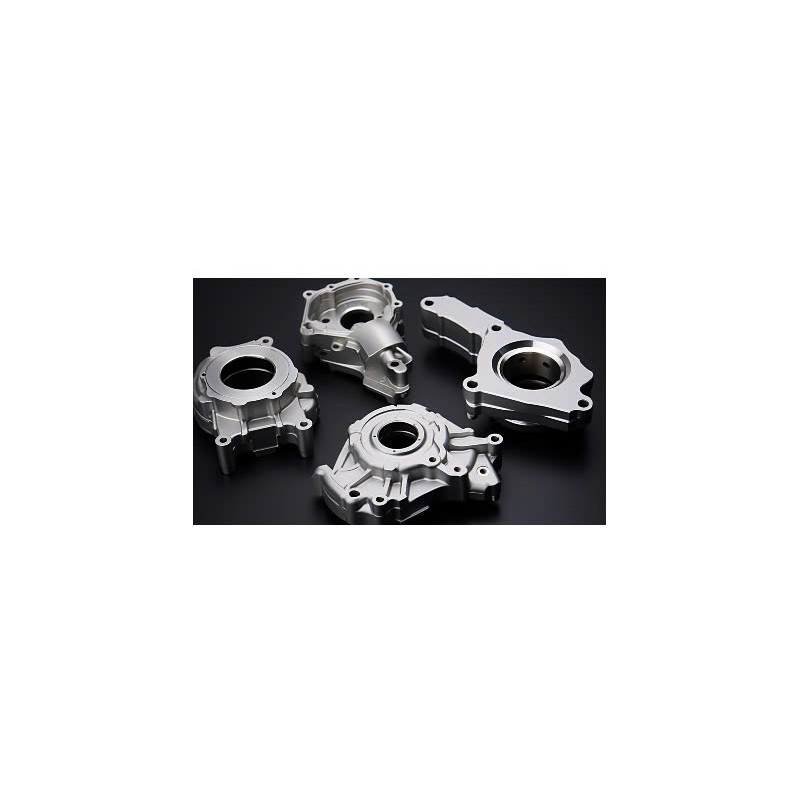
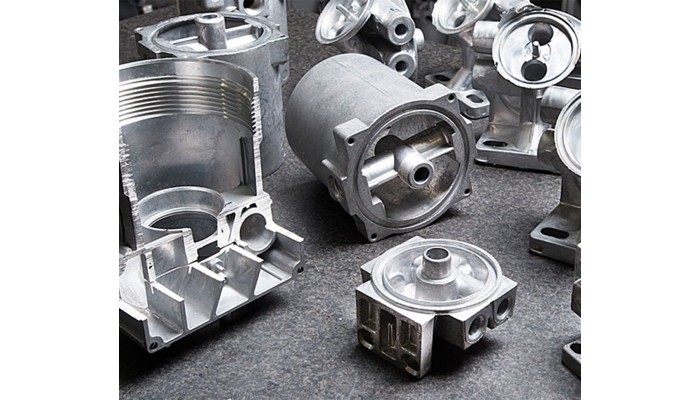
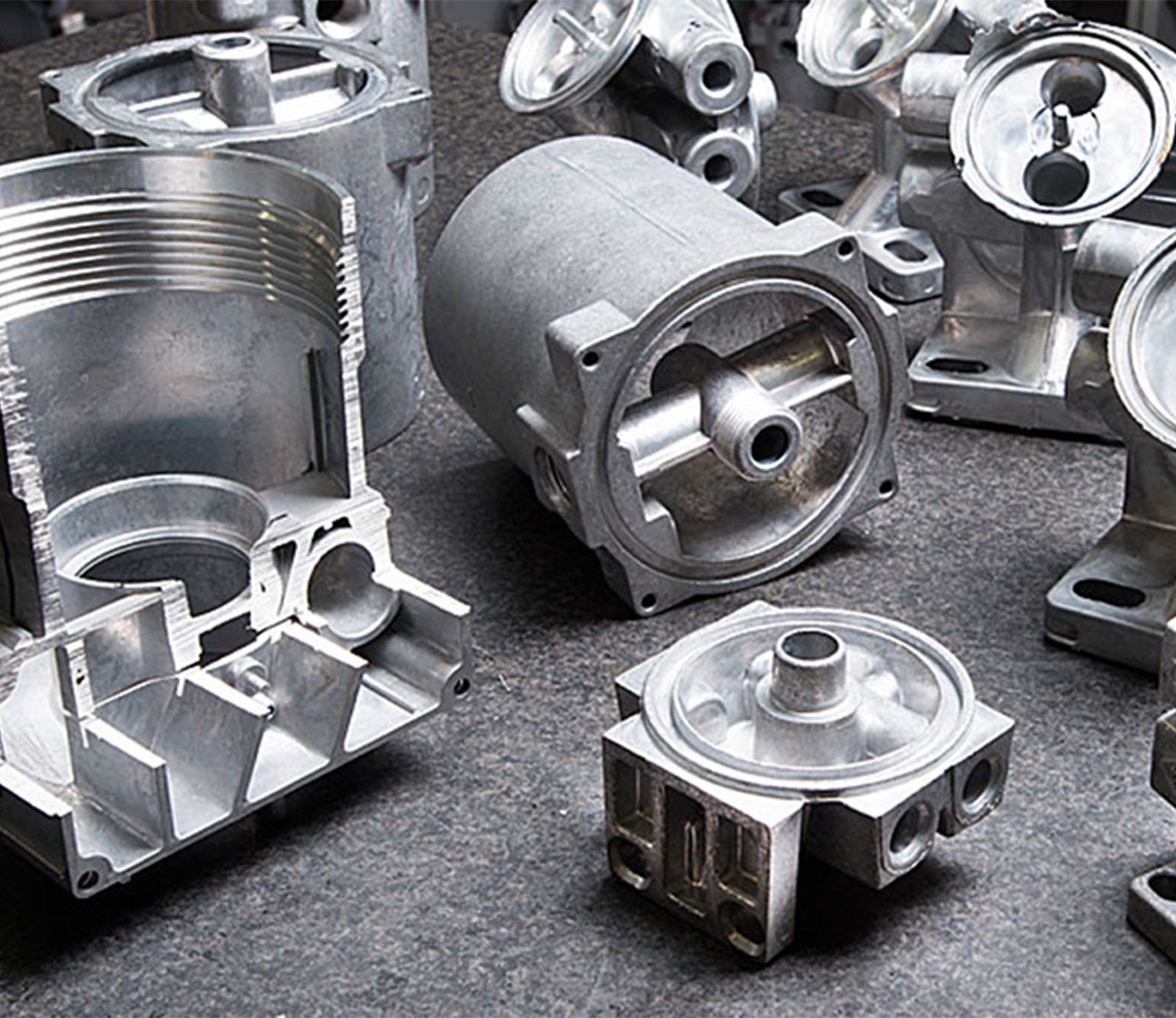
Yamaguchi is currently equipped with 420-ton and 800-ton die casting machines, combined with a vacuum system, automatic spray robots, electric furnaces, shot blast machines, and material composition analysis equipment. The system can handle products weighing up to approximately 6.5 kg, including thin-walled parts 2–3 mm thick and complex shapes. A notable point is that Yamaguchi does not stop at the casting blank stage.
After die casting, products can continue to be turned, milled, ground, drilled, and finished machined using a system of over 330 CNC machines, thereby processing areas requiring high precision such as datum surfaces, holes, threads, and mating surfaces.
Yamaguchi also owns an inspection system including 3D CMM coordinate measuring machines, optical measuring machines, roughness testers, roundness testers, hardness testers, and specialized inspection equipment, helping to control quality from raw material to finished product. By combining:Mold Design → Die Casting → Vacuum → Shot Blast → CNC Machining → Inspectionwithin the same production chain, Yamaguchi aims to provide not only aluminum die casting blanks, but also finished components ready for the customer's next assembly stage.
This capability is suitable for products such as housings, cases, covers, brackets, motor components, and complex aluminum components in the automotive, motorcycle, electrical-electronic, industrial equipment, automation, and precision mechanics industries.
Customers interested in developing aluminum die casting products can provide 2D/3D drawings, material specifications, tolerance requirements, surface finishes, and estimated production volume for Yamaguchi to evaluate mold options, select appropriate casting machines, and post-casting machining processes.
Company Information
Jigs and tools / Machine tools / Industrial machinery
Machining machine details / Jig design & fabrication / Aluminum die casting
Yamaguchi Vietnam Joint Stock Company is an engineering company that specializes in manufacturing of precision machined parts and components. We were founded in February 2011.
PICKUP
Technology & Services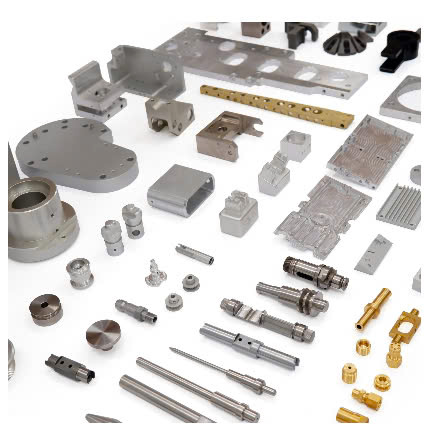
CONTACT
Contact