
LILAMA 10 Joint Stock Company
BLOG
Knowledge
Technology and Services
What technical requirements are needed for industrial oil tank manufacturing?
2026-05-27
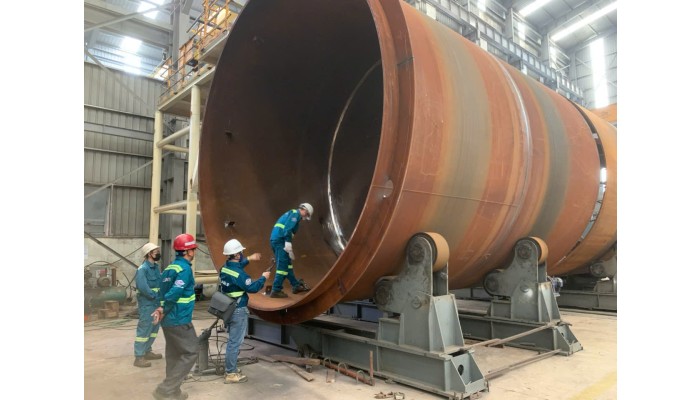
In the oil and gas, energy, chemical, and heavy industries, oil storage tanks are crucial equipment for storing raw materials, fuels, and industrial chemicals. Along with the development of oil refinery projects, LNG terminals, thermal power plants, hydrogen, and petrochemicals, the demand for large-scale industrial tank systems is continuously increasing.
However, manufacturing oil storage tanks is not merely about steel fabrication and structural welding. Modern industrial storage tanks require very high technical standards for tightness, structural durability, corrosion resistance, and long-term operational safety.
What are Industrial Oil Storage Tanks?
Oil storage tanks are steel tank systems used to store: crude oil, fuels, chemicals, industrial oils, liquefied gases, raw materials for power plants
These systems are commonly used in: oil refineries, fuel storage depots, thermal power plants, chemical plants, oil and gas ports, new energy plants
Depending on the intended use, tanks can be designed with different sizes and structures.
Common Types of Oil Storage Tanks Today
In current industry, common types of storage tanks include:
| Tank Type | Characteristics | Common Applications |
| Low-Pressure Storage Tank | A type of tank operating at near-atmospheric pressure, with a simple structure and large capacity | Stores diesel, FO oil, industrial water, common chemicals |
| Fixed-Roof Tank | The roof is welded fixedly to the tank body, providing good protection from the external environment | Oil and gas plants, fuel depots, chemical plants |
| Floating-Roof Tank | The tank roof can float up or down with the liquid level to reduce fuel evaporation | Stores gasoline, volatile solvents, fuels requiring high fire and explosion safety |
| Pressure Vessel | Designed to operate under high pressure or high temperature, requiring strict manufacturing standards | LPG, compressed gas, hot steam, high-pressure chemicals |
| Cryogenic Tank | Features a special insulation layer for storing media at extremely low temperatures | LNG, hydrogen, liquefied gas |
| Vertical Tank | Vertical design helps save installation space | Fuel storage depots, industrial plants |
| Horizontal Tank | Horizontal design, easy to transport and install | Fuel stations, industrial oil supply systems |
| Double-Wall Tank | Consists of two steel layers to enhance leak prevention and environmental protection | Fuel storage depots, hazardous chemicals |
| Modular Tank | Manufactured in modules and then assembled on-site | Large-scale projects, sites with difficult transportation |
| Large-Capacity Steel Tank | Uses thick steel and heavy-duty structures, requiring advanced welding technology and deformation control | Oil refineries, thermal power plants, oil and gas ports, energy projects |
What Technical Requirements Does Oil Storage Tank Manufacturing Entail?
1. Fabrication of Thick Steel and Large-Sized Structures
Industrial storage tanks typically use: thick steel plates, large-diameter structures, great heights, and heavy loads.
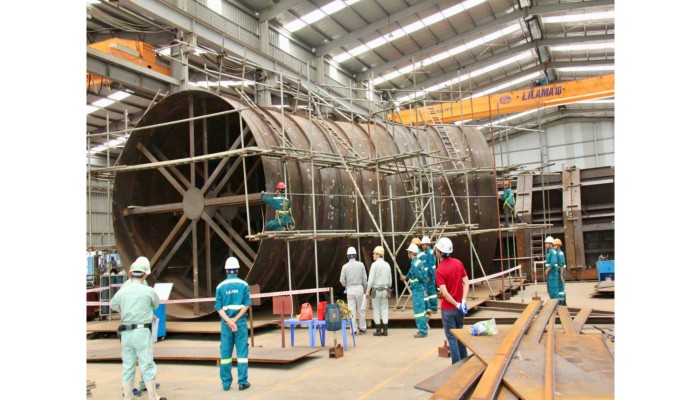
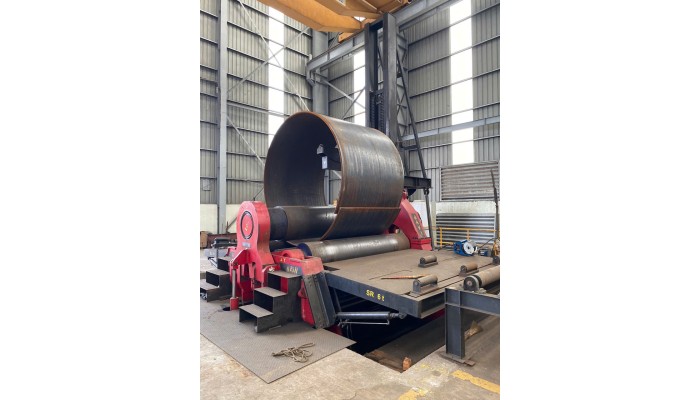
Therefore, they require: high-capacity steel rolling machines, high-load crane systems, precision steel fabrication technology, and control over roundness and deformation.
2. Welding Quality is the Most Critical Factor
In oil storage tanks, welds directly affect: tightness, load-bearing capacity, equipment lifespan
operational safety.
If welding quality is not guaranteed, it can lead to: fuel leakage, structural cracks, rapid corrosion, long-term operational damage
Therefore, large projects often require: strict welding procedures, non-destructive testing, control of welding temperature, control of post-weld deformation
3. Residual Stress and Post-Weld Heat Treatment
When welding thick steel, large temperature changes will create: residual stress, structural deformation, increased hardness in the heat-affected zone, risk of weld cracking
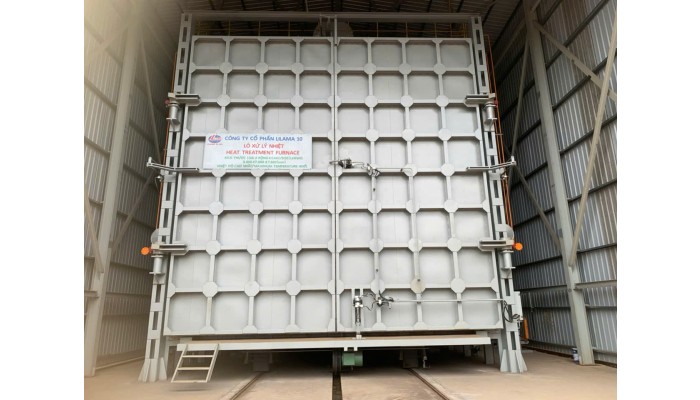
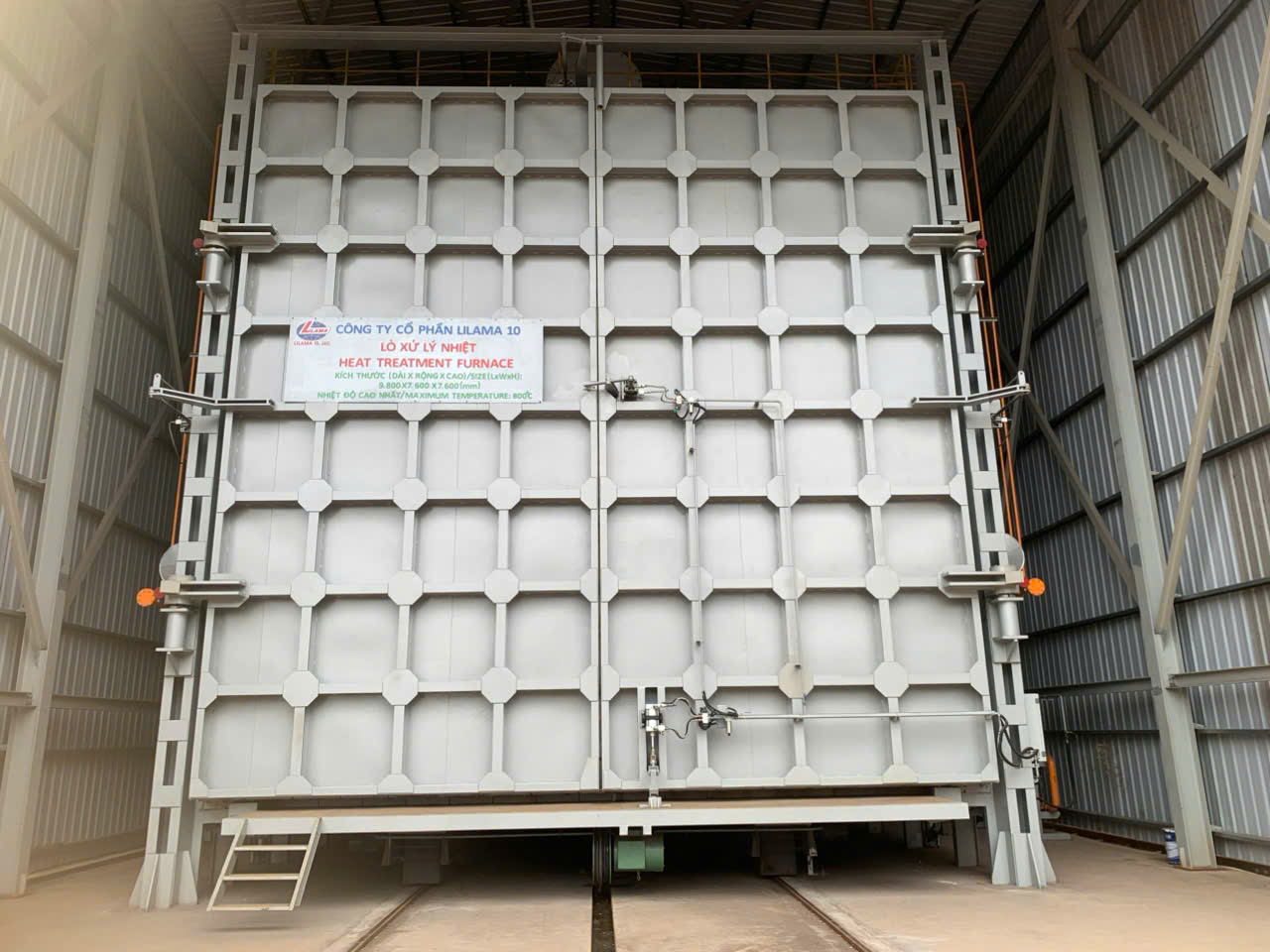
To mitigate these risks, many projects apply Post-Weld Heat Treatment (PWHT) technology. This process helps to: reduce residual stress, stabilize the metal microstructure, reduce cracking risk, increase structural durability, and extend equipment lifespan
Especially for pressure vessels or thick steel structures, post-weld heat treatment is almost a mandatory requirement.
4. Quality Inspection of Industrial Storage Tanks
As these are long-operating pieces of equipment requiring high safety, the quality inspection process is carried out very strictly.
Common inspection methods include:
weld ultrasonic testing
weld X-ray inspection
magnetic particle inspection
leak tightness testing
pressure testing
dimensional and roundness inspection
5. Current Manufacturing Standards for Industrial Tanks and Vessels
Depending on the tank type and operating environment, projects often apply important standards related to: structural design, welding quality, equipment inspection, operational safety: API 650, API 620, ASME, EN 1090, ISO 3834
Therefore, businesses in the heavy industrial large-structure fabrication sector today not only need the capacity for large-scale structural fabrication but also must meet stringent international standards for quality and safety for modern energy projects.
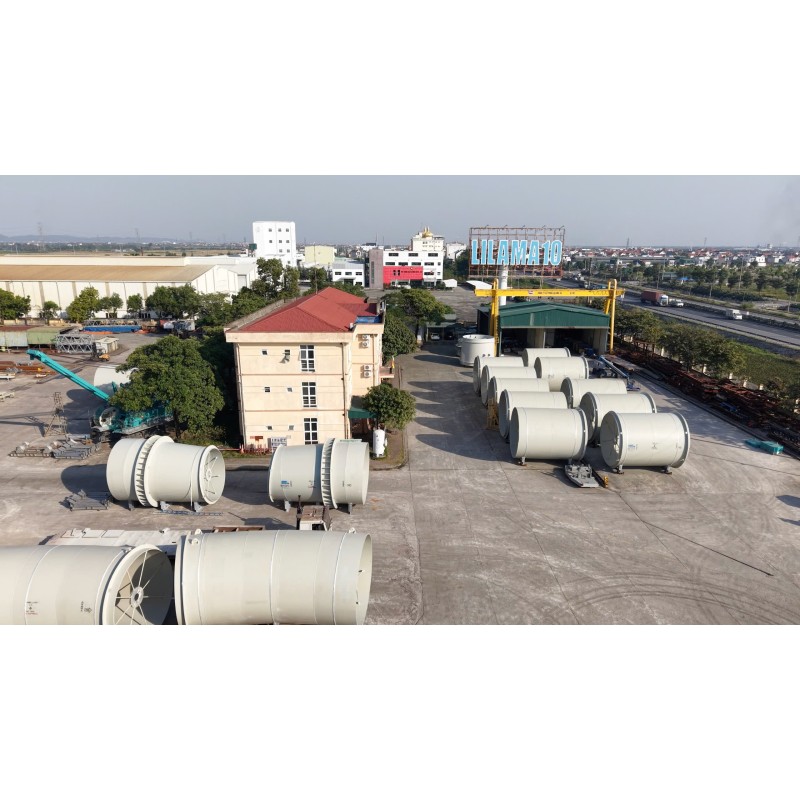
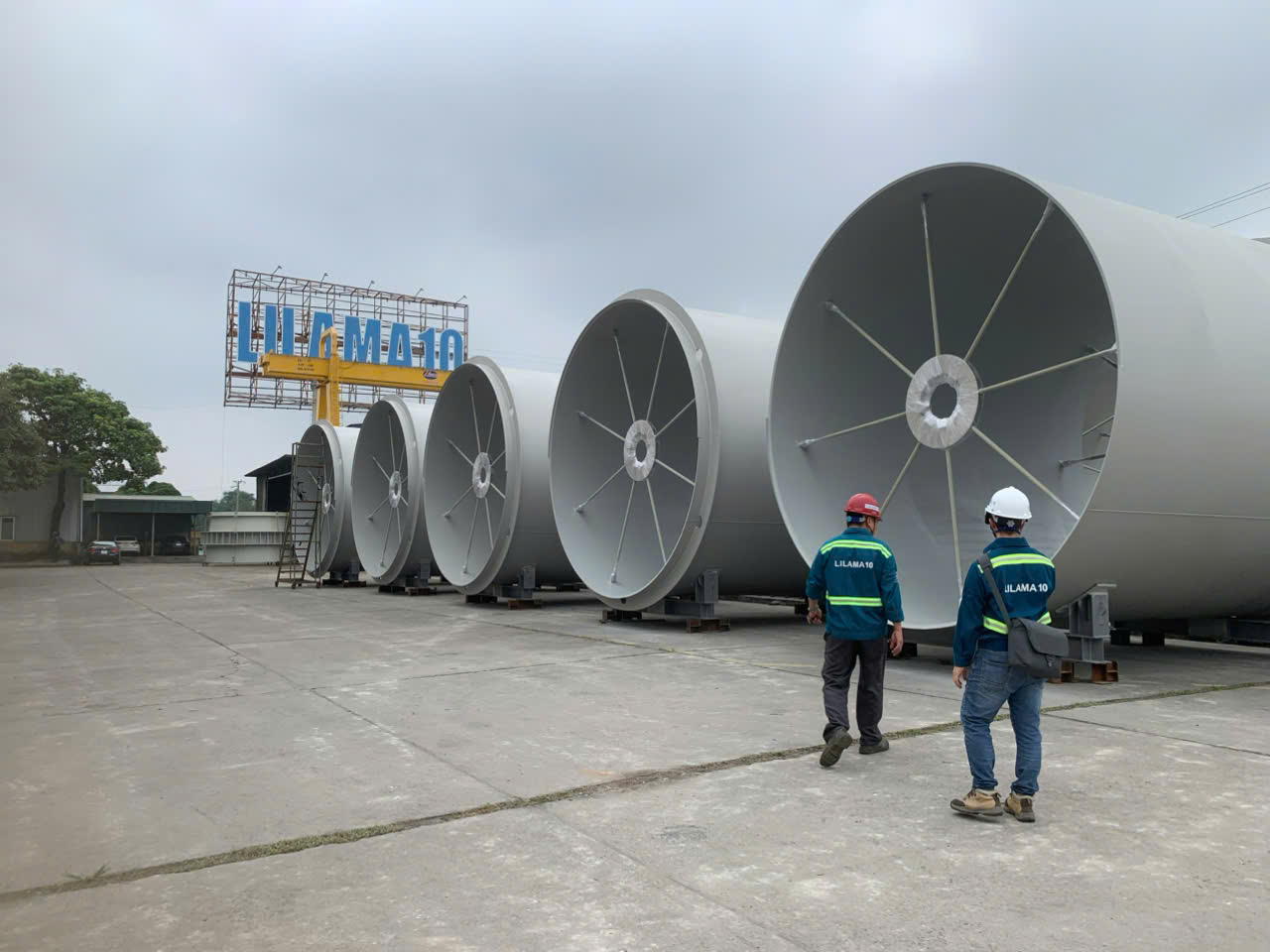
With over 30 years of experience in the heavy mechanical engineering sector, LILAMA 10 is one of Vietnam's leading enterprises in fabricating and manufacturing steel structures, tanks, and pressure equipment for large-scale energy, oil and gas, and industrial projects. The company holds full ASME "S", "U", and "NB" certifications, allowing it to manufacture pressure equipment according to US standards, meeting the stringent technical requirements of international thermal power, petrochemical, and hydropower projects.
LILAMA 10 currently operates a large-scale factory system with a manufacturing capacity of 10,000 tons of equipment and 30,000 tons of steel structures per year, along with modern machinery such as 4-roll plate bending machines, CNC – Laser – Plasma cutting machines, automatic welding technology, and high-capacity post-weld heat treatment (PWHT) furnaces. The entire process, from thick steel fabrication, structural welding, heat treatment, non-destructive testing, to final painting, is strictly controlled according to international standards to ensure the stability and long-term durability of pressure equipment and heavy industrial structures.
Company Information
Main 3 Products
Construction Installation / Office Rental
Phone Number
LILAMA10 Joint Stock Company is a leading enterprise in manufacturing, installation, and technical services for civil, industrial, transportation, and infrastructure projects.To meet the demands and c ...
PICKUP
Technology & Services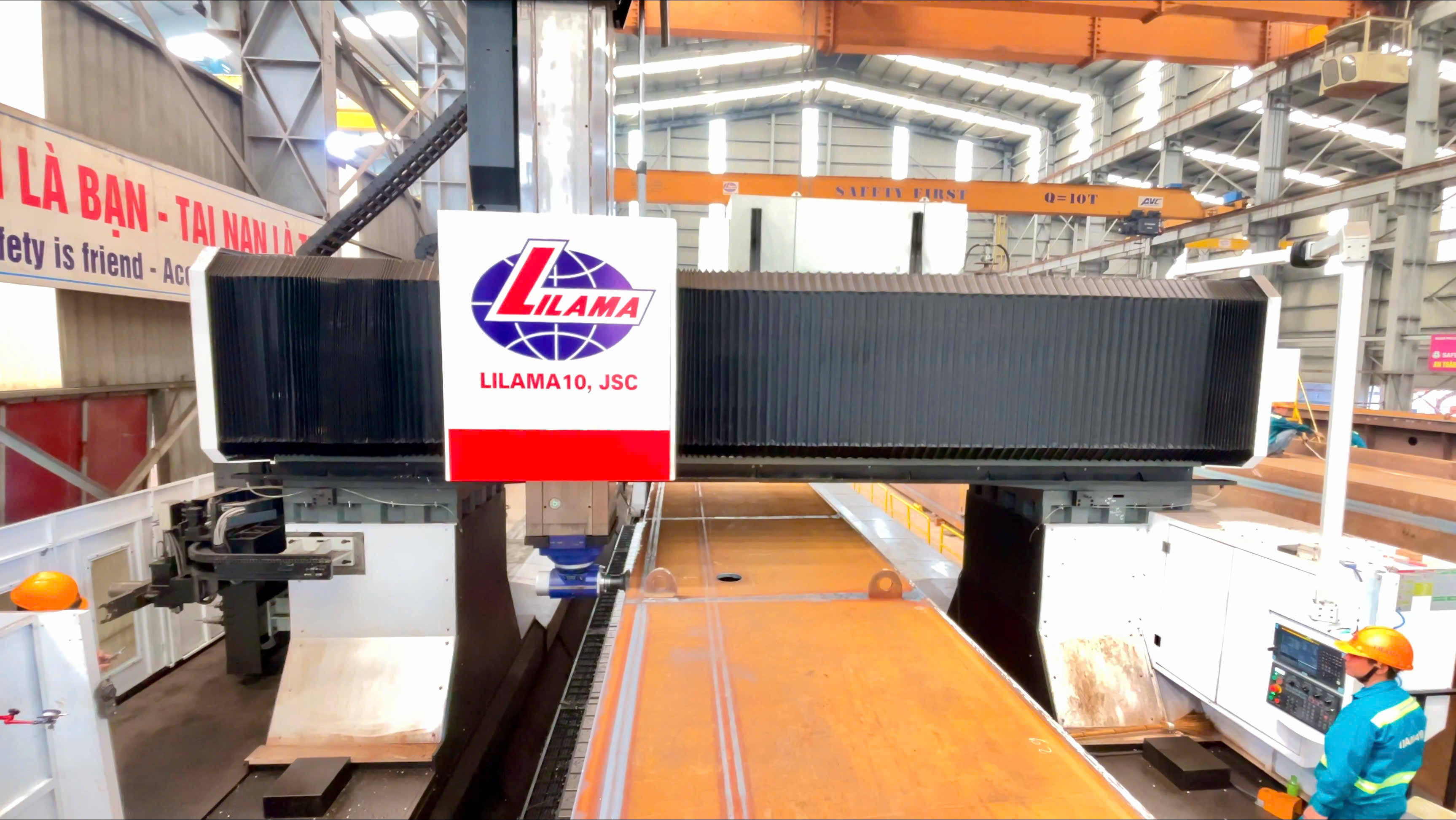
CONTACT
Contact