
BLOG
Knowledge
Technology and Services
What are the microstructural defects in cast iron? Causes and solutions
2026-09-09
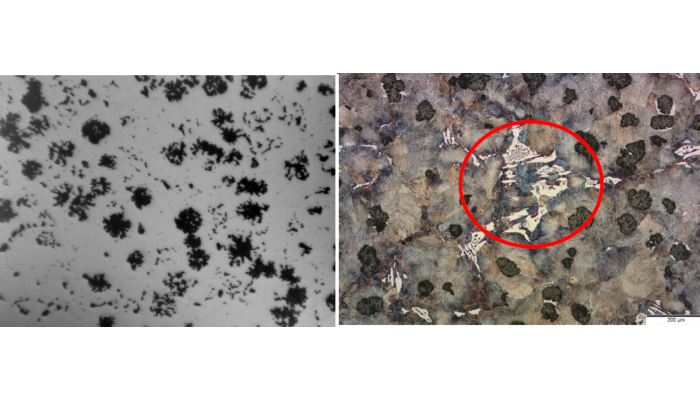
In green sand cast iron, microstructure deviation is a defect that can directly affect the mechanical properties, hardness, and machinability of the product. This error occurs when the metal microstructure of the casting does not meet the requirements for morphology, size, quantity, or distribution. Causes are often related to uneven cooling rates, chemical composition, crystallization process, or inappropriate modification or spheroidization.
What is Microstructure Deviation in Cast Iron?
Microstructure deviation is a phenomenon where the internal metal microstructure of a casting does not meet the required state, such as uneven size and distribution of microstructural components at different locations within the same part. For cast iron products, the metal microstructure directly affects properties such as:
- hardness;
- strength;
- load-bearing capacity;
- machinability;
- product stability during use.
In areas where the casting cools rapidly, the microstructure can become harder than required. This can lead to difficulties in subsequent turning, milling, drilling, or other machining operations. Conversely, areas with slower cooling rates will form different microstructures. If this difference is too large, the casting may exhibit uneven microstructure and mechanical properties. For FC gray cast iron and FCD ductile cast iron, the quality of the casting depends not only on the metal matrix microstructure but also on the morphology, size, and distribution of graphite. These factors directly affect the strength, hardness, and machinability of the product.
Common Manifestations of Casting Microstructure Deviation
Microstructure deviation is often not easily detectable by surface observation alone. However, during inspection or machining, some signs may indicate an uneven casting microstructure.
Uneven Hardness Between Locations
Thin-walled sections, corners, or areas with rapid heat dissipation tend to cool faster. When the cooling rate is too high, the microstructure in that area can change in a way that increases hardness. In some cases, undesirable hard microstructures may appear, making the casting more difficult to machine. Common manifestations include:
- rapid tool wear;
- increased cutting force;
- difficulty drilling or turning in certain areas;
- unstable surface quality after machining.
Uneven Metal Microstructure Between Regions
A casting often has multiple regions with varying wall thicknesses. Therefore, the heat dissipation rate and solidification rate are not entirely uniform. If the cooling process is not properly controlled, different microstructures can form in various regions of the same product, leading to differences in hardness and mechanical properties.
Chemical Segregation and Microstructural Segregation
During the solidification of liquid metal, elements are not always perfectly uniformly distributed. If crystallization conditions are unsuitable, the following can occur:Chemical segregation: the chemical composition in some areas differs from the rest.Microstructural segregation: the metal microstructure forms non-uniformly between locations. These two phenomena can cause the actual mechanical properties of the casting to deviate from design requirements.
Why Do Green Sand Cast Iron Products Suffer from Microstructure Deviation?
Microstructure deviation usually does not stem from a single cause but is the result of multiple factors in the process of melting – liquid metal treatment – mold making – pouring – solidification and cooling.
Uneven Cooling Rate
This is one of the most significant causes. The cooling rate of a casting is influenced by many factors such as:
- casting wall thickness;
- part geometry;
- mold and core structure;
- metal pouring temperature;
- mold heat transfer capability;
- time the casting is held in the mold.
For example, a part with both thick and thin sections will have different cooling rates. It can be simply imagined:Thin wall → rapid heat dissipation → rapid cooling → microstructure tends to be harderThick wall → slow heat dissipation → slow cooling → different microstructure formsIf the difference is too large, the mechanical properties between different areas of the product may also be uneven.
Inappropriate Chemical Composition of Cast Iron
Chemical composition directly affects the crystallization process and microstructure formation of cast iron. If the composition is not suitable for the material grade or actual casting conditions, the formation of graphite and the metal matrix microstructure may not occur as desired. Therefore, when addressing microstructure deviation, the chemical composition needs to be considered in relation to:
- cast iron grade;
- casting wall thickness;
- pouring temperature;
- cooling rate;
- product mechanical property requirements.
Adjusting the chemical composition is not merely about “cooling fast or slow,” but about controlling the crystallization process and the sensitivity of cast iron to actual cooling conditions.
Harmful Elements Affecting Crystallization Process
Some elements or impurities can adversely affect the microstructure formation process of cast iron. Depending on the material grade, they can:
- hinder graphitization;
- affect graphite morphology;
- alter the matrix microstructure;
- increase the likelihood of forming undesirable hard microstructures;
- cause fluctuations in product mechanical properties.
Therefore, the composition of the liquid metal needs to be controlled within limits appropriate to the material standard and technical requirements of each product.
Inappropriate Modification Process
In cast iron production, modification (inoculation) is a crucial step to control the crystallization process and graphite formation. The effectiveness of modification can be influenced by:
- type of inoculant;
- amount of inoculant used;
- addition method;
- liquid metal temperature;
- treatment time;
- time from modification to pouring.
If these parameters are unstable, the microstructure of the casting can also vary between production batches. The effectiveness of modification does not remain stable for a long time but tends to decrease after treatment. If the liquid iron is held for too long before pouring, the graphitization potential may decrease, altering the microstructure and hardness of the casting. Therefore, the time from modification to pouring needs to be strictly controlled.
Unstable Spheroidization Process for FCD Ductile Iron
For FCD ductile cast iron, in addition to controlling chemical composition and cooling rate, the spheroidization process is a particularly important factor. The type and amount of spheroidizing agent, treatment temperature, metal composition before treatment, and the time interval from spheroidization to pouring can all affect:
- graphite shape;
- degree of spheroidization;
- number of graphite nodules;
- graphite distribution;
- final mechanical properties of the casting.
Therefore, when ductile iron is found to have an unsatisfactory microstructure, the entire process of melting, spheroidization, modification, and pouring needs to be checked simultaneously.
Unstable Pouring Conditions
Pouring temperature and operation are also directly related to the solidification process of the casting. Fluctuations in:
- pouring temperature;
- pouring time;
- liquid metal holding time;
- time after modification or spheroidization;
- amount of metal poured;
can all affect crystallization conditions. Therefore, to limit microstructure deviation, the entire process needs to be controlled under stable technological conditions instead of adjusting only a single parameter.
How Does Microstructure Deviation Affect Casting Quality?
Uneven Product Mechanical Properties
The metal microstructure directly determines many material properties. When the microstructure differs between regions, hardness, strength, or load-bearing capacity can also change. This is particularly noteworthy for load-bearing components or those used in automotive, machinery, and industrial equipment.
Increased Difficulty in Machining
One of the most noticeable problems is that areas of the casting with excessively high hardness cause machining difficulties. This can lead to:
- increased tool wear;
- reduced tool life;
- necessity to adjust cutting parameters;
- extended machining time;
- increased production costs;
- difficulty in maintaining consistent quality during mass production.
For cast parts that subsequently undergo multiple CNC operations, this issue can significantly impact the productivity of the entire production line.
Increased Risk of Products Not Meeting Quality Requirements
Microstructure deviation can also cause products to fail to meet required specifications regarding:
- hardness;
- mechanical properties;
- metallographic microstructure;
- material requirements;
- customer-specific standards.
In mass production, microstructural variations between casting batches can further reduce product quality consistency.
How to Rectify Microstructure Deviation in Green Sand Cast Iron
To limit microstructure deviation, it is necessary to simultaneously control chemical composition, solidification-cooling conditions, modification/spheroidization processes, and pouring conditions. Adjusting only a single parameter is often insufficient to thoroughly address the root cause.
Controlling Solidification and Cooling Rates
First, the relationship between product geometry and cooling conditions needs to be considered. Factors to control include:
- wall thickness of each area;
- location of heat concentration zones;
- mold structure;
- core structure;
- pouring temperature;
- cooling time in the mold.
For products with significant wall thickness variations, solidification conditions must be considered right from the casting process design stage.
Adjusting Chemical Composition Appropriately
The chemical composition needs to be selected to match:material grade + product geometry + wall thickness + casting conditions + mechanical property requirements.The goal is to create conditions for stable crystallization and the formation of a microstructure that meets product requirements.
Limiting Elements Adversely Affecting Crystallization
Elements that can negatively impact microstructure formation need to be controlled within appropriate limits. These limits should not be applied universally to all products but must be based on:
- type of cast iron;
- material standard;
- mechanical property requirements;
- customer's metallographic microstructure requirements.
Adjusting the Modification Process
When the cause is related to the modification process, it is necessary to re-evaluate:
- type of inoculant;
- amount used;
- treatment method;
- treatment temperature;
- addition time;
- time from modification to pouring.
Maintaining stable conditions helps reduce microstructural variations between production batches.
Adjusting the Spheroidization Process for FCD Ductile Iron
For ductile iron, the spheroidization process needs to be separately controlled to ensure the graphite microstructure meets requirements. Adjustments must be based simultaneously on:
- liquid metal composition;
- spheroidizing agent;
- treatment amount;
- temperature;
- time;
- pouring conditions after treatment.
Stabilizing Operations and Pouring Conditions
The production process needs to maintain a stable sequence of parameters:Metal temperature → liquid metal treatment → holding time → pouring → solidification → coolingStandardizing operations helps limit variations between batches and is a crucial factor when producing castings in large quantities.
How to Detect Microstructure Deviation in Castings?
Since microstructure deviation is internal to the material, evaluation should not rely solely on the product's shape or surface. Some inspection methods that can be used include:
| Inspection Method | Purpose |
| Metallographic examination | Observe matrix microstructure, graphite morphology, and distribution |
| Hardness testing | Detect hardness differences between areas |
| Chemical composition analysis | Identify factors related to material composition |
| Tensile testing and mechanical property inspection | Evaluate the strength and mechanical properties of the casting |
| Mold sand inspection | Assess the stability of green sand mold making conditions |
Controlling Microstructure Deviation Must Start from the Entire Casting Process
Microstructure deviation should not be viewed merely as a "cooling defect". The final microstructure quality is the result of the entire technological chain:Raw materials → Melting → Composition control → Modification/Spheroidization → Mold making → Pouring → Solidification and cooling → Microstructure & mechanical property inspectionTherefore, to limit microstructure deviation in mass production, businesses need to implement comprehensive control from raw materials to post-production casting inspection. Especially with green sand cast iron, the stability of mold sand, liquid metal, pouring conditions, and cooling time can all affect the ability to maintain a uniform microstructure among products.
FC/FCD Cast Iron Green Sand Casting Capability at DISOCO
DISOCO – Diesel Song Cong Co., Ltd. has the capability to produce FC and FCD cast iron products using an automatic SINTO green sand molding system with a capacity of 10,000 tons/year, a molding speed of 30 seconds/mold, and a typical product range of 1–100 kg; it also has an automatic/semi-automatic casting line with a capacity of 14,000 tons/year. The company also possesses mold design and simulation capabilities using CATIA/SOLID Cast and inspection systems such as metallographic microscopes, spectrometers, hardness testers, tensile testing machines, and sand analysis equipment, supporting quality control from raw materials to finished products.
If your business is developing cast iron components or encountering issues with metal microstructure, hardness, mechanical properties, or machinability of castings, you can send drawings, material grades, product weight, and technical requirements for DISOCO to consider suitable production solutions.
Company Information
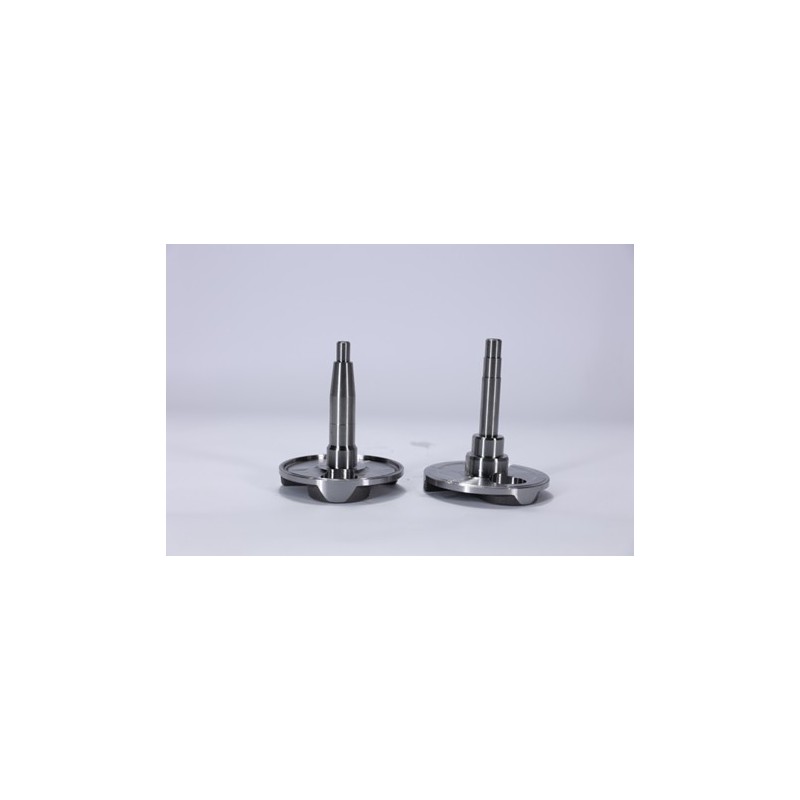
Green sand casting components. / Burnt sample casting components. / Hot forging components
Our company specializes in casting, forging, stamping, heat treatment, mainly manufacturing engine parts. Currently, the company is conducting transactions with many Japanese enterprises, as well as p ...
PICKUP
Technology & Services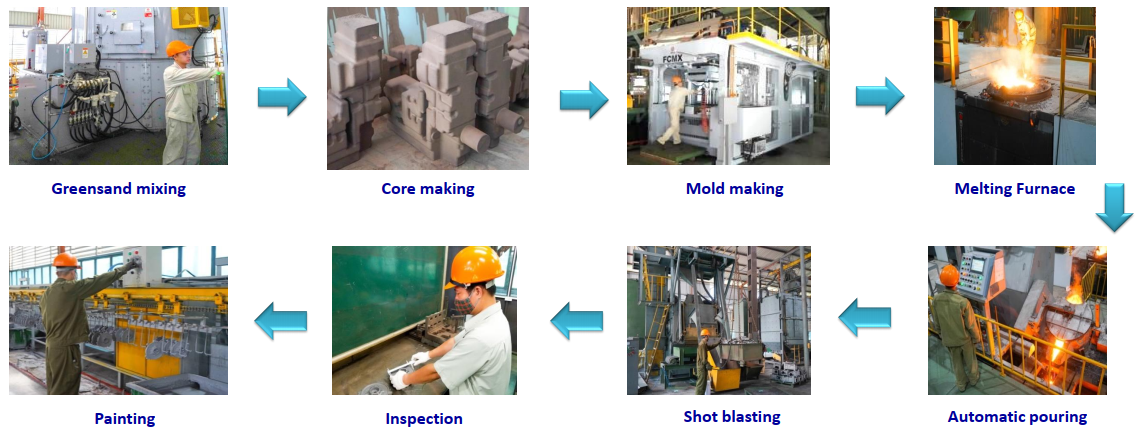
CONTACT
Contact