
SONG CONG DIESEL ONE MEMBER COMPANY LIMITED
BLOG
Knowledge
Technology and Services
Sand burn-on defect in sand casting: Causes, effects, and solutions
2026-06-12
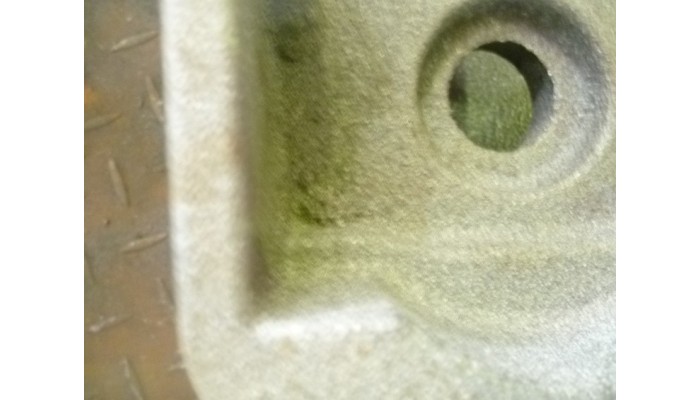
In the process of cast iron production using green sand casting technology, the surface quality of the casting is one of the important criteria for evaluating product quality. Besides defects such as gas porosity, mold shift, or burrs, sand burn is a fairly common surface defect, especially for large castings or those requiring high surface quality.
Sand burn defects not only reduce the aesthetic appeal of the product but also increase cleaning and machining costs, and can affect the dimensional accuracy of the casting.
What is Sand Burn in Sand Casting?
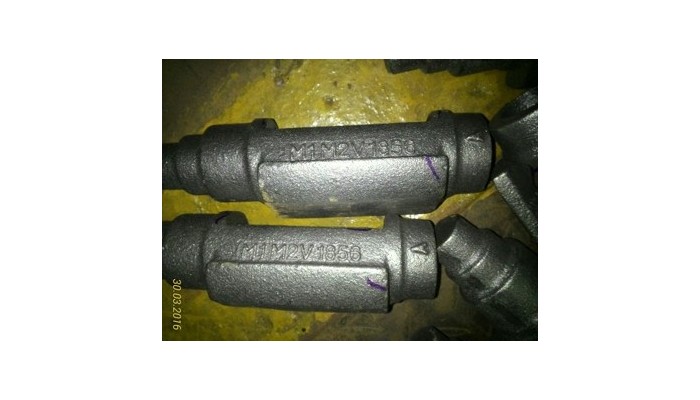
Sand burn is a phenomenon where mold sand or core sand is affected by the high temperature of molten metal, causing sand grains and binders in the mold to burn, decompose, or adhere firmly to the casting surface.
This results in the appearance of burnt sand layers, hard adhering spots, or rough surface patches on the casting surface after shakeout, which are difficult to clean by conventional methods.
Sand burn defects are typically identified by the following characteristics:
Abnormally rough casting surface.
Sand firmly adhering to the product surface.
Appearance of dark burnt patches on the casting.
Surface not meeting appearance or smoothness requirements.
Causes of Sand Burn Defects
Poor Thermal Stability of Mold Sand Mixture
This is the most common cause.
If the mold sand contains many impurities or a type of sand with low heat resistance is used, under the effect of high-temperature molten metal, the mold surface will be damaged and adhere to the casting.
Some influencing factors include:
Excessively high fine dust content.
Regenerated sand not properly treated.
Inappropriate sand grain composition.
Low heat resistance of the sand.
Inadequate Mold Permeability
During pouring, the amount of gas generated from the mold sand and binder needs to escape.
If permeability is low, trapped gas in the mold will increase the reaction between the molten metal and the mold material, creating conditions for sand burn to occur.
This phenomenon often appears in areas with thick sections or poor gas escape.
Excessively High Pouring Temperature
When the molten iron temperature exceeds the necessary level, the amount of heat transferred to the mold increases sharply, reducing the heat resistance of the sand layer in direct contact with the metal.
The higher the temperature, the greater the risk of sand burn.
This is a common cause for FCD ductile iron castings or large-mass products.
Improper Gating System Design
If the molten metal stream directly impacts the mold wall at high speed, the surface sand layer can be eroded or locally overheated. Areas near the gate often have a higher risk of sand burn than other areas because this is where the molten metal first contacts the sand mold. The metal temperature in this area is still very high, the flow rate is large, and the metal stream pressure is strong, increasing the likelihood of damaging the mold coating layer and causing localized burning or melting of the surface sand layer. Therefore, sand burn often concentrates around the gate, runners, or areas where the flow direction changes abruptly.
Inadequate Mold Coating
Mold coating plays the role of creating an insulating layer between the molten metal and the mold sand.
If the coating is: Too thin; Unevenly applied; Incompatible with the casting material, the mold's protective capability is significantly reduced, increasing the risk of sand burn on the casting surface.
Inappropriate Core Sand Composition
For products using sand cores, an excessively high resin or binder content can generate a lot of gas and create a burnt layer adhering to the surface in contact with the molten metal.
Impact of Sand Burn Defects
Sand burn primarily affects surface quality but in many cases also leads to issues with productivity and production costs.
Some common impacts include:
Increased casting cleaning time.
Increased costs for shot blasting, grinding, or machining.
Reduced product aesthetic quality.
Affects coating or finishing paint.
Can cause dimensional inaccuracies on precision machined surfaces.
For products such as machine bodies, gearboxes, machine bases, or industrial equipment housings, sand burn can reduce commercial value and product quality.
Solutions to Prevent Sand Burn in Sand Casting
Use High-Quality Sand Mixture
Select sand with good heat resistance.
Control appropriate sand grain composition.
Limit impurities in regenerated sand.
Ensure the strength and flowability of the sand mixture.
Control Core Sand and Binders
Use appropriate resin content.
Control core sand quality before assembly.
Reduce gas generation during pouring.
Control Pouring Temperature
Maintain pouring temperature according to technological standards.
Avoid pouring at temperatures higher than necessary.
Monitor molten metal temperature with specialized measuring equipment.
Optimize Gating System
Adjust the flow direction of molten metal.
Limit direct impact of molten metal on mold walls.
Design a stable and uniform gating system.
Improve Mold Coating Quality
Select appropriate mold coating type.
Ensure uniform coating thickness.
Control the drying process before pouring.
Improve Gas Permeability
Add vents in areas with poor gas escape.
Control the permeability of the mold and core.
Limit oxidizing environment within the mold cavity.
Sand burn is one of the common surface defects in green sand casting, occurring when mold material or core sand cannot withstand the thermal impact of molten metal. This defect reduces the surface quality of the casting, increases cleaning costs, and affects production efficiency.
Selecting an appropriate sand mixture, controlling pouring temperature, optimizing the gating system, and ensuring mold coating quality are important solutions to limit sand burn, improve casting quality, and reduce scrap rates.
DISOCO's Green Sand Casting Capabilities
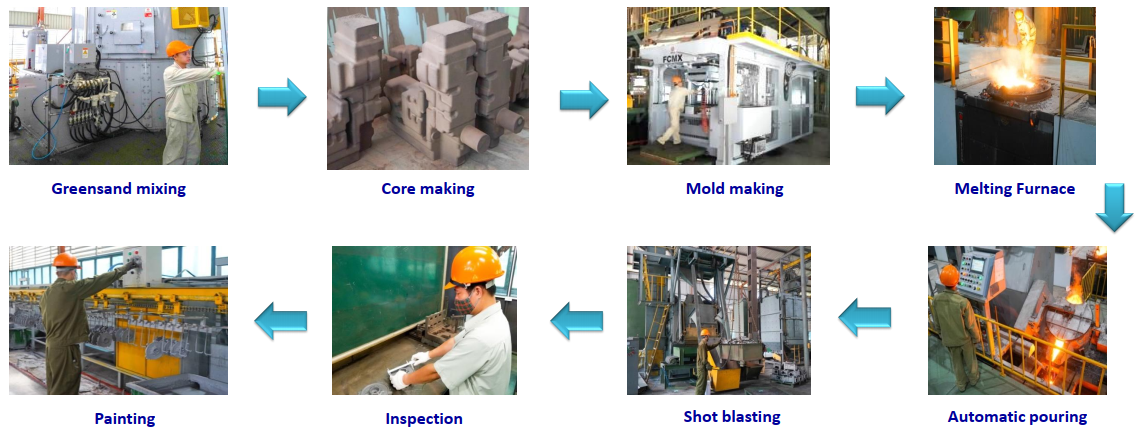
With an automated green sand casting system and quality control processes adhering to Japanese standards, DISOCO continuously improves casting surface quality, minimizes defects such as sand burn, gas porosity, or mold shift, thereby delivering stable and reliable FC/FCD cast iron products to domestic and international customers.
Company Information
Main 3 Products
Green sand casting components. / Burnt sample casting components. / Hot forging components
Phone Number
Our company specializes in casting, forging, stamping, heat treatment, mainly manufacturing engine parts. Currently, the company is conducting transactions with many Japanese enterprises, as well as p ...
PICKUP
Technology & Services
CONTACT
Contact