BLOG
Knowledge
Technology and Services
CNC Machining for the Aerospace Industry in Vietnam|CNCTech's Milling, Turning, and Multi-axis Machining Capabilities
2026-09-28
The aerospace industry places high demands on precision machining: from the ability to process engineering materials such as aluminum, titanium, and Inconel to controlling tolerances, surface quality, and stability between production batches. For parts with complex geometries, the capabilities of CNC milling, CNC turning, and multi-axis machining also directly affect the number of setups and the ability to control errors during the manufacturing process.
In Vietnam, CNCTech Group develops precision machining capabilities targeting high-value industries, including aerospace. The machining system includes CNC milling, horizontal machining centers, CNC turning, mill-turn, electrical discharge machining (EDM), wire cutting, along with a metrology equipment system. The list of machinable materials includes aluminum, titanium, stainless steel, alloy steel, Inconel, and various engineering plastics.
Requirements for CNC Machining in the Aerospace Industry
Parts used in the aerospace sector can have multiple surfaces, pockets, holes, and features that require machining from various directions. For such parts, the fixturing method and cutting tool accessibility directly impact the accuracy between machined features.
Material is also a critical factor. Aluminum has good machinability and is suitable for many weight-optimized applications, while titanium and nickel-based alloys like Inconel place higher demands on cutting tools and machining parameters. In addition to the ability to form parts, manufacturers need corresponding metrology capabilities to verify dimensions, hardness, surface roughness, and technical requirements according to the drawing.
Therefore, when evaluating a CNC machining supplier for the aerospace industry, capabilities must be assessed across the entire chain, from machining equipment, processable materials, metrology technology, to the quality management system.
CNCTech Group's Precision CNC Machining Capabilities
CNCTech develops a precision machining system with various technology groups including CNC milling, CNC turning, horizontal machining centers, mill-turn, electrical discharge machining, and wire cutting. The diversity in machine types and configurations allows CNCTech to select equipment based on the size, shape, material, tolerance, and production volume of each project, rather than applying a single machining approach for all parts.
CNC Milling – from precision parts to large-sized parts
CNC milling is one of the core capabilities within CNCTech's precision machining system. Machining ranges include:
- Vertical Milling: maximum 4,200 × 2,700 × 1,000 mm.
- Horizontal Milling: maximum 800 × 750 × 850 mm.
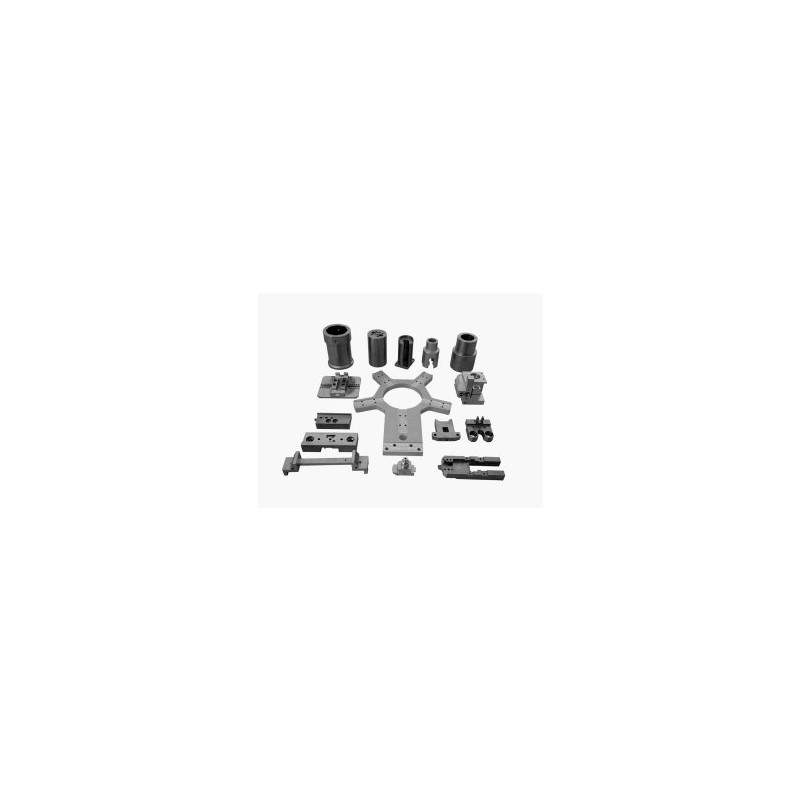
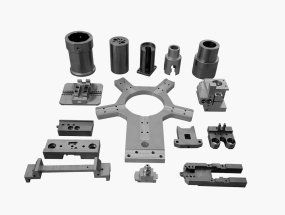
The milling machine system at CNCTech Thang Long features various travel ranges and spindle speeds. Some typical equipment includes Doosan DNM 6700 XL with a machining range of 2,100 × 670 × 625 mm; Makino PS105 with a range of 1,250 × 700 × 500 mm and a spindle speed of 20,000 rpm; Taikan T-500S with a spindle speed up to 24,000 rpm. The combination of machines with large machining ranges and high-speed machining centers allows CNCTech to select equipment suitable for the characteristics of each product. For aerospace projects, CNCTech has the capability to produce part groups such as brackets, housings, component bodies, structural parts, and precision mechanical components, depending on the specific drawing, material, tolerance, and inspection requirements.
Horizontal Machining Centers – multi-sided part machining
In addition to the vertical milling machine system, CNCTech Thang Long is equipped with horizontal machining centers such as Makino A61NX, Makino A51NX, and DMG Mori NH5000DCG. These machines have machining ranges from 560 × 640 × 640 mm to 730 × 730 × 850 mm, with spindle speeds up to 14,000 rpm. Horizontal machining centers are suitable for block-shaped or housing-type parts with multiple surfaces requiring processing. With appropriate fixturing, the machine can access multiple faces of the part, thereby reducing the number of machine transfers or re-fixturing.
CNC Turning – machining of rotational parts
For products with rotational shapes, CNCTech has a CNC turning machine system with various size ranges. The maximum turning dimension at CNCTech reaches diameter 481 × length 1,275 mm. The list of machines at CNCTech Thang Long includes Doosan LYNX 2100LA, Doosan LYNX 220L, Doosan LYNX 220Y, Hwachon Cutex 160B, and Citizen Cincom A20VII. Owning multiple turning machine configurations allows the factory to allocate equipment according to part size, shape, and production volume requirements of each project.
Mill-Turn – reducing process steps for complex-shaped parts
Some parts not only require turning of rotational surfaces but also have holes, grooves, flat surfaces, or features that need milling. With the DMG Mori NLX2500, CNCTech Thang Long can combine turning and milling operations on the same machine. The machine accommodates parts with diameters up to 366 mm and lengths up to 1,255 mm, suitable for products that have both rotational surfaces and features requiring milling. Depending on the specific parts, combining milling and turning on a single machine platform can reduce the number of machine transfers and re-fixturing. This provides the manufacturer with better conditions to control the geometric relationship between turned and milled features on the same part.
CNCTech's Multi-axis CNC Machining Capabilities
Multi-axis machining is particularly useful for parts with multiple surfaces or features that need to be machined from different directions. This technology increases cutting tool accessibility and can reduce the number of setups for complex-shaped parts. CNCTech's multi-axis machining capabilities are developed at various levels, from large-sized 3-axis milling to 4-axis and 5-axis milling. The current system includes 20 5-axis milling centers, 10 4-axis milling centers, and 15 large-sized 3-axis milling machines, providing a foundation for processing complex-shaped parts and those requiring machining on multiple surfaces. Additionally, the precision machining system also features horizontal machining centers such as Makino A61NX, Makino A51NX, DMG Mori NH5000DCG, and the DMG Mori NLX2500 mill-turn machine. For aerospace projects, the value of multi-axis machining is not merely in the number of machine axes. More importantly, it lies in the ability to select appropriate equipment, fixtures, and machining strategies for the shape of each part to minimize unnecessary operations and control accuracy. Therefore, the choice of using 3-axis, 4-axis, 5-axis machines, horizontal machining centers, or mill-turn machines must be determined based on the drawing and technical requirements of each product.
Aluminum, Titanium, and Inconel Machining Capabilities
Material is one of the decisive factors in selecting equipment, cutting tools, and machining strategies for precision mechanical projects. CNCTech handles a range of machinable materials including aluminum, titanium, brass, stainless steel, steel, various alloys, and Inconel. In addition to metals, the system can also process various engineering plastics such as PEEK, PTFE, POM, and PA.
CNC Aluminum Machining
Aluminum is a group of materials with good machinability and is widely used in applications requiring weight optimization. For aluminum machining, in addition to the machine's working range, spindle speed is one of the parameters to consider when establishing cutting conditions. The CNCTech Thang Long system has machining centers with spindle speeds ranging from 8,000 to 24,000 rpm. Among them, Taikan T-500S, Doosan DNM T4000, and Robodrill Alpha-D21LiB achieve spindle speeds of 24,000 rpm. The diversity in machine configurations facilitates the selection of appropriate equipment for aluminum parts with different sizes, shapes, and production volume requirements.
CNC Titanium Machining
Titanium is one of the materials CNCTech is capable of machining within its precision mechanical system. For this group of materials, the selection of a production method must simultaneously consider the material grade, part geometry, tolerance, surface requirements, and production volume.
At CNCTech, the machining process begins with reviewing drawings and agreeing on technical requirements with the customer, followed by developing the CNC program and appropriate machining strategy. Depending on the specific part, the process may include roughing, heat treatment, and precision machining before proceeding to inspection.
This approach is particularly suitable for titanium parts, as machinability not only depends on the material but is also greatly influenced by the product's shape, tolerance levels, and quality requirements of each project.
Machining Inconel and difficult-to-machine alloys
In addition to aluminum and titanium, CNCTech also has experience machining heat-resistant alloys such as Inconel. Within the CNCTech Group ecosystem, materials like Inconel 718, Incoloy 925, Incoloy 825, and K-Monel 500 have been practically machined in the oil and gas sector, along with various alloy steels and stainless steels. This foundation demonstrates CNCTech's experience in processing difficult-to-machine materials, providing a basis for addressing complex material requirements in high-tech industries.
Tolerance Control Capabilities in Precision CNC Machining
For precision machining, the ability to produce parts must be accompanied by the ability to maintain and verify dimensions after machining. CNCTech meets standard tolerance levels from 0.02 to 0.10 mm. For some applications, machining capabilities can achieve smaller tolerances; as low as 0.002 to 0.005 mm, depending on the specific case.
These parameters do not imply that every dimension on every product can be held to the same tolerance level. Actual capability depends on part size, material, geometry, fixturing method, machine configuration, and inspection method.
For aerospace parts with multiple critical dimensions, analyzing tolerances for each feature right from the drawing review stage is the basis for determining appropriate machining and inspection strategies.
Metrology System for Precision Machining
A high-precision CNC machine system requires corresponding metrology capabilities. At CNCTech Thang Long, the inspection equipment system includes CMM coordinate measuring machines, optical measurement systems, hardness testers, and surface roughness testers. This includes devices such as:
- Mitutoyo Crysta-ApexS, measuring range 700 × 700 × 600 mm;
- Mitutoyo Crysta Plus M544, measuring range 500 × 400 × 400 mm;
- Hexagon Croma 686, measuring range 600 × 800 × 600 mm;
- Renishaw Equator 500;
- Hexagon OPTIVE LITE optical measurement system;
- BAQ hardness tester;
- Mitutoyo Surftest surface roughness tester.
Combining multiple measurement methods helps select the inspection approach based on the characteristics of each product. CMM coordinate measuring machines are used for checking dimensions and geometric features; optical measurement systems provide non-contact measurement; hardness and roughness testers support the verification of corresponding part requirements. In the precision machining process, CNCTech implements in-process control using SPC/IPQC and final OQC inspection before packaging and delivery.
Quality Management System and AS9100 Roadmap
For aerospace projects, machining capability is only truly meaningful when accompanied by a sufficiently robust quality management system to control processes and maintain stability between production batches. Building upon ISO 9001:2015, ISO 14001:2015, and IATF 16949, CNCTech is continuously upgrading its management system towards AS9100; at CNCTech Thang Long, this standard is currently in the implementation phase. For the aerospace industry, equipment capability must be embedded within a management system capable of controlling quality and maintaining the consistency of the manufacturing process.
This roadmap is linked to CNCTech's long-term strategy of upgrading production capabilities to participate more deeply in high-tech supply chains. In the 2026–2030 period, the company aims to continue expanding its capabilities and target becoming a Tier 1 or Tier 2 supplier for the semiconductor, automotive, medical device, and aerospace industries.
Production Capabilities for Large-Scale and Long-Term Projects
For long-term production programs, a supplier's capability is assessed not only by its prototyping ability but also by its capacity to maintain quality as production volume increases. CNCTech builds this foundation across its entire system with 9 factories, over 60,000 m² of production area, more than 2,000 personnel, and over 400 machining centers.
At CNCTech Thang Long, the equipment system is organized into various technology groups, from milling, turning, electrical discharge machining, wire cutting to metrology and auxiliary processes, comprising 164 pieces of equipment, including 121 milling machines and 21 turning machines. The key point is not just the number of machines but also the ability to select the appropriate configuration for each type of part: high-speed machining centers for parts requiring productivity and stability, large-range machines for large-sized products, horizontal machining centers for multi-sided parts, along with CNC turning machines and mill-turn machines for complex-shaped products.
Processes such as surface grinding, electrical discharge drilling, laser engraving, and laser welding further expand the ability to finish parts within the same production system. This allows CNCTech to develop machining processes according to the technical requirements, complexity, and production volume of each project, rather than just offering a single milling or turning operation.
For long-term production programs, the ability to machine a few prototypes is only the initial step. Suppliers also need equipment capacity and production organization to meet increased production volumes.
CNCTech Develops CNC Machining Capabilities for the Aerospace Industry
With its system of CNC milling machines, CNC turning machines, horizontal machining centers, multi-axis machining, mill-turn capabilities, and supplementary machining technologies, CNCTech is building a production foundation to address high-technical-requirement precision mechanical projects.
This capability is complemented by the ability to machine various material groups such as aluminum, titanium, stainless steel, alloy steel, and Inconel, along with a system of CMM coordinate measuring machines, optical measurement, hardness testing, and roughness measurement for quality control. For each CNC machining project for the aerospace industry, technical drawings, materials, tolerances, surface requirements, inspection methods, and production volume are critical information that needs to be evaluated before determining the appropriate equipment and production process.
Building on its existing precision machining capabilities and the roadmap for upgrading its quality management system to AS9100, CNCTech continues to develop its capabilities to participate more deeply in the aerospace supply chain and other high-tech industries.
Send your drawings and technical requirements for CNCTech to develop a machining plan, select suitable equipment, and propose production capabilities for your project.
Company Information
Jigs and tools / Home electrical appliances / Electronic parts
Precision mechanical processing / Mold design and manufacturing / Plastic injection molding
Founded in 2008, CNCTech can provide customers with integrated production of precision cutting, mold design and manufacturing, resin molding, printing and assembly. (1) Precision machining: More than ...
PICKUP
Technology & Services
CONTACT
Contact