BLOG
Knowledge
Technology and Services
Solution for defect reduction in heavy-duty ductile iron castings for construction machinery and the mining industry
2026-06-30
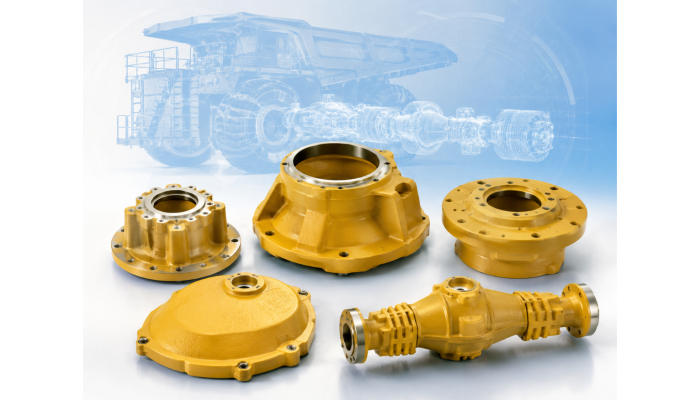
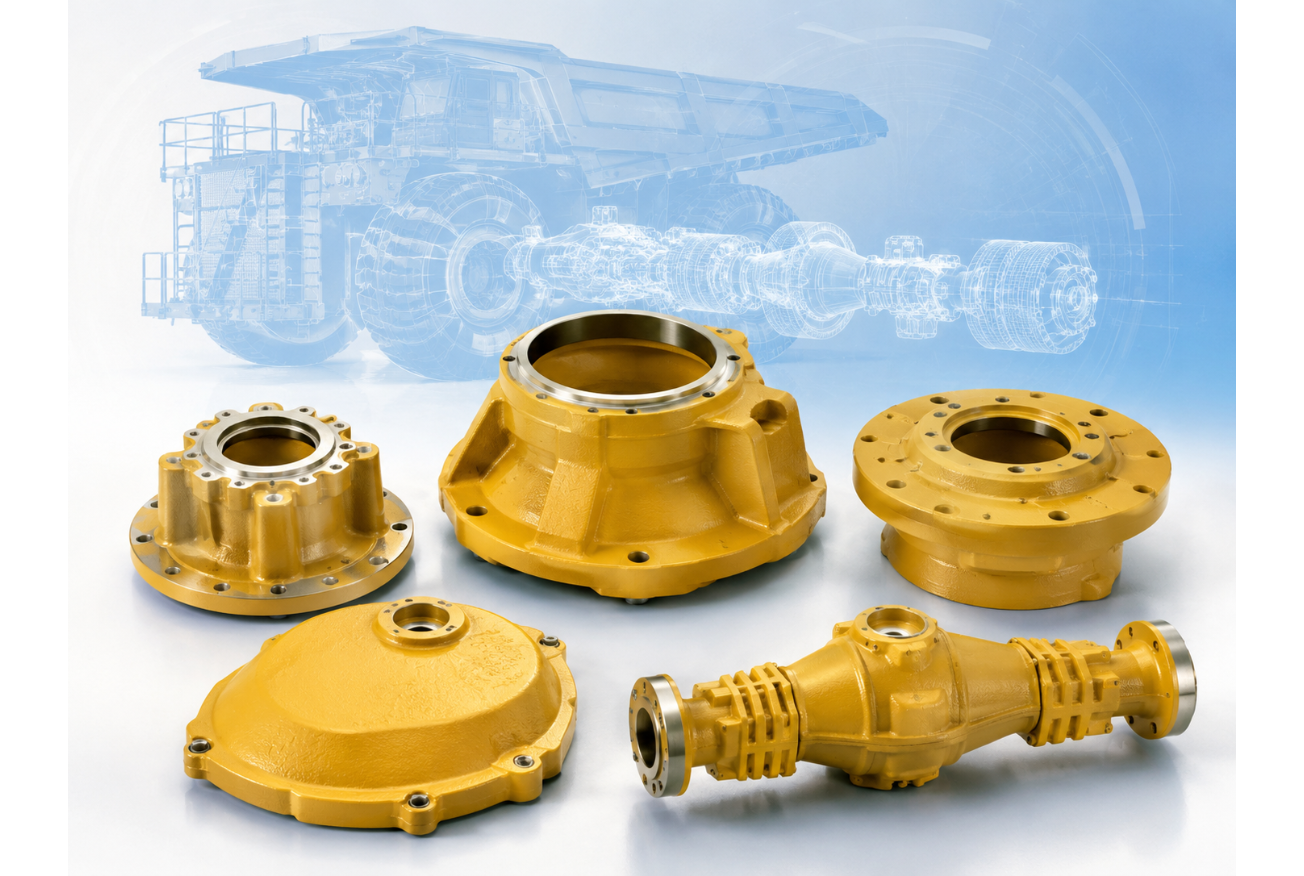
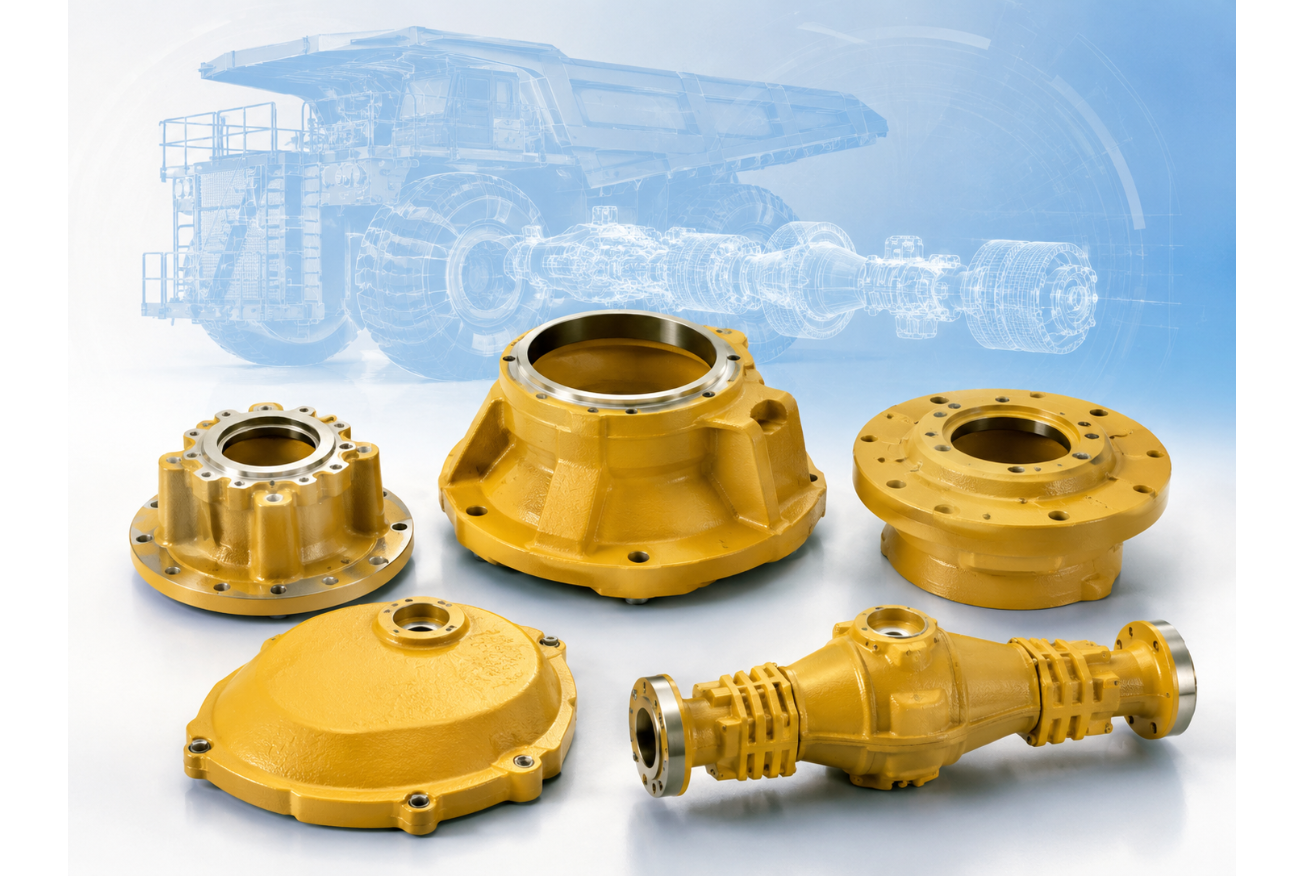
In the mining industry, machinery such as construction equipment, construction vehicles, and mining vehicles must operate in environments with heavy loads, strong impacts, wear resistance, and continuous operation under harsh conditions. Components such as hubs, carriers, cases, housings, or powertrain components are often large, heavy-walled, and require high mechanical strength. For this product group, iron casting, especially ductile iron casting using sand casting or sand mold casting methods, is one of the suitable manufacturing solutions. However, when castings are large, thick-walled, and used in heavy-load environments, the risk of casting defects is also higher. Defects such as gas porosity, shrinkage, cracks, slag inclusions, deformation, or dimensional deviations can directly affect the strength, assemblability, and lifespan of the product. Therefore, to produce ductile iron castings for heavy industry and mining, foundries need to synchronously control the entire process: from product design, sand mold preparation, melting, metal pouring, cooling, cleaning, to machining and post-casting quality inspection.
What is sand mold ductile iron casting?
Sand mold ductile iron casting is a method that uses a mold made of sand to shape the product, then pours molten ductile iron into the mold. When the metal solidifies, the sand mold is broken to retrieve the casting. This is a common method in the production of medium to large-sized iron components, especially products with complex structures or thick walls. Ductile iron, in particular, is a type of cast iron where graphite is in spherical form. Thanks to this structure, ductile iron has better tensile strength, toughness, and impact resistance than conventional gray iron. Therefore, ductile iron casting is often chosen for components subjected to stress, wear, and operating in heavy-load environments. Compared to some other methods like gravity casting, sand casting (sand mold casting) offers higher flexibility when producing large, complex-shaped components.
Why is ductile iron casting suitable for heavy-load components?
Components in mining vehicles, mining dump trucks, bulldozers, articulated trucks, or mining equipment often have to withstand repetitive loads for extended periods. In addition to shape requirements, the material must also meet the ability to withstand force, impact, and wear. Ductile iron casting is suitable for heavy-load components due to the following characteristics:
| Component Requirement | Role of Ductile Iron |
| Withstands heavy loads | Ductile iron has high mechanical strength, suitable for load-bearing components |
| Impact resistance | Spherical graphite gives the material better toughness than gray iron |
| Wear resistance | Suitable for heavy industry and mining environments |
| Thick and heavy structure | Can be produced by sand casting, sand mold casting, or no-bake sand casting |
| Precise assembly requirements | Can be CNC machined after casting to finish surfaces, holes, and datum faces |
Common Casting Defects in Large Ductile Iron Castings
When producing large ductile iron castings using sand casting or sand mold casting, defects can arise at various stages. For components used in heavy industry or mining, defect control is even more critical because products often operate under heavy loads and continuous impacts. Some common casting defects include:
| Casting Defect | Common Cause | Impact on Product |
| Gas Porosity | Poor sand mold permeability, moist sand, metal stream entraining gas | Reduces tightness, mechanical properties, affects durability |
| Shrinkage | Inadequate gating/risering system, slow solidification in thick sections | Creates internal voids, reduces load-bearing capacity |
| Hot tears, cold cracks | High thermal stress, uneven cooling | Risk of component failure under heavy loads |
| Slag Inclusion | Molten metal not properly cleaned, turbulent flow | Reduces surface quality and mechanical properties |
| Distortion | Unbalanced structure, premature mold breakdown, or improper cooling | Incorrect dimensions, difficult to assemble |
| Dimensional Deviation | Unstable sand mold, inaccurate pattern or core | Increases machining costs, affects assembly |
In the production of parts for construction machinery and mining vehicles, these defects not only increase the rejection rate but can also affect operational safety. Therefore, limiting casting defects must be implemented right from the design and production preparation stages.
Reasons why heavy-load ductile iron castings are prone to defects
Ductile iron castings used in heavy-load environments often have large mass, thick walls, and complex shapes. These factors make the solidification process more difficult to control compared to smaller components. The main reasons include:
1. Product structure with thick-walled sections and complex transition areas.
These areas often retain heat for a long time, solidify slowly, and are prone to shrinkage. If the product design or gating/risering system is not optimized, internal defects are very likely to occur.
2. Insufficient sand mold stability.
For large iron castings, the mold must withstand significant pressure from the molten metal. If the sand mold is not strong enough, has poor permeability, or the core is unstable, the casting may suffer from gas porosity, distortion, or dimensional deviations.
3. Material composition and spheroidization process are not tightly controlled.
In ductile iron casting, controlling the chemical composition and spheroidization treatment directly affects the mechanical properties of the material. If the graphite does not achieve the required spherical shape, the strength and toughness of the product can be compromised.
4. Suboptimal gating system and pouring temperature. Turbulent flow can cause gas entrapment and slag inclusion.
Pouring temperature that is too low can easily lead to metal shortfalls; excessively high temperatures can increase the risk of shrinkage or affect the metal's microstructure.
5. Uneven cooling.
For thick and heavy components used in mining or heavy industry, differences in cooling rates between regions can create significant stress, leading to cracks or distortion.
Solutions to Limit Defects in Heavy-Load Ductile Iron Castings
1. Optimize casting design from the initial stage
To limit casting defects, foundries need to evaluate the product structure before production. Thick-walled areas, transition angles, reinforcing ribs, hole locations, and assembly surfaces need to be carefully considered. For components used in construction machinery or vehicles, the design must ensure both load-bearing capacity and suitability for the casting process. Some points to control include:
- Limit abrupt changes in cross-section;
- Arrange appropriate fillet radii at transition areas;
- Pre-determine locations requiring post-casting CNC machining;
- Evaluate areas prone to heat accumulation and shrinkage;
- Design products suitable for heavy-load operating conditions.
When the casting design is optimized from the outset, the iron casting process will be more stable, reducing the risk of internal defects and post-casting repair costs.
2. Control the quality of sand molds and sand cores
In sand casting and sand mold casting, mold quality directly affects the surface, dimensions, and stability of the casting. For large ductile iron products, sand molds need high strength, good gas permeability, and must maintain a stable shape throughout the metal pouring process. For large components used in mining or heavy industry, no-bake sand casting technology (alkaline self-hardening sand mold) is a suitable solution. This method provides better mold stability, making it suitable for thick-walled, large-sized castings requiring higher precision compared to conventional sand molds. VINA ITO applies alkaline sand casting technology for medium to large-sized iron castings, suitable for components with thick and heavy structures used in heavy-load environments.
3. Control melting and FCD ductile iron material
In ductile iron casting, the material is a fundamental factor determining product quality. Ductile iron grades such as FCD450, FCD500, FCD600, or FCD700 have different requirements for tensile strength, elongation, and mechanical properties. Therefore, the chemical composition needs to be tightly controlled during the melting process. Factors to pay attention to include:
- carbon and silicon ratio;
- magnesium content during spheroidization;
- control of sulfur, phosphorus, and impurities;
- composition inspection before pouring;
- ensure graphite achieves the appropriate spherical shape;
- control mechanical properties after casting.
4. Optimize gating and risering system
For large ductile iron castings, the gating and risering system plays a very important role. If the metal flow is unstable, the casting is prone to gas entrapment, slag inclusion, or gas porosity. If risers are not properly placed, thick-walled areas can suffer from internal shrinkage. To limit defects, it is necessary to control:
- gate location;
- molten metal flow direction;
- pouring speed;
- pouring temperature;
- riser location and size;
- solidification direction of the casting;
- mold permeability.
For products operating in heavy-load environments, defects such as internal shrinkage or gas porosity may not be easily detectable by visual inspection but significantly affect operational durability. Therefore, optimizing the gating system is a crucial step in producing castings for mining and heavy industry.
5. Control the cooling and mold breakdown process
After metal pouring, the cooling process directly affects the material's microstructure, residual stress, and dimensional stability of the casting. For heavy components, excessively fast or uneven cooling can cause cracks, warping, or distortion. To limit defects, foundries need to:
- control mold retention time;
- avoid premature mold breakdown;
- control cooling rates between thick and thin sections;
- have appropriate handling methods for heavy products;
- clean surfaces before inspection and machining.
In the production of components for mining vehicles or construction machinery, even a small deviation in the mating surface can affect the assembly process. Therefore, after cooling and mold breakdown, castings need to undergo visual and dimensional inspection before moving to the next stage.
6. Post-casting CNC machining to ensure accuracy
For many ductile iron castings used in construction machinery, the post-casting product is not yet in its final finished state. Mating surfaces, holes, datum faces, grooves, or locations requiring tolerances need to be machined. Integrating iron casting + CNC machining helps businesses reduce risks associated with transferring products between multiple suppliers. At the same time, manufacturers can better control the entire process from raw casting to finished component. Benefits of post-casting machining include:
- ensuring dimensional accuracy;
- finishing assembly surfaces;
- reducing cumulative deviations;
- synchronous quality control;
- shortening lead time;
- reducing logistics costs between stages.
Quality Control Process in Ductile Iron Casting
To cast ductile iron components for heavy industry and mining, quality inspection needs to be performed at multiple steps, not just final inspection. The tighter the control process, the higher the likelihood of early defect detection. Inspection items typically include:
| Stage | Control Content |
| Before Casting | Inspect pattern, sand mold, sand core, input materials |
| Melting | Chemical composition analysis, temperature control |
| Ductile Iron Treatment | Control spheroidization and inoculation processes |
| After Pouring | Control cooling, mold breakdown, cleaning |
| After Casting | Visual inspection, dimensional inspection, surface inspection |
| After Machining | Inspect tolerances, mating surfaces, holes, datum faces |
| Before Shipment | Overall inspection according to customer requirements |
VINA ITO – Capabilities in Sand Mold Ductile Iron Casting for Heavy-Load Components in Vietnam
VINA ITO is a specialized manufacturer of iron casting and ductile iron casting in Vietnam, applying Japanese casting technology in the production of components for construction machinery, construction vehicles, mining vehicles, and heavy industrial equipment. VINA ITO's strengths include:
- Produces FC150–FC300 gray iron and FCD450–FCD700 ductile iron.
- Capable of producing large-sized products, from approximately 100 kg to 2 tons.
- Production capacity of approximately 800 tons/month.
- Large-scale factory, with an area of approximately 30,097 m².
- Applies no-bake alkaline sand mold casting technology.
- Has integrated capabilities from casting to CNC machining.
- Equipped with large-component machining systems from brands such as Okuma, DMG MORI, Niigata, Nidec.
- Experienced in supplying Japanese customers in the construction machinery and mining sectors, such as Komatsu Osaka, KUI, KI, PTU.
Thanks to the combination of casting technology, material control, inspection processes, and post-casting finishing, VINA ITO can support customers in projects requiring large-sized ductile iron castings, with thick and heavy structures, operating in heavy-load environments.
To limit casting defects in the production of heavy-load ductile iron, businesses cannot control just one isolated stage. The quality of the casting depends on the entire process chain: product design, sand mold, material, melting, spheroidization treatment, gating system, cooling, cleaning, CNC machining, and quality inspection. In the construction machinery, construction vehicle, mining vehicle, mining industry, and heavy industry sectors, choosing a supplier with capabilities in iron casting, sand casting, sand mold casting, and ductile iron casting is a crucial factor to ensure the durability, stability, and operational efficiency of the product. With a foundation of Japanese technology in Vietnam, the capability to cast FCD450–FCD700 ductile iron, no-bake alkaline sand mold casting technology, and post-casting CNC machining capabilities, VINA ITO is a suitable choice for businesses needing to produce large-sized ductile iron castings, used in heavy-load environments, and requiring high reliability.
Company Information
Industrial machinery
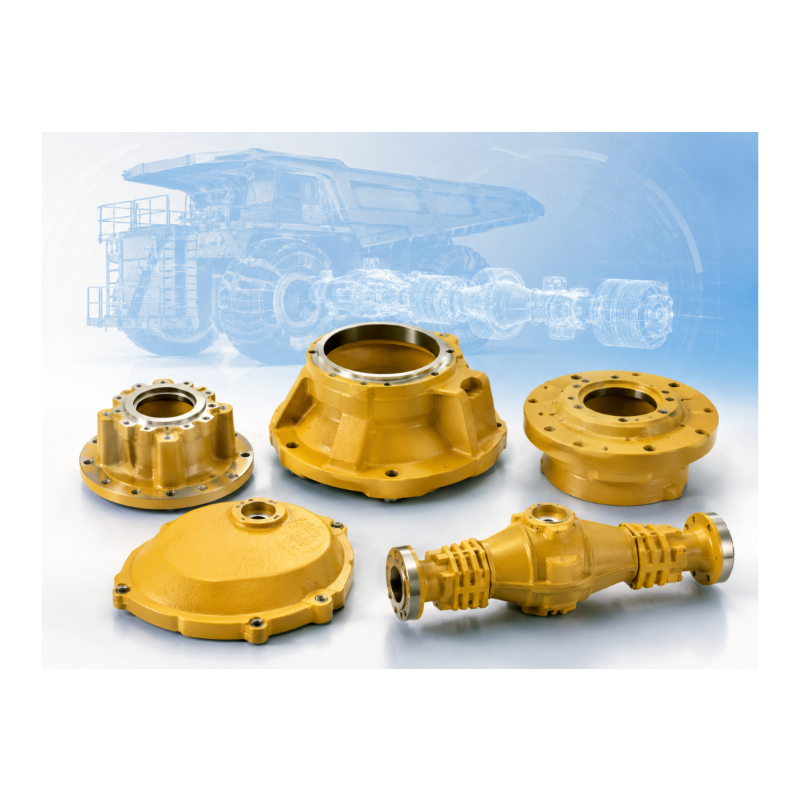
FCD Ductile Iron Component / Drive components / Heavy load components
VINA ITO is a company specializing in ductile iron casting and CNC machining of components for the heavy industry sector, adhering to Japanese standards in Vietnam. The company focuses on manufacturin ...
PICKUP
Technology & Services
CONTACT
Contact