BLOG
Knowledge
Technology and Services
How do horizontal milling and vertical milling differ? When should a horizontal milling machine be chosen for blocks and housings?
2026-09-24

In CNC machining, both horizontal and vertical milling machines can perform operations such as face milling, drilling, reaming, tapping, or pocket machining. However, the efficiency of each machine type varies significantly depending on the part geometry, number of faces to be machined, amount of material to be removed, and cycle time requirements. In brief:
- Plate-shaped parts: vertical milling machines are often preferred.
- Housing or block requiring multi-face machining: horizontal milling machines offer many advantages.
- Small parts, short cycle time: high-speed compact machining centers like Brother SPEEDIO are more suitable.
- Large parts or heavy cutting requirements: machines with large travel and high rigidity like FJV or VS10000 should be prioritized.
Therefore, the issue is not whether a horizontal or vertical milling machine is better, but rather which machine type is suitable for the product's geometry and machining process.
What is a Vertical Milling Machine?
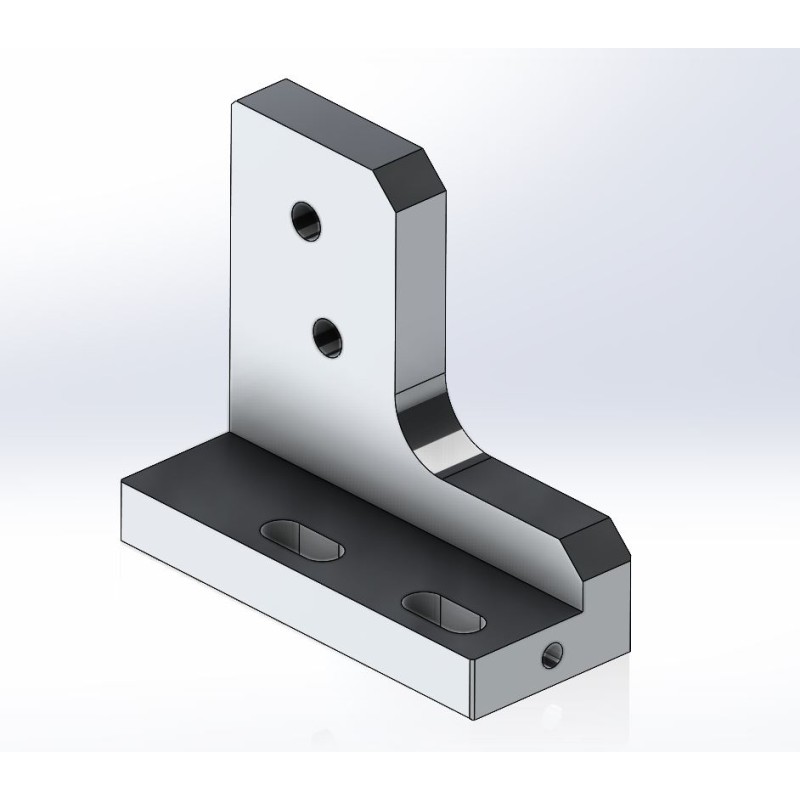
A vertical milling machine, or Vertical Machining Center (VMC), is a type of machining center with its spindle oriented vertically. The cutting tool primarily approaches the workpiece from above. This is a very common configuration in CNC machining due to its simple fixturing, ease of observing the machining process, and suitability for various mechanical parts. Vertical milling machines are particularly effective for products such as: plates; base plates; jig plates; brackets; fixtures; parts with multiple holes and pockets on the same face; products where most machining locations are on the top face. When a part does not require extensive side access, vertical milling machines often provide good efficiency in terms of both setup time and machining costs.
What is a Horizontal Milling Machine?
A horizontal milling machine, or Horizontal Machining Center (HMC), has its spindle oriented horizontally. This configuration is particularly suitable for machining parts with multiple features on different faces, such as: housings; blocks; gearbox cases; valve bodies; manifolds; motor housings; assemblies with multiple horizontal holes, bores, or pockets on various sides. Horizontal milling machines are often combined with rotary tables or pallet systems, allowing the tool's approach direction to be changed without removing the part from the fixture after each operation. This is why HMCs are often chosen for complex housing or block-type products.
How do Horizontal and Vertical Milling Differ?
The most significant difference between the two methods lies not only in the spindle orientation but also in the approach to the part's surfaces.
| Criterion | Vertical Milling | Horizontal Milling |
| Spindle Orientation | Vertical | Horizontal |
| Suitable Part Type | Plate, bracket, flat parts | Housing, block, multi-face parts |
| Access Capability | Mainly from above | Favorable for multiple faces |
| Horizontal Hole Machining | Often requires re-fixturing | More favorable |
| Deep Pockets | Chip accumulation possible | Good chip evacuation |
| Number of Setups | May increase with multi-face parts | Can be significantly reduced |
| Accuracy Relationship between Multiple Faces | Depends on re-fixturing accuracy | Favorable if completed in a single setup |
| Setup | Simple | More complex |
| Equipment Cost | Often lower | Often higher |
| Typical Applications | Plate, jig, fixture | Housing, block, manifold |
Therefore, when selecting machining equipment, it is necessary to look at the product's structure rather than just comparing machine specifications.
Plate-shaped parts: why are vertical milling machines often preferred?
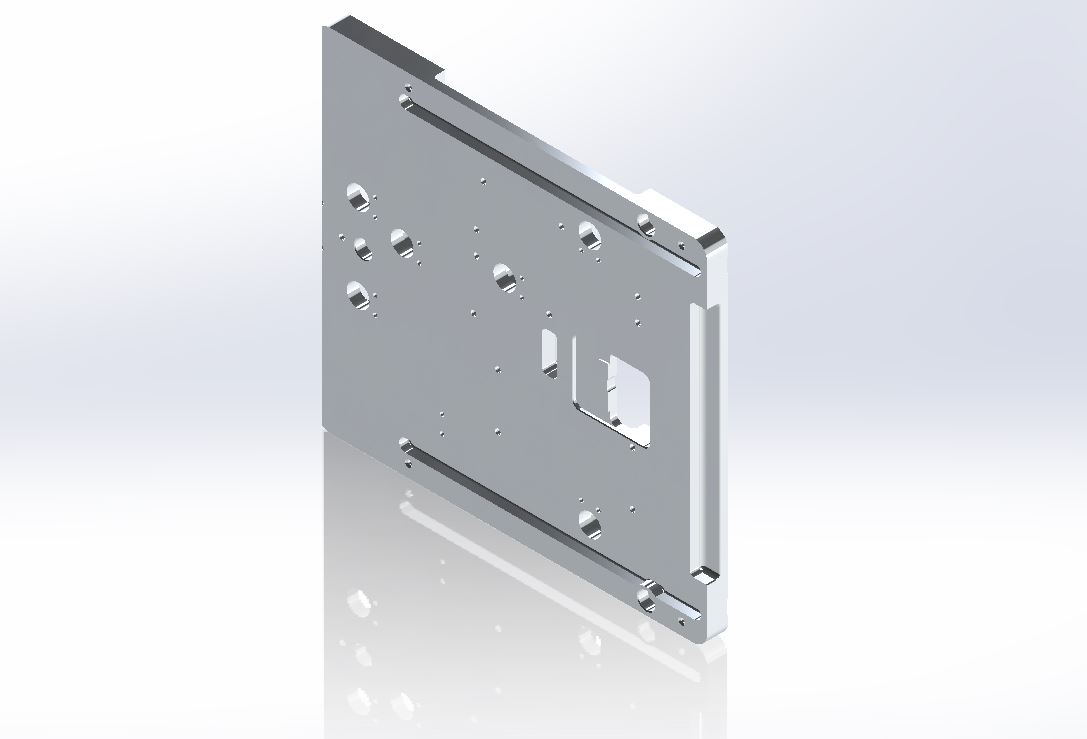
Plates are one of the most suitable product types for vertical milling machines. Examples include: base plates; jig plates; mounting plates; machine plates; brackets; plates with pockets and multiple drilled holes. A common characteristic of this group is that most surfaces, holes, and pockets to be machined can be accessed from above. After securing the workpiece to the machine table or fixture, the tool can continuously perform operations such as:face milling → pocket milling → drilling → tapping → finishing. Not having to rotate the part too many times reduces setup time and simplifies the process. For this type of product, using a horizontal milling machine may not necessarily yield benefits commensurate with the equipment and fixturing costs. Therefore, for plates with most features on one or two main faces, vertical milling machines are often a more economical and efficient choice.
Housing and multi-face blocks: where do horizontal milling machines have an advantage?
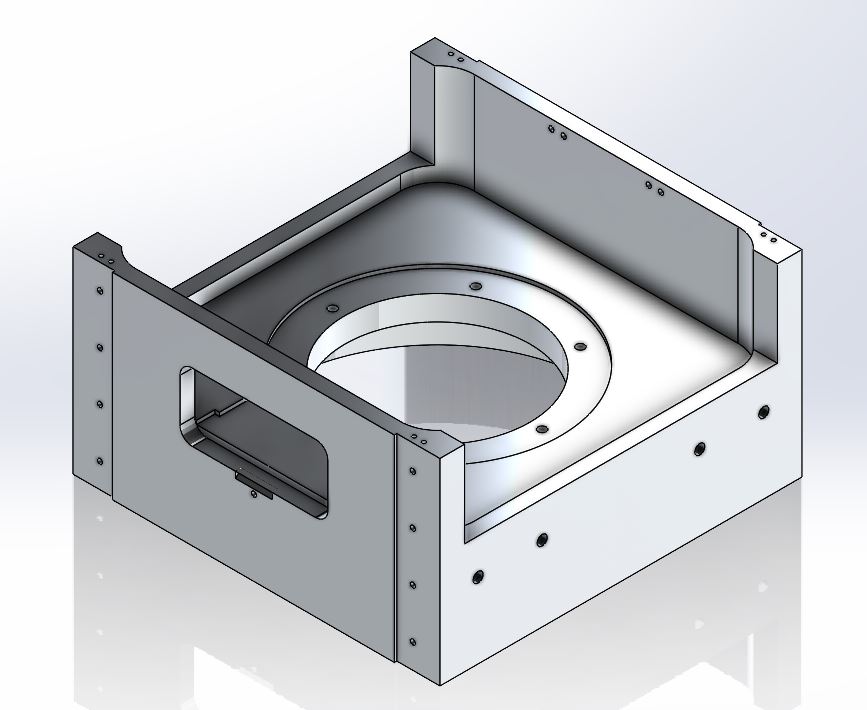
Housings and blocks have significantly different structures compared to plates. A typical housing may require: datum face milling; machining two or three side faces; drilling horizontal holes; bore machining; pocket milling; machining bearing mounting locations; ensuring perpendicularity and positional relationship between multiple faces. If a conventional vertical milling machine is used, each group of features in a different orientation may require removing the part, rotating the workpiece, and re-fixturing. The process may include:Machining face A → removing workpiece → rotating → re-fixturing → machining face B → removing → re-fixturing → machining face C. Each re-fixturing not only increases production time but also has the potential to introduce errors. One of the major advantages of horizontal milling machines when machining housings and blocks is the ability to reduce the number of setups. When an HMC is combined with a rotary table, the part can be rotated to allow the tool to access multiple different faces in a single setup, instead of having to remove the workpiece, rotate, and re-fixture after each operation. This not only shortens preparation time but also limits errors arising from changes in datum, especially for parts requiring high accuracy between multiple machined faces. This is particularly significant for parts requiring high accuracy in: hole position; center distance; perpendicularity; parallelism; concentricity between bores. When multiple features are created from the same datum, errors due to changes in fixturing datum can be limited.
Horizontal Milling has an Advantage in Machining Deep Pockets
Chip evacuation capability is also a notable difference between vertical and horizontal milling. When machining a deep pocket on a vertical machine, chips tend to remain inside the cavity. If the chip volume is large, they can:
- obstruct coolant flow;
- be re-cut by the tool;
- increase heat in the cutting zone;
- affect surface finish;
- reduce tool life.
On horizontal milling machines, gravity assists chips in falling away from the machining area. Good chip evacuation is particularly useful for:
- housings with deep cavities;
- blocks requiring large material removal during roughing;
- deep pockets;
- operations involving significant material removal.
This is one of the reasons HMCs are often used for blocks and housings requiring multi-face machining combined with large chip volumes.
Housings do not always necessarily require horizontal milling machines
Although horizontal milling machines offer many advantages for housings, not every housing-shaped product necessarily has to be machined on an HMC. A small housing can still be efficiently machined on a vertical milling machine if:
- production volume is not too large;
- the number of side features is small;
- simple rotary fixturing is possible;
- setup time is negligible;
- the relationship requirements between faces are not overly complex.
In practice, machine selection should be based on total production time, not just the product's name or general shape. There are cases where machining on an HMC is technologically faster, but the investment and fixture costs are not suitable for the production volume. Conversely, for high-volume, multi-face housings with high accuracy requirements, reducing one or two setups can make a significant difference in cycle time and stability.
Small Parts, Short Cycle Time: The Advantage of Brother SPEEDIO
For the small parts category, equipment selection differs. When product size is small and the amount of material to be removed is not large, the decisive factor for productivity is sometimes not heavy cutting capability, but rather the speed of repetitive operations. For example: tool change; rapid movement; drilling; tapping; positioning; axis acceleration and deceleration. Assuming a part has a machining time of only a few minutes, even a small time saving per tool change can make a significant difference when producing thousands or tens of thousands of products. This application group is suitable for high-speed compact machining centers like Brother SPEEDIO. These types of machines are particularly suitable for:
- small components;
- products with many drilled and tapped holes;
- short machining cycles;
- high production volumes;
- requirements to increase the number of products per machine in a production shift.
Therefore, in mass production, machine selection should not be based solely on machine table size or spindle power. The actual cycle time per product is the important metric for evaluating productivity.
Large Parts or Heavy Cutting: Prioritizing Rigidity and Work Envelope
Conversely, for large blocks or thick plates, equipment requirements change completely. These products typically have:
- large workpiece dimensions;
- large machining allowance;
- long cutting paths;
- large depths of cut;
- long rough machining times.
In such cases, fast tool change speed is not necessarily the decisive factor. More important are:
- rigidity;
- spindle torque;
- work envelope;
- machine table load capacity;
- ability to limit vibration during cutting.
Large-sized machining centers like FJV or VS10000 are more suitable for this type of work. Especially when rough machining a large block, a machine with good rigidity can maintain more stable cutting conditions, thereby helping to control accuracy and surface quality in subsequent operations.
A Part Does Not Necessarily Have to Be Machined on Only One Type of Machine
In actual production, equipment selection does not necessarily have to follow the mindset:one product = one machine. For a complex part, each operation can be allocated to the most suitable equipment. For example:Rough machining → Semi-finishing → Finishing → Drilling/Tapping A large block can undergo rough machining on a highly rigid machine, then be transferred to other equipment more suitable for finishing or machining multiple holes. Similarly, a part may have a large body but also contain many small features requiring drilling and tapping with short cycle times. In this case, the important question is no longer “which machine is best”, but rather:which equipment to allocate operations to in order to achieve a balance between accuracy, productivity, and machining costs. This is precisely the role of process engineering in precision machining.
Choosing Machines Based on Product Shape and Requirements
Equipment selection guidelines can be summarized as follows:
| Part Type | Machining Characteristics | Preferred Machine Type |
| Plate | Features mainly on the top face | Vertical Milling Machine |
| Small Plate | Many holes, short cycle time | High-speed machine |
| Small Housing | Some side faces | VMC or multi-face machining machine |
| Multi-face Housing | Many bores, horizontal holes, pockets | Horizontal Milling Machine |
| Multi-face Block | Requires precise relationship between faces | Horizontal Milling Machine |
| Small parts, high volume | Cycle time is critical | Brother SPEEDIO |
| Large Block | Large allowance, requires rough machining | FJV |
| Large plate/block | Requires large work envelope | VS10000 |
Seiko Industry's Equipment System Meets Diverse Component Needs
Instead of using a single machine series for all products, Seiko Industry builds a machining equipment system to meet different part groups and cutting conditions. For small components requiring short cycle times, the Brother SPEEDIO system optimizes operations with high tool change, drilling, and tapping frequencies. For plates and parts with most features on one face, vertical machining centers allow for convenient fixturing and simple process development. For housings or blocks requiring multi-face processing, the machining plan is designed to limit the number of setups and maintain the relative accuracy between features. Meanwhile, for large blocks or products requiring high material removal rates, machines like FJV and VS10000 expand processing capabilities in terms of size and cutting conditions. By combining various equipment groups, Seiko Industry can select the appropriate process based on:
- product geometry;
- workpiece size;
- material;
- number of faces to be machined;
- amount of material to be removed;
- target cycle time;
- tolerance and surface finish requirements.
For precision machining, Seiko Industry can meet tolerance requirements up to 0.005 mm and surface roughness up to Ra 0.63, depending on the product's specific geometry, material, and technical conditions. The important point is not owning a single type of machine, but rather the ability to select the right machine and develop the correct process for each part.
Company Information
Precision machining / Jig gá
Seiko Industry Vietnam Co., Ltd. (SIV) is a precision mechanical manufacturing company 100% owned by Akita Seiko (Japan), established on October 17, 2012, and officially commenced operations in Novemb ...




PICKUP
Technology & Services
CONTACT
Contact