
BLOG
Knowledge
Technology and Services
What is Swiss-type machining?
2026-08-04
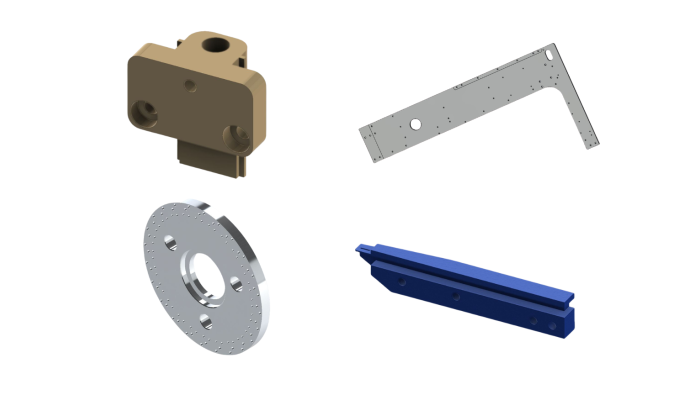
In the precision machining industry, not every part can be efficiently produced using conventional CNC lathes. For products with small diameters, long lengths, tight tolerance requirements, and high-volume production, many businesses choose Swiss-type machining (Swiss-type Turning) to achieve higher precision and productivity. So, what is Swiss-type machining, what products is this technology suitable for, and when should it be chosen? The article below will help you understand the operating principles, advantages, and applications of Swiss-type lathes.
What is Swiss-type Machining?
Swiss-type machining is a turning method that uses a Swiss-type automatic lathe. This technology was originally developed in Switzerland to produce very small watch components requiring extremely high precision, hence the name "Swiss-type". Unlike conventional CNC lathes, Swiss-type machines use bar stock that is automatically fed through a guide bushing. During machining, the bar material moves along the Z-axis while the cutting tool performs turning, milling, or drilling operations right next to the guided position. Thanks to the very short distance from the support point to the cutting position, material vibration is significantly reduced, ensuring stable machining even for parts with a high length-to-diameter ratio. This characteristic has made Swiss-type a widely used technology in the production of precision mechanical components, electronic components, medical devices, and automotive parts.
Operating Principle of Swiss-type Lathes
The biggest difference of Swiss-type machines lies in how the workpiece is held and moved. In conventional CNC lathes, the workpiece is clamped stationary in the chuck, while the tool moves to cut the material. When machining long and small parts, the portion of the material protruding from the chuck is prone to vibration or bending under cutting forces, reducing accuracy. In contrast, on a Swiss-type machine:
- The workpiece is continuously fed from the bar stock.
- The bar material is guided by a Guide Bushing.
- The workpiece moves to the machining position instead of protruding far from the chuck.
- The cutting tool works right next to the Guide Bushing, where the material is firmly supported.
Thanks to this principle, Swiss-type machines can maintain high stability during cutting, especially for small and long parts. In addition to turning operations, many modern Swiss-type machines also integrate live tools, Y-axis, and B-axis, allowing for milling, drilling, tapping, or multi-face machining in a single setup.
When to Choose Swiss-type Machining?
Swiss-type is not the optimal choice for all products. This technology is most effective when machining small parts that require high precision and are produced in large quantities. Choosing the right technology from the outset not only helps improve product quality but also reduces machining time and optimizes production costs.
Advantages of Swiss-type Machining
High Precision
Thanks to the Guide Bushing holding the material right next to the cutting position, the cutting tool always operates under stable conditions, helping to limit vibration and reduce errors during machining. This is why Swiss-type is commonly used to produce components with tight tolerances and high uniformity requirements.
Efficient Machining of Long Parts
Parts with a high length-to-diameter ratio are often very difficult to machine on conventional lathes because they are prone to deflection or vibration. Swiss-type overcomes this drawback by always keeping the material in a guided state, ensuring stable machining even for small, long shafts.
Complete Multiple Operations in a Single Setup
Modern Swiss-type machines are integrated with multiple axes and live tools, allowing for continuous turning, milling, drilling, or tapping operations without needing to transfer to another machine. This helps reduce cumulative errors, shorten production time, and increase productivity.
Suitable for Mass Production
Combined with an automatic bar feeder system, Swiss-type machines can operate continuously to produce large quantities with consistent quality across batches.
Limitations of Swiss-type Machining
Besides its outstanding advantages, Swiss-type also has some limitations to consider. The machine is primarily suitable for small diameter parts. For larger or box-shaped products, fixed-headstock CNC lathes or machining centers would be more appropriate. Furthermore, the investment cost for the machine, bar feeding system, and programming requirements are also higher compared to many conventional CNC lathe models. Therefore, the choice of Swiss-type should be based on the product characteristics and production goals of each project.
Comparison of Swiss-type and Conventional CNC Lathes
| Criteria | Swiss-type | Conventional CNC Lathe |
| Workpiece | Bar Stock | Bar or cut blanks |
| Workpiece holding method | Guide Bushing | Chuck |
| Small, long parts | Very suitable | More difficult |
| Multi-operation machining | High | Depends on machine configuration |
| Machining stability | High | Depends on workpiece overhang length |
| Mass production | Very suitable | Suitable |
Applications of Swiss-type Machining
Thanks to its ability to machine small parts with high precision, Swiss-type is applied in many industries such as:
- Automotive components
- Electrical – electronic equipment
- Automation equipment
- Medical devices
- Measurement equipment
- Precision industrial equipment
Seiko Industry's Swiss-type Machining Capabilities
As a company specializing in precision turning, Seiko Industry invests in Citizen Cincom Swiss-type machine systems to meet the demands for small-sized products requiring high precision and mass production. Currently, the company owns the following machine models:
| Equipment | Key Capabilities |
| Citizen Cincom A20 | Machining small diameter parts from bar stock with high precision. |
| Citizen Cincom L20 | Equipped with a B-axis, supporting turning, milling, and drilling on multiple surfaces in a single setup; suitable for complex-shaped parts. |
In addition to the Swiss-type system, Seiko Industry also invests in Citizen Miyano BNA-42S2, BNC-42C7 and Mori Seiki NL2000/Y, NL2500/Y models, allowing for the machining of various product groups with different sizes and technical requirements. The combination of Swiss-type machines and fixed-headstock CNC lathes helps the company choose the optimal machining solution for each product instead of applying a single technology. Seiko Industry is a suitable partner for businesses seeking a precision turning supplier, from prototype production to mass production.
Company Information
Precision machining / Jig gá
Seiko Industry Vietnam Co., Ltd. (SIV) is a precision mechanical manufacturing company 100% owned by Akita Seiko (Japan), established on October 17, 2012, and officially commenced operations in Novemb ...




PICKUP
Technology & Services
CONTACT
Contact