BLOG
Knowledge
Technology and Services
What is multi-sided machining in a single setup? Why does it help reduce errors in precision parts machining?
2026-07-24

What is multi-sided machining in a single setup?
Multi-sided machining in a single setup is a machining method where the workpiece is fixed once on a fixture, and then the machine can access and machine multiple different faces of the part without needing to remove and re-fixture it multiple times.
In precision machining, every time the workpiece is removed and re-fixtured, errors can arise. These errors stem from the workpiece's placement, clamping force, datum features, perpendicularity between faces, and deviations during coordinate re-alignment. Therefore, if multiple faces can be machined in a single setup, manufacturers can reduce the risk of accumulated deviations between operations.
This method is particularly suitable for block-shaped parts, box-shaped parts, or parts with multiple faces requiring machining, such as housings, gear boxes, valve bodies, pump casings, jigs, fixtures, aluminum blocks, machine bodies, industrial bases, and components for production equipment.
Why does multi-sided machining in a single setup help reduce errors?
In conventional manufacturing, a part with multiple faces to be machined may require multiple setups: setting up face A for milling, removing it, rotating the workpiece, setting up face B, and then continuing to set up face C or face D. Each such instance requires re-aligning the machining datum.
The problem is that even with experienced operators and well-designed fixtures, re-fixturing can still introduce small deviations. For parts requiring tight tolerances, small deviations between setups can affect concentricity, parallelism, perpendicularity, hole positions, datum face positions, or assembly accuracy.
Multi-sided machining in a single setup helps reduce errors due to the following factors:
Reduces the number of workpiece removals and installations, thereby reducing deviations caused by re-fixturing. Maintains the same machining coordinate system for multiple faces of the part. Better control over the geometric relationship between faces, e.g., perpendicularity, parallelism, concentricity. Reduces accumulated errors between operations. Increases stability between prototype products and mass production. Shortens setup time, especially for repeatedly manufactured parts.For products such as housings, gear boxes, valve bodies, or pump casings, the accuracy between faces and assembly holes is a critical factor. If the datum faces are unstable, the part may encounter errors when installing bushings, shafts, bearings, seals, or when assembling into a complete machine unit.
What is an HMC?
HMC stands for Horizontal Machining Center. Unlike a Vertical Machining Center (VMC), the spindle of an HMC is oriented horizontally. This design gives HMCs an advantage when machining box-shaped parts, block-shaped parts, or parts requiring multi-sided machining.
Some common machine series in the HMC category include Okuma MB8000H, Mori NH5000, HG500, HS500. These are suitable equipment for leveraging multi-sided machining capabilities, machining box-shaped parts, and repetitive production with high stability requirements.
The strength of HMCs lies not only in the spindle orientation but also in their ability to combine with rotary tables, pallets, specialized fixturing systems, and optimized machining programs. This allows the machine to access multiple faces of a part without needing to change the setup too many times.
Advantages of Horizontal Machining Centers (HMCs) in Mass Production
Horizontal Machining Centers (HMCs) offer numerous advantages in mass production, especially for parts with complex geometries or those requiring multi-sided machining.
More efficient multi-sided machining
For box-shaped parts, HMCs can machine side faces, bore faces, assembly faces, and positions requiring better correlative accuracy. When combined with a rotary table or suitable fixture, the machine can handle multiple machining orientations in a single setup.
Better chip evacuation
Because the spindle is horizontal, chips tend to fall away due to gravity instead of accumulating on the workpiece surface. This is particularly beneficial when machining deep pockets, holes, grooves, or parts like housings, valve bodies, and pump casings. Good chip evacuation reduces the risk of surface scratching, minimizes impact on cutting tools, and improves the stability of the machining process.
Suitable for repetitive production
In mass production, it's crucial not only to produce one accurate part but also to maintain consistent accuracy across many products. HMCs are suitable for repetitive production because they can integrate fixtures, pallets, and standardized machining programs to reduce reliance on manual operations.
Reduced waiting time between operations
When multiple faces can be machined in a single setup, the number of inter-operation transfers decreases. This helps shorten lead time, reduce machine idle time, minimize internal transportation time, and limit the risk of errors arising during the movement of semi-finished products.
Reduced setup time with automatic pallet systems
One of the strengths of HMCs in mass production is their ability to integrate with automatic pallet systems.With a pallet system, operators can prepare a workpiece on one pallet while the machine is machining a part on another pallet. When the machining cycle is complete, the pallets can be quickly exchanged to continue production. This helps reduce machine downtime, increase utilization rates, and improve overall productivity.Pallet systems are particularly useful when producing parts such as: Housing Gear box Valve body Pump casing Jig/fixture Aluminum block Machine body or industrial base For products with repetitive production volumes, the benefits lie not only in shorter setup times but also in the ability to standardize the fixturing process. When the same fixturing method is repeated multiple times, the quality between production batches becomes more stable.
Comparison of VMC and HMC in machining box-shaped parts
|
Criterion |
VMC - Vertical Machining Center |
HMC - Horizontal Machining Center |
|
Spindle Orientation |
Vertical spindle |
Horizontal spindle |
|
Suitable Parts |
Plates, flat parts, simple parts, products requiring top-face machining |
Housings, gear boxes, valve bodies, pump casings, box-shaped parts, multi-sided parts |
|
Multi-sided Machining Capability |
Often requires multiple re-fixturing if the part has many faces to be machined |
More advantageous when combined with rotary tables, pallets, and suitable fixtures |
|
Chip Evacuation |
Chips tend to accumulate on the surface or in pockets |
Chips easily fall away, more advantageous for deep pockets and box-shaped parts |
|
Mass Production Setup |
Suitable for various part types, flexible |
Highly efficient for repetitive products and standardized fixtures |
|
Stability between Faces |
Highly dependent on the number of re-fixturing operations |
Advantageous when needing to control the correlation between multiple faces |
|
Investment and Operating Costs |
Generally more accessible |
Often requires more specialized investment, programming, and fixturing |
Products suitable for multi-sided machining using HMCs
Housing
Housings often have multiple assembly surfaces, locating holes, screw holes, internal pockets, and datum surfaces. If re-fixturing is required multiple times, errors between holes and datum surfaces can affect the assembly process. Multi-sided machining in a single setup helps better control the correlative accuracy between these features.
Gear box
Gear boxes require high precision at shaft, bearing, gear, and mating surface locations. Small deviations in hole position or concentricity can affect noise, vibration, the lifespan of the drive unit, and stable operation.
Valve body
Valve bodies often have multiple intersecting holes, oil passages, air passages, seal mating surfaces, and areas requiring tight sealing. Multi-sided machining in a single setup helps reduce deviations between hole passages and sealing surfaces, thereby supporting better product quality control.
Pump casing
Pump casings require precision at the pump chamber, mounting face, shaft position, and contact surfaces. For this part, the stability between machined faces directly impacts assembly performance and the stability of the pump unit.
When should multi-sided machining in a single setup be chosen?Businesses should consider multi-sided machining in a single setup when the part has the following characteristics:
Has multiple faces requiring precise machining.Has multiple interrelated holes or assembly faces.Requires tight perpendicularity, parallelism, concentricity, or positional correlation.Prone to errors if re-fixtured multiple times.Needs repetitive production with consistent quality.Is a box-shaped part, block-shaped part, or has deep pockets.Needs to optimize setup time and production lead time.For simple parts that only require machining one face or do not demand complex geometric correlation, a VMC or conventional machining process may still be a reasonable choice. However, for precise parts such as housings, gear boxes, valve bodies, pump casings, or jigs/fixtures, HMCs and multi-sided machining offer clearer advantages.
Seiko Industry Vietnam – Multi-sided Machining and Precision Component Capabilities in Vietnam
Seiko Industry Vietnam Co., Ltd. is a factory in Vietnam belonging to Akita Seiko Co., Ltd., located in Thang Long II Industrial Park, Hung Yen province. The company operates in the field of machining and jig manufacturing, with its main products being components for semiconductor manufacturing equipment. The company provides precision component machining for semiconductor manufacturing equipment, including material procurement, machining, and surface treatment; primary materials include aluminum A5052, A5056, A6063, A7075, and stainless steel SUS303, SUS304, SUS316.
Regarding equipment, Seiko Industry Vietnam has a diverse range of machining systems including Vertical Machining Centers, Horizontal Machining Centers, NC milling machines, NC lathes, grinders, wire-cut EDMs, and other equipment. The factory's equipment records show 5 Horizontal Machining Centers, 33 Vertical Machining Centers, 1 5-axis machine, along with a maximum workpiece processing capability of 2,000 x 1,000 x 750 mm and the ability to operate up to 3 shifts with approximately 60 machines running continuously.
Seiko Industry Vietnam has closed-loop production capabilities from raw material procurement, machining, surface treatment, quality control, to packaging. For high-precision parts such as housings, gear boxes, valve bodies, pump casings, jigs/fixtures, or aluminum/stainless steel components, the multi-sided machining capability combined with inspection systems helps the company better control errors, appearance, and stability between production batches. The factory also possesses 3D measuring equipment, image measuring machines, microscopes, roughness measuring devices, film thickness measuring devices, and various other measuring tools for quality control.
Company Information
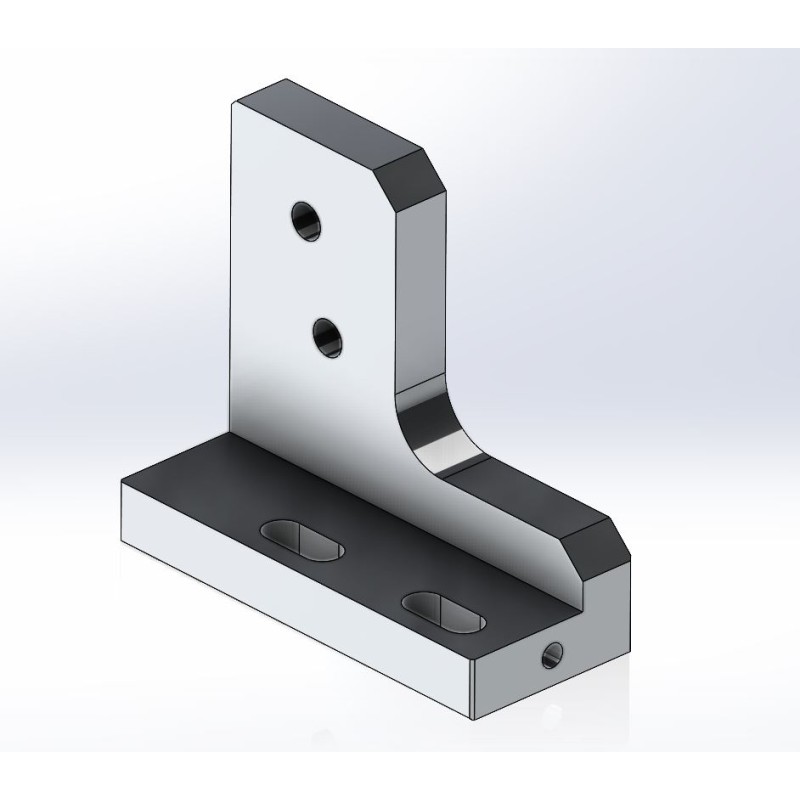
Precision machining / Jig gá
Seiko Industry Vietnam Co., Ltd. (SIV) is a precision mechanical manufacturing company 100% owned by Akita Seiko (Japan), established on October 17, 2012, and officially commenced operations in Novemb ...




PICKUP
Technology & Services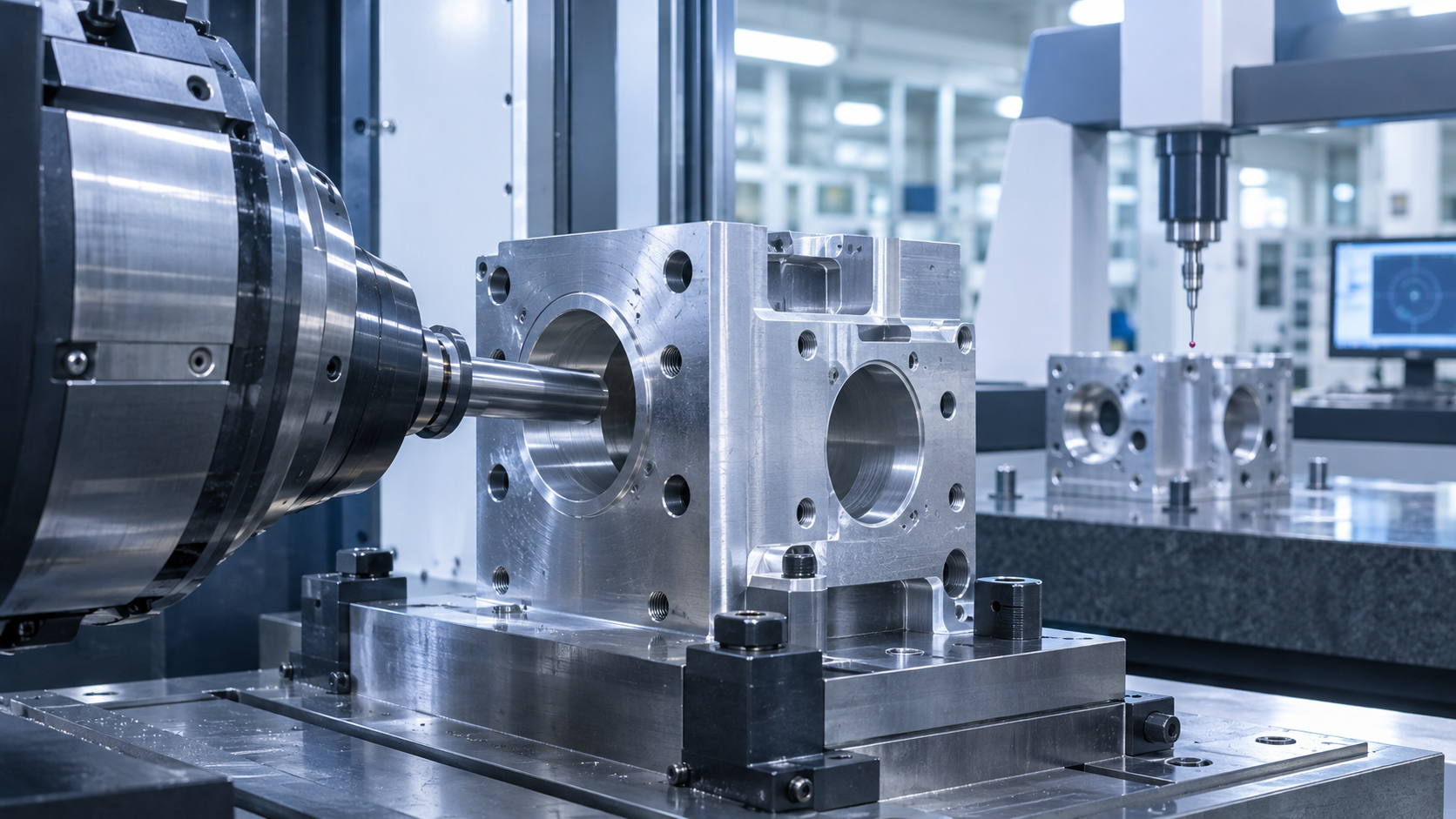
CONTACT
Contact