BLOG
Knowledge
Technology and Services
What is Hairline processing? Applications in precision metal processing
2026-07-03
Characteristics of Hairline Finished Surfaces
The most easily recognizable characteristic of Hairline finished surfaces is the fine, parallel lines running in a consistent direction. When properly processed, the metal surface feels clean, uniformly colored, and more professional than a rough machined surface. Hairline finished surfaces typically have the following characteristics:
- Creates fine, uniform, and clearly directed scratch patterns.
- Reduces mirror gloss, limits excessive light reflection.
- Creates a premium appearance for metal parts.
- Helps conceal minor scratches that occur during use.
- Suitable for materials such as aluminum, stainless steel, steel, copper, and some other metal materials.
- Often used for parts requiring strict aesthetic control.
For aluminum, stainless steel products, or parts used in manufacturing equipment, the uniformity of the Hairline finished surface directly impacts the perceived quality of the product. If the scratch patterns are uneven, misaligned, discolored, or have localized scratches, the part may be deemed unacceptable even if its machined dimensions are within tolerance.
How is Hairline Finishing Performed?
In principle, Hairline finishing is a controlled grinding or scratching process on the metal surface. Manufacturers can use abrasive belts, abrasive wheels, non-woven pads, or specialized surface treatment machines to create uniform patterns. Depending on the part's shape and size, the processing can be done by machine or a combination of machine and controlled manual operation. For parts such as plates, covers, panels, or large flat surfaces, controlling the grain direction and uniformity is relatively easier. For parts with complex shapes, multiple edges, many holes, or hard-to-reach areas, the processing requires higher skill to avoid deep scratches, misaligned patterns, or discoloration. Factors that typically need to be controlled include:
- Hairline grain direction.
- Abrasive grit size.
- Processing pressure.
- Processing speed.
- Flatness of the surface before hairline finishing.
- Condition of burrs, sharp edges, and scratches after machining.
- Cleaning, packaging, and surface protection conditions after processing.
Especially with aluminum, a relatively soft and easily scratched material, the Hairline finishing process needs to be controlled more carefully. Even a small deviation in operation, fixturing, internal transport, or packaging can create unwanted scratches on the product surface.
Materials Commonly Used in Hairline Finishing
Hairline finishing can be applied to various types of metals. In precision machining, common materials include aluminum, stainless steel, steel, and copper.
Aluminum
Aluminum is a very common material for machine parts, jigs, fixtures, plates, covers, and industrial equipment components. Aluminum grades such as A5052, A5056, A6063, A7075 are often used in precision machining due to their good machinability, light weight, and suitability for various surface treatment requirements. After machining, aluminum can be Hairline finished to create a uniform surface, then combined with anodizing or other surface treatment methods as per drawing requirements. For products requiring a high-quality appearance, careful control of scratches, discoloration, and uniformity between parts is necessary.
Stainless Steel
Stainless steel grades such as SUS303, SUS304, SUS316 are often used for parts requiring high durability, corrosion resistance, and stability. Hairline finished stainless steel surfaces are commonly applied to covers, brackets, panels, machine parts, manufacturing equipment components, or equipment requiring a clean appearance. When performing Hairline finishing on stainless steel, attention must be paid to the grain direction, grain depth, and post-processing cleaning conditions to ensure the surface meets both technical and aesthetic requirements.
Copper and other materials
In addition to aluminum and stainless steel, some parts made of copper or other materials may also require precision machining and surface finishing depending on the application. However, for each material, the processing method must be chosen specifically to avoid deformation, deep scratches, or affecting dimensions after machining.
Applications of Hairline Finishing in Precision Metal Processing
Hairline finishing is widely applied in products requiring both precision and surface quality.
Components for semiconductor manufacturing equipment
In semiconductor manufacturing equipment, many metal parts must meet strict requirements for dimensions, cleanliness, appearance, stability, and surface condition. Aluminum or stainless steel parts often require careful control after machining to avoid scratches, burrs, discoloration, or aesthetic defects. For some components located in areas with requirements for airflow, cleanliness, or particle control, the surface condition after machining can be a critical part of the overall technical requirements. If the drawing or customer standard specifies a Hairline surface, Hairline finishing must be performed consistently to ensure correct grain direction, the right level of finish, and no uncontrolled surface defects.
Jigs, fixtures, and inspection parts
Jigs and fixtures used in electronics, manufacturing equipment, or inspection stages often require high precision, stable assembly capabilities, and surfaces that do not affect contacting products. For aluminum or stainless steel jigs, Hairline finishing can be used to refine the surface, increase uniformity, and improve the part's appearance. For this type of product, the requirement is not only to machine to correct dimensions but also to ensure the surface after machining is free of scratches, burrs, and abnormal discoloration.
Large plates, frames, machine bases, and large-sized components
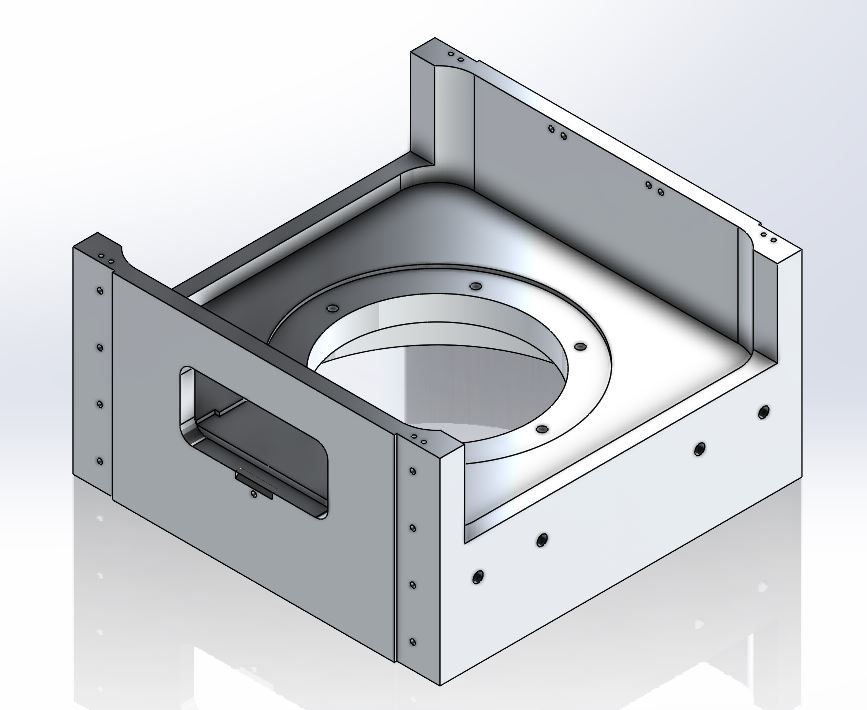
Large plates, machine frames, machine bases, or industrial jigs/fixtures often have large dimensions and require a uniform surface over a wide area. This is a challenging product group to process because uneven grinding force or unstable grain direction can easily lead to blotchy, misaligned, or discolored surfaces. For this product group, manufacturers need the capability to simultaneously handle large dimensions, flatness, grain direction, and aesthetic inspection after finishing.
Equipment casings, covers, brackets, and panels
Parts such as covers, brackets, panels, or equipment casings are often visible after assembly. Therefore, aesthetic requirements are often very stringent. Hairline finished surfaces give products a uniform, modern feel and are suitable for industrial equipment with high design standards. For these parts, manufacturers need to control the entire process from cutting, surface treatment, inspection, to packaging to prevent scratches during internal transportation.
Comparison of Hairline Finishing with Polishing, Buffing, and Blasting
| Method | Surface Characteristics | Main Purpose | Advantages | Considerations for Use |
| Hairline Finishing | Creates fine, parallel, clearly directed scratch patterns | Creates an industrial, uniform appearance, reduces mirror gloss | Beautiful, modern surface, suitable for aluminum/stainless steel, better at concealing minor scratches than polished surfaces | Requires control of grain direction, grit size, localized scratches, and discoloration |
| Polishing | Smooth, bright surface, can achieve high gloss | Smoothes and increases surface gloss | Increases brightness, improves smoothness, suitable for products requiring an attractive surface | Can reveal scratches or substrate defects if not processed uniformly |
| Buffing | Brighter, shinier surface after polishing | Increases gloss, final aesthetic finish | Provides a premium feel, suitable for decorative parts or high-gloss requirements | Not suitable if the product requires directional grain or reduced reflection |
| Blasting | Rough matte surface, no linear grain | Creates uniform roughness, reduces gloss, prepares surface before coating | Creates a uniform matte surface, can process various shapes | Can affect roughness, requires control of blasting media and masking of untreated areas |
For machine parts, jigs, fixtures, or components for semiconductor manufacturing equipment, the choice of surface treatment method must be based on drawing requirements, aesthetic standards, material, part dimensions, and actual usage conditions.
Factors Affecting Hairline Finishing Quality
To produce a consistent Hairline finished surface, manufacturers need to simultaneously control many factors.
Precision after cutting/machining
If the surface after milling, turning, or grinding still has many tool marks, burrs, deep scratches, or deformation, the Hairline finishing step will struggle to create a uniform surface. Therefore, Hairline quality heavily depends on the quality of prior machining.
Grain direction and uniformity
Grain direction needs to be consistent across parts, especially for assembled products. If one part has horizontal grain, another has vertical grain, or the grains are not parallel, the finished product will lose uniformity.
Ability to control scratches and discoloration
For aluminum or stainless steel products requiring a high-quality appearance, common defects include localized scratches, uneven grain, discoloration after surface treatment, or impact marks during packaging. This is why the production process needs control from raw material input, machining, surface treatment, inspection, to packaging.
Measurement capability and aesthetic evaluation standards
In addition to machining equipment, measurement capability is also very important. For products requiring a high-quality appearance, manufacturers need clear evaluation standards, experienced inspection personnel, and suitable measuring equipment to control quality before shipment.
When Should Hairline Finishing Be Chosen?
Businesses should consider Hairline finishing when the product has one or more of the following requirements:
- Requires a beautiful, uniform metal surface with industrial aesthetic appeal.
- Needs to reduce gloss while retaining the premium feel of metal.
- Requires surface treatment for aluminum, stainless steel, or exposed parts in equipment.
- Needs to increase uniformity among parts in an assembly.
- Needs to minimize aesthetic defects such as scratches, discoloration, uneven grain.
- Needs to meet drawing requirements or standard samples from Japanese customers.
- Needs to combine precision machining with surface treatment and quality inspection.
Especially for components for semiconductor manufacturing equipment, jigs/fixtures, large plates, or aluminum/stainless steel parts with stringent aesthetic requirements, choosing a supplier with integrated production capabilities and experience in surface control is a very important factor.
Considerations When Ordering Hairline Finishing
When ordering products requiring Hairline finishing, customers should clarify the following information from the drawing discussion stage:
- Material used: aluminum, stainless steel, copper, steel, or other materials.
- Specific material grade: e.g., A5052, A6063, A7075, SUS304, SUS316.
- Part dimensions and shape.
- Areas requiring Hairline finishing and areas not to be treated.
- Required grain direction.
- Fineness level or standard surface sample.
- Tolerance requirements after surface treatment.
- Whether anodizing, coating, or other surface treatments are required after Hairline finishing.
- Aesthetic inspection standards.
- Packaging conditions to prevent scratches during transportation.
For high-requirement products, a standard sample should be agreed upon before mass production. This helps minimize discrepancies between customer expectations and actual quality after machining.
Seiko Industry Vietnam – Precision Metal Processing, Hairline Finishing, and Surface Treatment in Vietnam
Seiko Industry Vietnam Co., Ltd. is a factory in Vietnam belonging to Akita Seiko Co., Ltd., located in Thang Long II Industrial Park, Hung Yen province. The company operates in the field of **precision mechanical processing** and **jig manufacturing**, with its main products being components for semiconductor manufacturing equipment. Seiko Industry Vietnam has the capability to machine materials such as **aluminum A5052, A5056, A6063, A7075** and **stainless steel SUS303, SUS304, SUS316**, with an equipment system including machining centers, lathes, milling machines, EDM machines, grinding machines, 3D measuring machines, and Hairline finishing equipment. The factory can handle everything from small parts to large plates, industrial jigs/fixtures, and products requiring stringent aesthetic quality. Seiko Industry Vietnam offers integrated production capabilities from **raw material procurement, machining, surface treatment, quality control, to packaging**. With a stable workforce, experience in meeting Japanese customer requirements, and the ability to control surface quality after machining, Seiko Industry Vietnam is suitable for projects requiring precise metal components, scratch-free, uniformly colored surfaces, and consistent quality according to drawings.
Company Information
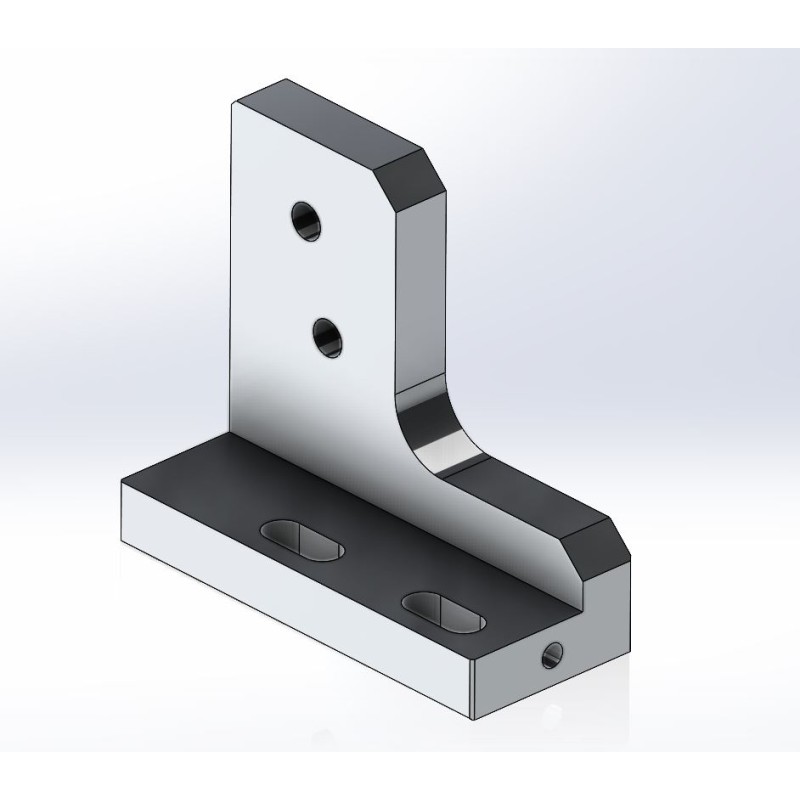
Precision machining / Jig gá
Seiko Industry Vietnam Co., Ltd. (SIV) is a precision mechanical manufacturing company 100% owned by Akita Seiko (Japan), established on October 17, 2012, and officially commenced operations in Novemb ...
PICKUP
Technology & Services
CONTACT
Contact