BLOG
Knowledge
Producer goods
What are the differences between Acrylic and Polycarbonate? How to choose by application
2026-08-25
【What are the differences between Acrylic and Polycarbonate? How to choose based on application】
Acrylic and polycarbonate are representative transparent resins. By correctly understanding their respective properties, you can select the appropriate material for your application, leading to improved quality and durability.
【Overview】
Acrylic (PMMA) and polycarbonate (PC) are both resin materials with excellent transparency, used in a wide range of fields. However, there are significant differences in their performance, such as impact resistance, heat resistance, and processability, making it crucial to use them appropriately according to the application. Selecting materials based solely on their shared transparency can lead to problems such as breakage or deformation. This article provides a clear explanation of their respective features, applications, and key points for selection.
【Features】
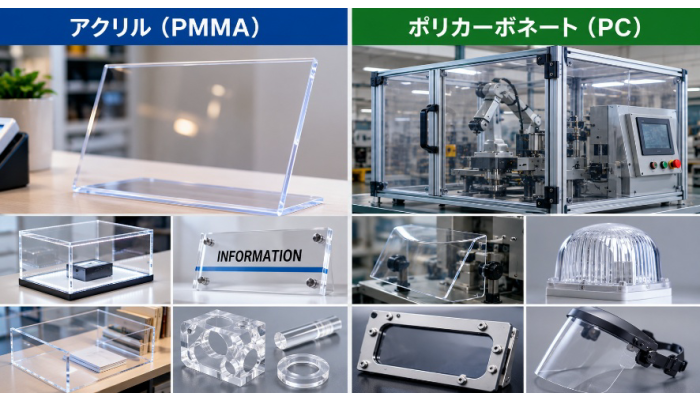
Acrylic is a resin with a very high light transmittance of approximately 94%, offering superior transparency compared to general glass. It also boasts excellent weather resistance, making it easy to maintain transparency outdoors, and is suitable for applications where design aesthetics are important, such as signboards and displays. On the other hand, its impact resistance is lower than that of polycarbonate, requiring caution in environments where strong impacts may occur. Polycarbonate is an engineering plastic that maintains transparency while possessing extremely high impact resistance. Furthermore, it excels in heat resistance and dimensional stability, and is widely adopted in applications requiring safety and durability. Conversely, compared to acrylic, its surface hardness is lower, and it tends to be more susceptible to scratches, making selection based on the usage environment crucial.
【Applications】
Acrylic is used in products requiring high transparency and aesthetic appeal, such as signboards, store displays, display cases, lighting covers, aquariums, and decorative panels. Polycarbonate is suitable for applications requiring impact resistance and durability, such as safety covers, protective screens, machine equipment protective windows, security panels, and architectural daylighting materials. It is important to select materials after organizing the performance requirements for each application.
【Industries of Use】
Both materials are used in various industries, including industrial machinery, electrical and electronics, construction and building materials, semiconductor manufacturing equipment, medical devices, and store fixtures. Acrylic is often adopted for products emphasizing transparency and design aesthetics, while polycarbonate is frequently used for equipment and components prioritizing safety and impact resistance.
【Features of MEISEI INTERNATIONAL TRADING's Acrylic and Polycarbonate Solutions】
As the Vietnam agent for Nitto Jushi Kogyo Co., Ltd.'s "CLAREX", MEISEI INTERNATIONAL TRADING offers high-quality acrylic products. CLAREX combines high transparency, excellent weather resistance, and a beautiful appearance, and is adopted in a wide range of fields, from industrial applications to displays and machine covers. Furthermore, for various resin materials including polycarbonate, we propose optimal materials tailored to your application and usage environment.
When considering acrylic products in Vietnam, please feel free to contact MEISEI INTERNATIONAL TRADING. Further details can be found in our catalog.
Company Information
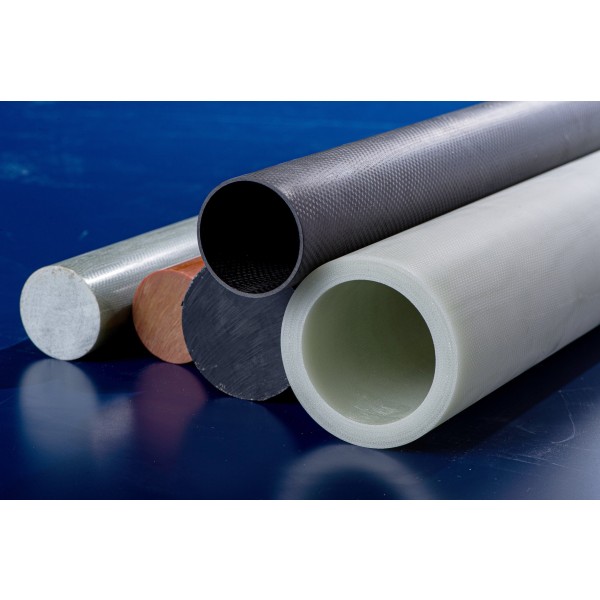
Plastic Products / Film tape material / pressed products, jigs
Our company has a 77-year history of operations in Japan, specializing in general plastic products, and also serving as a distributor and processing company. Last year, we established a subsidiary in ...
_thumb_d6b5ad6e-963a-4692-89b3-af7fa072a6ce.png)
PICKUP
Technology & Services
CONTACT
Contact