
BLOG
Knowledge
Technology and Services
Investment Casting Defects: 7 Common Defects, Causes, and Prevention
2026-09-25
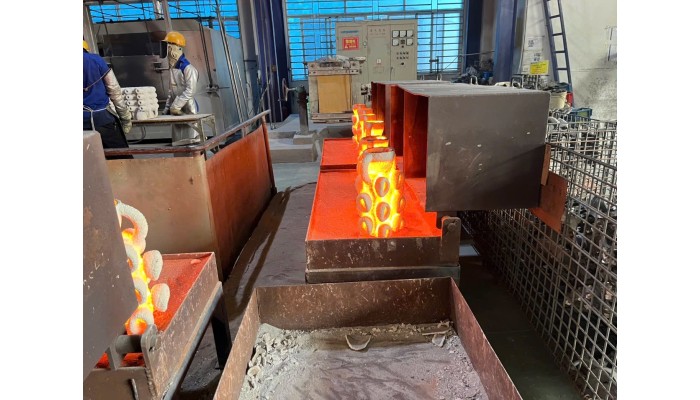
What are the common defects in investment casting?
In investment casting, common defects can be divided into 7 main categories below, each related to different causes and control stages.
| Defect | Manifestation | Main Cause | Control Stage |
| Gas porosity | Round voids on or within the casting | Gas, moisture, melting and pouring conditions | Shell, mold firing, melting, pouring |
| Shrinkage porosity | Cavities or porous areas in thick sections | Insufficient metal feeding during solidification | Gating system, solidification |
| Misrun | A part of the product is not filled | Metal cools before filling | Temperature, gate, wall thickness |
| Cold shut | A seam between two metal flows | Two metal flows do not completely fuse | Temperature, flow |
| Inclusions | Ceramic, oxide, or foreign material in the casting | Shell spalling, oxide, or poor cleanliness | Shell, firing, melting, pouring |
| Cracks | Cracks appear on or within the part | Thermal stress, shrinkage | Design, solidification, heat treatment |
| Surface defects | Roughness, depressions, excess metal, ceramic adhesion | Unstable wax pattern or shell | Wax, shell |
The location where a defect is detected and the location where the cause originates can differ. For example, ceramic may be found in the finished casting, but the cause could have started from the shell building stage.
Gas Porosity
What is gas porosity?Gas porosity refers to round or nearly round voids appearing on the surface or inside the casting. Some gas porosity only becomes apparent after machining.Causes of Gas PorosityGas porosity can be related to residual moisture in the ceramic shell, gas trapped within the mold cavity, molten metal condition, or unstable melting and pouring conditions.Specifically, if the shell is not dried or fired under proper conditions, moisture and gases generated upon contact with molten metal can increase the risk of void formation.
How to Prevent Gas Porosity
It is necessary to simultaneously control shell drying conditions, mold firing cycle, molten metal condition, and pouring temperature and speed.Gas porosity should not be simply addressed by increasing or decreasing pouring temperature. The appropriate temperature range depends on the material, product shape, wall thickness, and gating system design.
Shrinkage Porosity
Shrinkage porosity forms when the metal reduces in volume during solidification, but that area is not sufficiently replenished with molten metal.The risk is often higher in thick-walled areas, intersections of multiple sections, or locations with large concentrations of metal mass.How to Prevent Shrinkage Porosity:The focus is not only on pouring temperature but also on gate design, feeding capability, and solidification direction.
| Control Point | Objective |
| Gate position | Effectively feed metal to the area requiring compensation |
| Product wall thickness | Limit areas of heat concentration |
| Solidification direction | Avoid isolated metal regions |
| Mold and metal temperature | Maintain stable filling and solidification conditions |
| Product design | Reduce abrupt section changes where possible |
For new products, considering the casting design before mold making can help reduce the risk of shrinkage porosity from the outset.
How do Misrun and Cold Shut Differ?
Misrun occurs when molten metal does not completely fill the mold cavity before solidifying.Cold shut occurs when two streams of molten metal meet but do not completely fuse, forming a distinct seam on the casting.
| Criterion | Misrun defect | Cold shut |
| Manifestation | Missing part of the shape | A seam on the surface |
| Main phenomenon | Metal does not reach the entire mold | Two metal flows do not completely bond |
| Related factors | Temperature, thin walls, gate | Temperature, flow speed, and direction |
| Prevention | Improve filling capability | Stabilize metal flow and temperature |
These two defects are more likely to occur in products with thin walls, long flow paths, or complex shapes.Therefore, analysis must simultaneously consider metal temperature, mold temperature, gating system design, and the overall filling capability of the product.
Inclusion Defects
Inclusions are one of the defects that require attention in investment casting.Inclusions can be ceramic fragments, metal oxides, slag, dust, or foreign materials entering the mold cavity or molten metal.In lost wax casting, the ceramic shell is a source that requires special control. If the shell cracks or spalls, ceramic fragments can be carried into the metal flow and remain inside the casting.How to Prevent Inclusions:Control points should start from the shell building stage. The quality of the slurry (ceramic suspension), refractory layers, drying time, shell strength, and the dewaxing and mold firing processes can all affect the risk of ceramic spalling.In the metal stage, it is necessary to control the condition of the molten metal, oxides, and the cleanliness of the melting-pouring process.Therefore, an effective measure is not just to detect foreign objects in the final product, but to limit the source of foreign objects from the beginning of the process.
Casting Cracks?
Casting cracks can arise during metal solidification or after the product has cooled.Factors often considered include shrinkage stress, temperature differences, abrupt changes in wall thickness, sharp corners, cooling rate, and heat treatment conditions.A thick section directly connected to a very thin section can cool unevenly. When shrinkage differs between areas, stress can concentrate at certain points and increase the risk of cracking.Therefore, crack prevention should start with casting design, followed by controlling solidification, cooling, and heat treatment.
Surface Defects
The surface of an investment casting is directly affected by the wax pattern and the ceramic layer in contact with the pattern.If the wax pattern has depressions, burrs, deformation, or surface flaws, these characteristics can be replicated onto the casting.Similarly, an unstable shell can cause rough surfaces, ceramic adhesion, or excess metal at mold crack locations.Therefore, for surface defects, merely increasing grinding or post-casting processing steps does not address the root cause. It is necessary to re-examine the wax pattern, slurry, coating, and shell drying conditions.
Which stages affect each type of investment casting defect?
Investment casting is a continuous chain. Each stage has its own set of risks. The table below shows why controlling a single stage is not enough to reduce all investment casting defects.
| Stage | Defects to Prevent | Control Point |
| Wax pattern creation | Dimensional inaccuracy, deformation, surface defects | Molding and pattern stabilization conditions |
| Wax assembly | Misrun, cold shut | Gate and product layout |
| Shell building | Inclusions, surface defects | Slurry, coating, drying |
| Dewaxing | Shell cracks | Dewaxing conditions |
| Mold firing | Gas porosity, shell cracks | Thermal cycle |
| Metal melting | Inclusions, incorrect composition | Raw materials, temperature, molten metal |
| Pouring | Misrun, cold shut, metal oxides | Temperature, speed, gating system |
| Solidification | Shrinkage porosity, cracks | Feeding and solidification direction |
| Post-casting processing | Cracks, deformation | Cutting, heat treatment, rectification |
Is Final Product Inspection Sufficient to Prevent Casting Defects?
Final product inspection helps detect non-conforming products, but by that point, the product has gone through almost the entire production process and has consumed materials, labor, energy, and time.More effective defect prevention requires shifting the focus from:Detecting defects after production => Controlling causes before defects arise.For example, when ceramic inclusions are detected, it is necessary to trace back to the shell, dewaxing, and mold firing stages. When shrinkage porosity appears, it is necessary to re-examine the gate, solidification direction, and product structure. If dimensional inaccuracies recur, the wax pattern and heat treatment conditions must also be included in the analysis scope.This is why **process traceability** is particularly important for investment casting.
How does continuous process control help Kobayashi Casting prevent defects?
Kobayashi Casting specializes in manufacturing stainless steel parts using investment casting (lost wax casting), meeting the requirements for complex shapes, high precision, and superior surface quality.In stainless steel investment casting production, the quality of the finished product is determined even before the metal is poured into the mold.Kobayashi Casting controls the relevant stages from wax pattern, ceramic shell building, metal melting and pouring, to product processing and inspection. Continuous management across stages helps the factory pinpoint causes when anomalies occur, rather than merely rejecting defective products at the final stage.If you are experiencing issues with gas porosity, shrinkage porosity, inclusions, or need to evaluate the feasibility of producing stainless steel parts by investment casting, please contact Kobayashi Casting for suitable solutions
Company Information
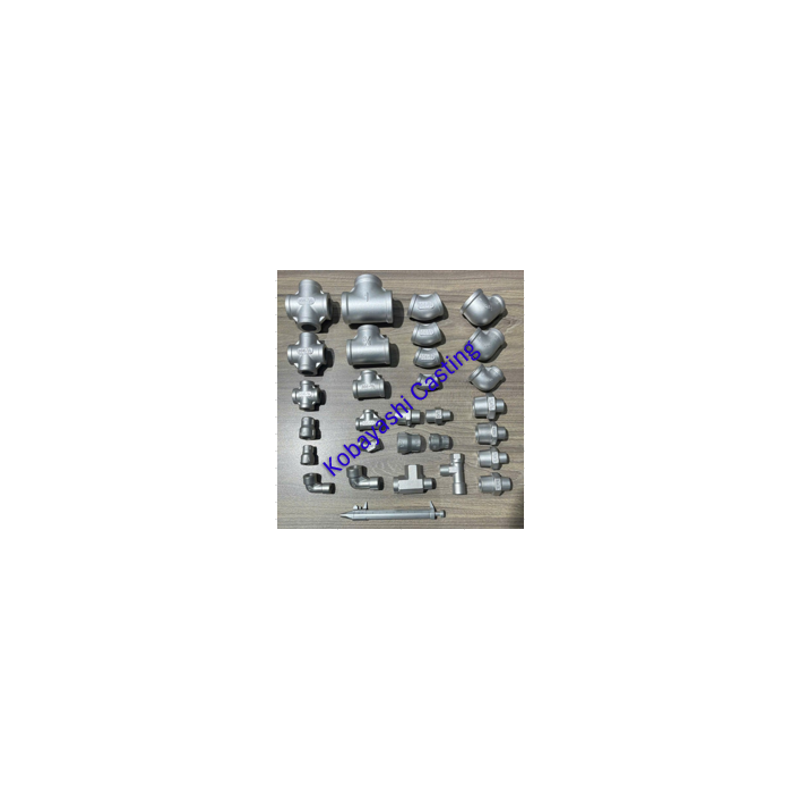
Machine tools / Industrial machinery / Medical equipment
Steel precision casting / Stainless-steel precision casting / machining precision mechanical parts
Founded in 2019, Kobayashi Casting specializes in precision casting of stainless steel products using lost wax casting technology. The company currently operates a factory in Binh Duong Province, Viet ...
PICKUP
Technology & Services
CONTACT
Contact