


-
Check
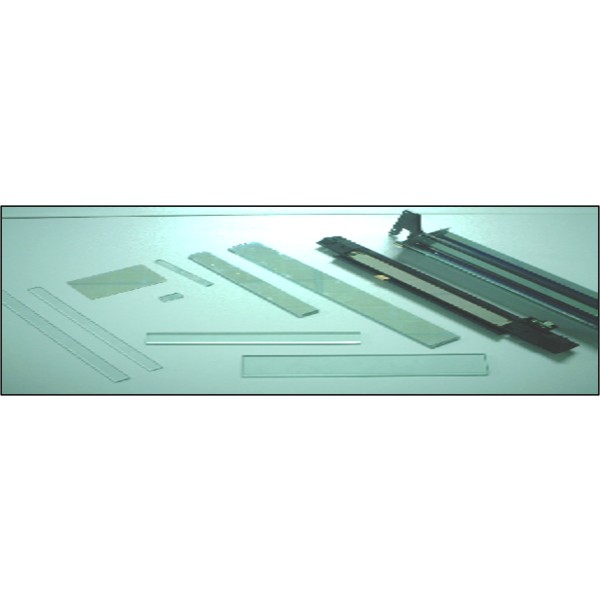

About Precision cutting
Glass bonding is a processing technology that integrates glass materials with each other, or glass with dissimilar materials. It is indispensable for products requiring high airtightness, optical properties, heat resistance, electrical insulation, and other characteristics, and is utilized in a wide range of fields such as displays, semiconductor packages, MEMS, medical devices, optical components, and vacuum equipment. Representative bonding methods include "direct bonding," which activates the glass surface for direct bonding; "anodic bonding," which bonds glass and silicon (and other materials) by applying an electric field; "frit glass bonding," which involves heat bonding via low-melting-point glass powder (frit glass); "adhesive bonding," which uses UV-curable or thermosetting adhesives; and "laser bonding," which bonds by localized laser heating. These methods differ in characteristics such as bonding strength, hermeticity, thermal history, and the feasibility of dissimilar material bonding, making optimal process selection according to the application crucial.
