
Ohashi Tekko Vietnam Inc.
SERVICES
Technology & Services
Typical defects and countermeasures in parking rod manufacturing
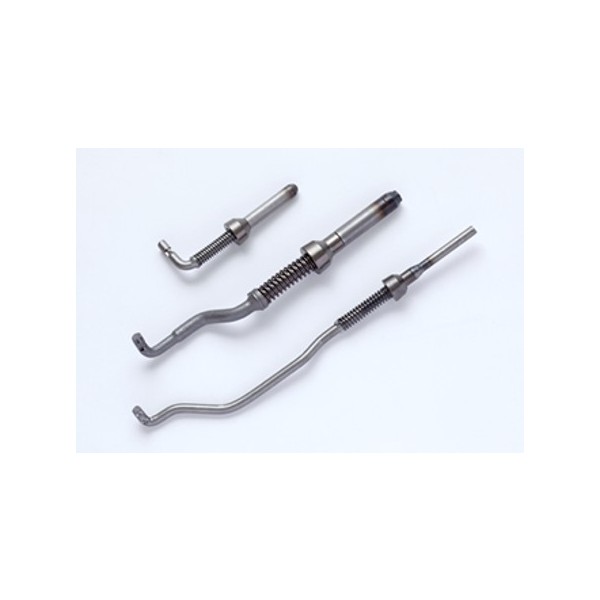
■ About Parking Rods
A parking rod is a rod in the parking lock mechanism that moves the parking pawl by shift lever operation, and is a critical component for reliably stopping the vehicle in the "P range" of an automatic transmission (AT) vehicle. Even slight errors in shape or poor surface quality can lead to a decline in the locking function, abnormal noise, and overall operational malfunctions of the AT. Here, we will organize typical defects and their countermeasures.
■ Applicable Parts and Uses
Mainly used in the parking lock mechanism of AT vehicles. The rod shape and cam angle vary depending on the vehicle model, and they are incorporated into various AT units such as kei cars, passenger cars, and trucks.
■ Typical Defects and Precautions
The following items are typical defects:
1. Adhesion of foreign matter (e.g., chips, lint)
If foreign matter adheres and the part is assembled, it can bite into the parking lock gear, leading to damage to related parts and the risk of the vehicle becoming inoperable.
2. Dimensional defects
Defects in cam collar angle, surface roughness, or product dimensions can prevent assembly to the manual valve lever or engagement of the P range, leading to inoperable shift lever.
3. Cam dents, burrs, and poor pin angle
If dents or burrs remain, smooth operation is hindered, leading to inoperable shift lever.
4. Wrinkles in bent sections, poor bend radius (R), and uneven hardening penetration
If the bent shape does not conform to specifications, stress concentration can occur, causing rod breakage.
5. Incorrect component assembly, poor welding position, welding defects
If the parking mechanism disengages or fails to engage on a slope, it can lead to a vehicle unlockable state and potentially serious accidents.
■ Countermeasures for Defect Avoidance
To prevent the above defects, it is effective to manage the following points at each process step:
・ Manage the frequency of glove replacement (which causes lint), and the concentration, contamination, and replacement cycle of cleaning solutions. Thoroughly implement 2S (Seiri, Seiton - Sort, Set in order) in the welding process to suppress the inclusion of lint and chips.
・ To prevent dimensional defects, regularly inspect jig wear, confirm reference positions, and calibrate measuring equipment.
・ Standardize product handling to prevent dents. Clarify deburring standards.
・ Establish inspection items for comparison with good samples to thoroughly prevent wrinkles and scratches in the rod's bent sections.
・ To prevent incorrect component assembly and out-of-tolerance dimensions, confirm component parts using on-site display boards.
・ Strengthen inspection machine accuracy verification using masters and first-off samples to prevent poor welding positions.
・ Conduct full-circumference inspection of welded parts to ensure zero overlooked welding defects.
■ Key Points for Purchasers
Since parking rods are central components of safety devices, sharing specifications and clarifying quality requirements at the ordering stage is extremely important. By presenting the following points in advance, the manufacturing side can set optimal processing conditions and inspection standards, significantly reducing the risk of defects.
・ Permissible range for critical characteristics such as dimensions, cam angle, and R shape
・ End face finishing conditions (presence/absence of deburring, R dimension, surface roughness)
・ Evaluation method for bent shape (straightness measurement, jig standards, good sample for comparison)
・ Requirements regarding foreign matter contamination control (cleanliness level, packaging specifications, etc.)
・ Welding specifications (positional accuracy, strength, appearance standards)
・ Assembly direction and identification information for assembled parts
・ Inspection items and inspection frequency (first-off samples, periodic lots, 100% inspection, etc.)
■ Features of Ohashi Tekko Vietnam's Parking Rod Manufacturing
Ohashi Tekko Vietnam specializes in the mass production processing of shafts and rods, possessing equipment and technology to consistently perform bending, cam forming, and end face finishing. We thoroughly implement in-process inspections based on quality standards common with our Japanese headquarters, suppressing variations in critical characteristics such as straightness and cam angle. Furthermore, through measures against bending by jig improvement and standardization of finishing processes, we provide stable quality that minimizes defects specific to parking rods.
For more details, please download the PDF or feel free to contact us.
Company Information
Main 3 Products
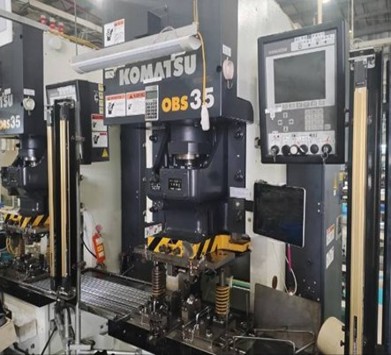
Cationic electrodeposition coating / Pressing / Press-fitting
Phone Number
Homepage URL
Ohashi Tekko Vietnam is a manufacturing base for critical automotive safety components that support the running, stopping, and turning of vehicles. We have established a fully integrated production sy ...
CATALOG
Related Catalogs
PICKUP
Technology & Services

CONTACT
Contact