
Ohashi Tekko Vietnam Inc.
BLOG
Knowledge
Technology and Services
Principles of Cation Electrodeposition Coating and Defect Prevention Measures
2026-05-10
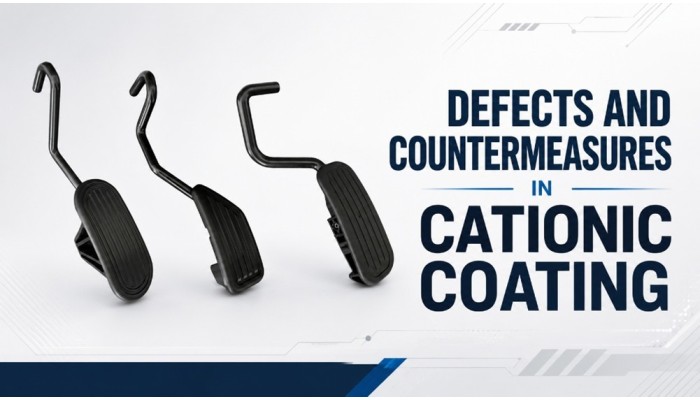
Principles of Cation Electrodeposition Coating and Defect Prevention Measures
Cation electrodeposition coating is one of the representative surface treatment technologies that supports corrosion-resistant quality in automotive components. It can form a uniform coating film even on complex-shaped parts and offers excellent quality stability in mass production. For this reason, it is widely used for functional and safety-related components.
The Ohashi Tekko Group operates cation coating lines both domestically and overseas, establishing an integrated system for mass production and quality evaluation. Rather than ensuring quality only within the coating process itself, the company manages quality throughout the entire process from pretreatment to baking. Its fundamental approach is not to “guarantee quality through inspection,” but to “build quality into the manufacturing process itself.”
■ What is Cation Electrodeposition Coating?
Cation coating is a type of electrodeposition coating in which the workpiece acts as the cathode, while positively charged paint particles are deposited onto the metal surface through electric current.
As electricity is applied, the coating film gradually forms. Once the film reaches a certain thickness, electrical resistance increases, preventing excessive paint deposition.
Basic Process Structure:
Pretreatment (degreasing, cleaning, chemical conversion treatment)
Electrodeposition coating (film formation through electrical current)
Water rinsing (removal of excess paint)
Baking (film curing)
Through the integration of these processes, a highly corrosion-resistant and uniform coating film is achieved.
Main Advantages:
Excellent corrosion resistance
Uniform coating thickness
Strong coating adhesion on complex shapes
High reproducibility and stability in mass production
■ Applicable Parts and Applications
Cation coating is applied to conductive metal parts. In the automotive industry, it is mainly used for:
Brackets and stays
Pipe components and welded structures
Safety and functional components (anchors, reinforcement parts, etc.)
It is particularly valued for its ability to maintain stable coating performance even on complex-shaped parts with uneven surfaces or enclosed structures.
■ Potential Defects
Defects are usually caused by multiple factors interacting together. Typical examples include:
Poor adhesion (insufficient pretreatment)
Uneven coating thickness (improper electrical conditions or jig issues)
Dust particles and foreign material adhesion (originating from liquid or equipment)
Pinholes (caused by gas release or insufficient cleaning)
Incomplete curing (insufficient baking conditions)
At Ohashi Tekko, these issues are not addressed only after occurrence; instead, they are anticipated and controlled in advance within the production process.
■ Quality Control System for Stable Production
At our company, the quality of cation electrodeposition coating is not “guaranteed through inspection,” but “built into the manufacturing process itself.” Potential defects and their causes are analyzed and standardized as control items within each process.
① Pretreatment Process Control
Stabilizing degreasing, cleaning, and chemical conversion conditions to minimize variations in coating adhesion.
② Coating Liquid Management
Continuous monitoring of coating liquid conditions such as solid content, pH, and conductivity to ensure early detection of abnormalities and stable coating performance.
③ Process Condition Management
Standardization of electrodeposition conditions and processing times, along with change-point management (start-up, product model changes, etc.), to minimize fluctuations and quality variations.
④ Equipment and Jig Management
Maintenance and control of nozzles, tanks, hangers, and related equipment to prevent contamination and contact defects.
⑤ Baking Process Management
Control of baking temperature and holding time to maintain stable curing conditions for the coating film.
■ Features of Ohashi Tekko’s Cation Coating Technology
The Ohashi Tekko Group analyzes causes based on past defect cases and reflects them into process management to achieve not only recurrence prevention but also proactive defect prevention.
In addition, equipment, jigs, and process conditions are managed in an integrated manner rather than individually, enabling comprehensive control of quality-related factors.
Cation coating operations are also implemented at the company’s Vietnam facilities in the same manner as in Japan. By embodying the philosophy of “building quality throughout the entire process,” the company has established a stable quality supply system both domestically and internationally.
Please download the PDF for more details or feel free to contact us for inquiries.
Company Information
Main 3 Products
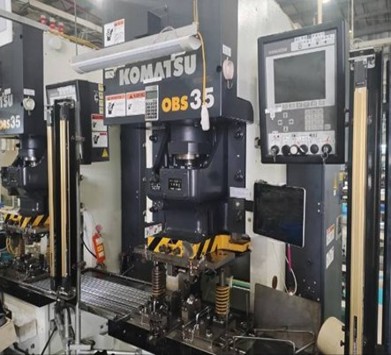
Cationic electrodeposition coating / Pressing / Press-fitting
Phone Number
Homepage URL
Ohashi Tekko Vietnam is a manufacturing base for critical automotive safety components that support the running, stopping, and turning of vehicles. We have established a fully integrated production sy ...
PICKUP
Technology & Services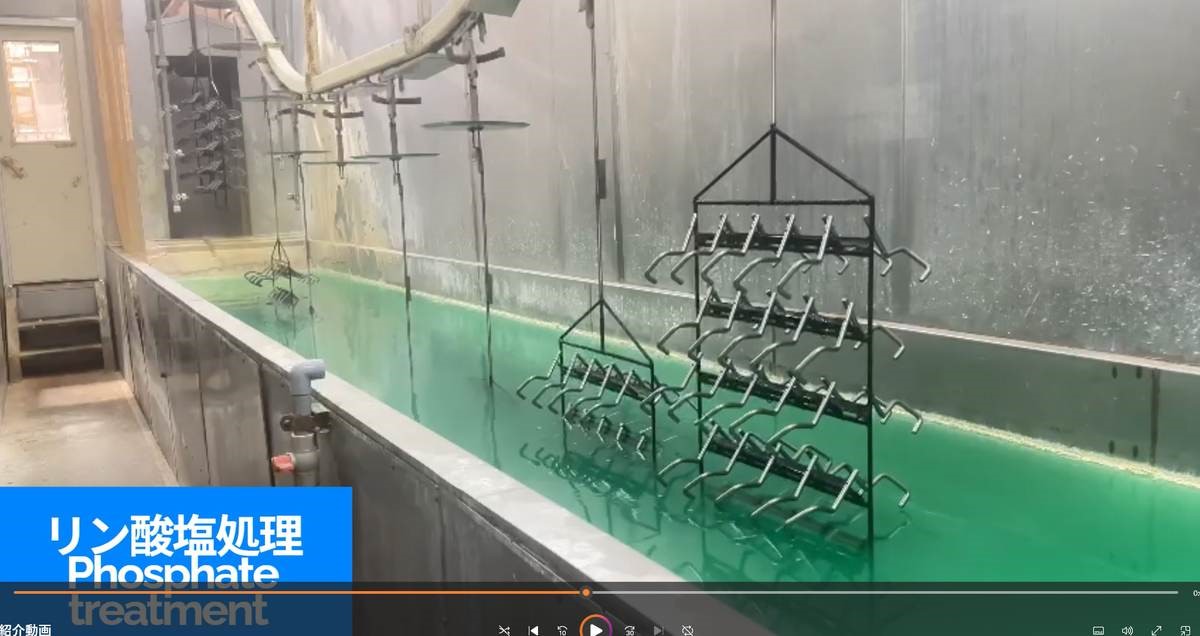

CONTACT
Contact