


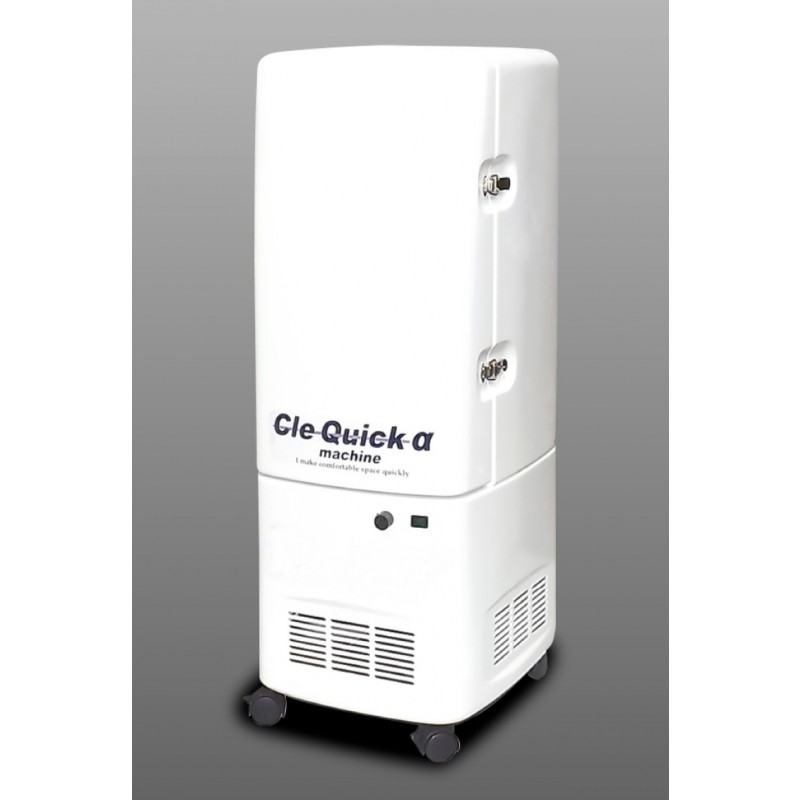
Shuman Cle Quick Alpha MA-03A Deodorizer
The Shuman Cle Quick Alpha MA-03A SAT Deodorizer is an equipment in the field of commercial deodorization equipment / chemical adsorption deodorizer / indoor odor control / air treatment system / commercial deodorizer / indoor odor treatment equipment / chemical adsorption odor filter, developed and manufactured by Shuman Inc. of Japan, and supplied, leased, or supported by SAT Co., Ltd. for offices, stores, restaurants, hotels, hospitals, welfare facilities, pet shops, and service areas that need to improve their air environment.
The equipment is used to draw in odorous air, pass it through a specialized deodorizing filter, and circulate the treated air back into the usage area. The product is suitable for spaces generating odors from food, tobacco, domestic waste, pets, waste products, body odor, and certain odorous compounds in commercial or service environments.
Cle Quick Alpha MA-03A does not use a single fixed filter type for all odor sources. The chosen solution is based on the odor composition, concentration, source location, space area and height, ventilation conditions, operating time, airflow volume, power supply, and the treatment objectives of each customer.
1. Product Highlights
Cle Quick Alpha MA-03A uses Shuman's proprietary honeycomb-type Cle filter to treat odor-causing molecules in the airflow.
The filter material is designed to adsorb and retain odor-causing components through a chemical mechanism suitable for each group of substances.
The filter can be selected according to the type of odor to be treated, instead of using a general material for all applications.
The equipment has a standalone structure, allowing customers to place it in the treatment area without necessarily needing to implement complex ducting systems in typical applications.
The machine uses AC 100 V power, standard for the Japanese market. When used in countries with different voltages, customers need to confirm the power supply solution with the supplier.
Airflow volume can be adjusted using a speed controller to match the room area and the level of odor generation.
According to manufacturer specifications, the airflow volume at 50 Hz ranges from 234–660 m³/h and at 60 Hz ranges from 168–720 m³/h.
Power consumption is approximately 74 W at 50 Hz and 100 W at 60 Hz, suitable for continuous operation in many commercial and service spaces.
Equipment dimensions are approximately 328 mm (width) × 854.5 mm (height) × 358 mm (depth), with a weight of approximately 19.5 kg.
The vertical design allows the machine to occupy less floor space compared to some large-scale industrial air treatment systems.
The recommended filter replacement interval is approximately three months to one year, depending on the odor type, concentration, operating time, and environmental conditions.
The standard equipment may not include a filter, so customers need to select the appropriate filter type for their actual odor source.
2. What needs is the product suitable for?
The Shuman Cle Quick Alpha MA-03A SAT Deodorizer is suitable for:
- Offices and workspaces.
- Meeting rooms and reception areas.
- Retail stores.
- Restaurants and dining areas.
- Hotels and accommodation facilities.
- Hospitals and clinics.
- Nursing homes and welfare facilities.
- Pet shops.
- Veterinary hospitals.
- Temporary waste collection areas.
- Staff break rooms.
- Smoking areas.
- Spaces with food odors or domestic odors.
- Service establishments wishing to improve customer experience.
- Areas where fixed deodorization ducting is inconvenient to install.
For offices and reception areas, the equipment can be placed near the odor source or in an area with circulating airflow to help reduce odor accumulation in the room.
For restaurants, food stores, or hotels, customers need to clearly identify whether the odor source originates from the preparation area, dining area, waste disposal, or ventilation system to select the appropriate machine placement and filter type.
For hospitals and welfare facilities, the machine can assist in treating odors in care rooms, corridors, waiting areas, or restrooms. The equipment does not replace ventilation systems, hygiene procedures, infection control, or mandatory professional measures.
For pet shops and animal care facilities, it is necessary to assess the number of animals, room area, cleaning frequency, and odor generation level to determine the operating airflow and filter replacement cycle.
3. Consultation and Supply Process
The process may include:
- Receiving information about the space to be treated.
- Identifying the odor source and type.
- Assessing the level of odor generation and its persistence.
- Determining the room's area, height, and volume.
- Checking ventilation conditions and airflow.
- Determining equipment installation location.
- Selecting the appropriate Cle filter type.
- Confirming the power supply at the usage location.
- Proposing operating airflow.
- Evaluating the need for equipment purchase, lease, or maintenance.
- Installing or positioning the machine at the usage location.
- Providing operation and filter replacement instructions.
- Monitoring treatment effectiveness under actual conditions.
- Adjusting configuration if the odor source or usage environment changes.
For new projects, customers should provide images of the area, floor plans, area, ceiling height, odor source location, generation time, daily operating hours, and existing power supply.
If odors originate from multiple sources or spread through the ventilation system, additional information about airflow direction, intake vents, exhaust vents, ventilation fans, and existing air treatment equipment should be provided.
3.1. Machine Selection Criteria
The equipment and filter are selected based on:
- Type of odor to be treated.
- Chemical composition of the odor source.
- Concentration and generation level.
- Space area.
- Ceiling height.
- Room volume.
- Ventilation conditions.
- Airflow direction.
- Distance from odor source to equipment.
- Odor generation time.
- Daily operating hours.
- Number of occupants in the space.
- Temperature and humidity.
- Power supply at the installation site.
- Equipment placement location.
- Noise level requirements.
- Desired filter replacement cycle.
- Purchase, lease, or maintenance option.
- Customer's operating standards.
Applications with light and intermittent odors can use low or medium airflow settings to balance treatment effectiveness and noise level.
Applications with continuous odor sources, large spaces, or high generation levels require evaluating the possibility of using multiple units, supplementing with local exhaust systems, or selecting higher-capacity models.
3.2. Information Customers Need to Provide
Customers should provide:
- Type of facility.
- Location and area to be treated.
- Room area and height.
- Odor source.
- Description of odor characteristics.
- Time when odor appears.
- Duration of odor persistence.
- Impact level on users/occupants.
- Daily operating hours.
- Ventilation conditions.
- Location of doors, windows, and exhaust fans.
- Existing power supply.
- Proposed machine placement location.
- Noise level requirements.
- Need for equipment purchase or lease.
- Maintenance and filter replacement requirements.
- Desired time for machine deployment.
The more complete the information, the more accurately the filter selection, airflow determination, machine placement, and supply solution can be tailored to actual conditions.
3.3. Inspection and Operation
Before operation, it is necessary to check the power supply, cable condition, machine placement, direction of intake and exhaust vents, filter, and the set fan speed level.
The equipment should be placed on a stable surface, with intake or exhaust vents unobstructed, and with adequate clearance for air circulation.
When installing the filter, it is necessary to confirm the correct filter material type, correct installation direction, and ensure the filter is securely seated in the machine compartment.
During operation, users should monitor the level of odor reduction, noise, airflow volume, and dust accumulation on the intake vent.
If treatment effectiveness decreases, it is necessary to check the filter condition, operating airflow, changes in the odor source, and equipment placement.
Filters need to be replaced or processed according to the cycle recommended by the supplier. Actual service life may be shorter with high odor concentrations or continuous machine operation.
Intake vents, exhaust vents, and equipment surfaces need to be cleaned periodically to prevent dust from obstructing airflow.
The equipment should not be used in environments with temperature, humidity, chemicals, or dust exceeding permissible conditions without prior assessment by a technical unit.
In case the odor source changes, customers need to reconfirm the filter type, as the currently used material may not be suitable for the new group of odor-causing substances.
4. Benefits for Customers and Businesses
The equipment helps reduce unpleasant odors in offices, stores, and service areas.
The standalone design allows customers to deploy quickly without extensive ducting system modifications in many typical applications.
The adjustable airflow feature allows users to select an operating level suitable for the room area, occupancy density, and odor generation level.
Filters selected for specific odor groups enhance suitability compared to using a general filter material for all applications.
Odor control contributes to improving customer perception when visiting stores, hotels, restaurants, or service facilities.
For offices and care facilities, a less odorous environment can help enhance comfort for staff, patients, the elderly, and users.
For pet shops or facilities with specific odor sources, the equipment helps maintain a cleaner and more professional space.
The leasing option can help businesses test treatment effectiveness before deciding on a long-term investment, subject to SAT's supply conditions.
Regular maintenance and filter replacement help maintain airflow, limit efficiency degradation, and extend equipment service life.
5. Highlights and Suitable Customers
Product highlights include:
- Model Cle Quick Alpha MA-03A.
- Shuman brand from Japan.
- Supplied and supported by SAT Co., Ltd.
- Standalone deodorizer design.
- No extensive ducting system required in many typical applications.
- Uses honeycomb-type Cle filter.
- Filter selected according to odor type.
- Chemical adsorption mechanism for odor-causing components.
- Adjustable airflow volume.
- Maximum airflow approximately 660 m³/h at 50 Hz.
- Maximum airflow approximately 720 m³/h at 60 Hz.
- Low power consumption.
- Compact vertical dimensions.
- Weight approximately 19.5 kg.
- Suitable for offices and stores.
- Suitable for hospitals and welfare facilities.
- Suitable for restaurants, hotels, and service areas.
- Applicable in pet shops and veterinary hospitals.
- Supports supply, lease, or maintenance options depending on conditions.
- Filter selection based on odor source survey.
The Shuman Cle Quick Alpha MA-03A SAT Deodorizer is suitable for businesses, stores, offices, restaurants, hotels, hospitals, care facilities, pet shops, and customers who need to treat odors in commercial or service spaces using standalone equipment.
SAT Co., Ltd. supports customers from receiving odor source information, space assessment, filter selection, airflow confirmation, machine placement consultation, to supply, lease, maintenance, and replacement of filter materials suitable for actual usage conditions.
Environmental equipment / Commercial Equipment / Others
CONTACT
Inquiry for the above productCompany Information

Machine tools / Industrial machinery / Measuring machinery
Precision mechanical components / Manufacturing equipment / Factory environmental equipment
SAT Co., Ltd. (エスエイティ株式会社) is a Japanese company operating in the fields of technical trading, precision machining, industrial equipment manufacturing, international production management, machine too ...