
BLOG
Knowledge
Technology and Services
Selection of stainless steel material for investment casting components in the food industry
2026-07-17
In the food industry, metal components frequently come into contact with water, salt, organic acids, hot steam, and cleaning chemicals. Therefore, selecting the correct stainless steel material directly impacts the equipment's corrosion resistance, durability, lifespan, and safety level. For complex-shaped parts such as valve bodies, pump casings, impellers, couplings, etc., investment casting is a commonly used manufacturing method.
How is stainless steel investment casting applied in the food industry?
Investment casting is suitable for stainless steel components with complex 3D shapes, multiple curved surfaces, stiffening ribs, through-holes, or areas difficult to machine entirely by cutting. Compared to welded assemblies, lost wax casting can help reduce the number of parts, limit weld lines, and produce parts closer to their finished shape. After casting, surfaces requiring high tolerances can still be CNC machined. Food industry components commonly produced using this technology include:
- Valve bodies and pump casings
- Impellers
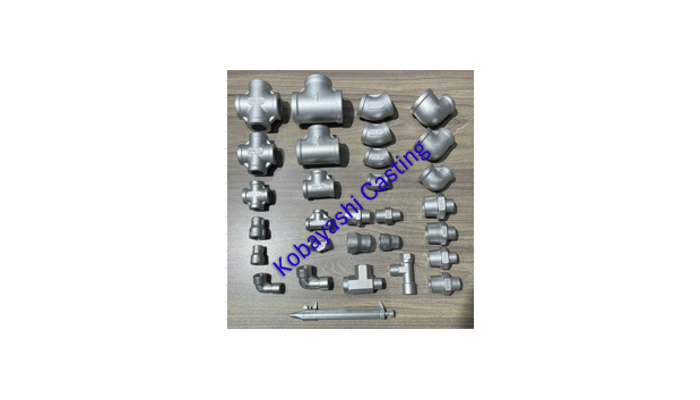
- Connectors and couplings
- Clamps, hinges, and handles
- Sensor brackets
- Coffee machine components
- Dosing machine components
- Packaging machine components
- Parts for seafood and beverage processing equipment
Key criteria for selecting lost wax cast stainless steel
There is no single stainless steel grade suitable for all food equipment. Material selection should be based on the following factors:
- Whether the component directly contacts food
- Salt and chloride content
- Level of exposure to organic acids
- Operating temperature and pressure
- Type of cleaning chemicals
- Cleaning frequency
- Post-casting welding requirements
- Required strength and hardness
- CNC machinability
- Material certification and batch traceability requirements
A stainless steel grade with high corrosion resistance may not necessarily be the optimal choice if it is expensive, difficult to process, or unnecessary for the actual operating environment.
Common cast stainless steel grades in the food industry
SCS13 and CF8: Cast stainless steel grades similar to SUS304 and AISI 304
SCS13 and CF8 belong to the Cr-Ni austenitic stainless steel group. These are commonly used cast stainless steel grades in general food equipment.(*) SUS304 and AISI 304 typically refer to rolled, sheet, or bar materials. In contrast, SCS13 and CF8 are grades used for cast products. This group of materials offers good corrosion resistance in water, low-salt food environments, and not overly harsh sanitary conditions. Machinability and polishability are also relatively favorable. Suitable applications include:
- Brackets and machine bodies
- Clamps and hinges
- Couplings
- Beverage dispensing machine components
- Water-contacting components
- Parts not operating in high-chloride environments
SCS14 and CF8M: Cast stainless steel grades similar to SUS316 and AISI 316
SCS14 and CF8M contain added molybdenum. This component enhances pitting corrosion resistance in chloride-containing environments. Compared to SCS13 and CF8, the SCS14 and CF8M group is more suitable for:
- High-salt foods
- Seafood processing equipment
- Equipment frequently exposed to cleaning chemicals
- Valve bodies
- Pump casings
- Salty food processing machines
- Beverage equipment
- Components operating in humid and highly corrosive environments
The material and processing costs for SCS14 or CF8M are generally higher than for the SCS13 or CF8 group. Therefore, the operating environment should be evaluated before selection.
CF3 and CF3M: Low-carbon cast stainless steel
CF3 is similar to 304L, while CF3M is similar to 316L. Low carbon content helps reduce the risk of chromium carbide precipitation during welding or heating. As a result, the material maintains the necessary chromium content to form a protective film, contributing to limiting intergranular corrosion and reducing the risk of decreased corrosion resistance. CF3 and CF3M are often considered for:
- Parts requiring post-casting welding
- Welded valve assemblies
- Pipe connectors
- Food and pharmaceutical equipment components
- Parts with high corrosion resistance requirements
- Assemblies that undergo multiple heating stages
Among these, CF3M contains molybdenum, making it more suitable for chloride environments than CF3.
SUS630 and 17-4PH: Precipitation-hardening stainless steel for load-bearing parts
SUS630, also known as 17-4PH, is a precipitation-hardening stainless steel. This material offers significantly higher strength and hardness compared to the 304 or 316 groups. This grade is suitable for parts that need to withstand loads, resist wear, or require high dimensional stability, such as:
- Shafts
- Handles
- Opening/closing mechanisms
- Drive components
- Load-bearing parts in food machinery
- Parts requiring heat treatment to adjust mechanical properties
Duplex and special stainless steel grades
Duplex stainless steel combines austenitic and ferritic structures. This group of materials offers high strength and good chloride corrosion resistance. Duplex can be considered in cases such as:
- Equipment exposed to saltwater
- High chloride environments
- Equipment operating under pressure
- Components requiring both corrosion resistance and high strength
- Food processing systems with strong chemicals
Due to higher costs and process control requirements, duplex is typically only used when working conditions truly necessitate it.
Comparison table of common cast stainless steel grades
| Cast Stainless Steel Grade | Reference Material Group | Corrosion Resistance | Key Characteristics | Suitable Applications |
| SCS13/CF8 | SUS304/AISI 304 | Good | Common, easy to machine, reasonable cost | General food equipment |
| SCS14/CF8M | SUS316/AISI 316 | Very good | Contains Mo, better chloride resistance | Seafood, salty foods, valves and pumps |
| CF3 | 304L | Good | Low carbon, suitable for welded parts | Connectors, welded assemblies |
| CF3M | 316L | Very good | Low carbon and contains Mo | Sanitary, food, chemical equipment |
| SUS630/17-4PH | 17-4PH | Fair to good | High strength and hardness | Shafts, handles, load-bearing mechanisms |
| Duplex | Duplex stainless steel | Very high | High strength, good chloride resistance | Salt and strong corrosive environments |
The grades in the table are for reference only. Substitution between wrought and cast grades must be confirmed based on chemical composition, mechanical properties, material standards, and actual operating conditions.
How to select cast stainless steel grades based on the operating environment
| Operating Condition | Recommended Stainless Steel Grade | Reason |
| General food, low salt | SCS13, CF8 | Good corrosion resistance, reasonable cost |
| Salty food, seafood, high chloride | SCS14, CF8M, CF3M | Contains Mo, better pitting corrosion resistance |
| Parts requiring post-casting welding | CF3, CF3M | Low carbon, limits intergranular corrosion |
| Load-bearing parts or requiring high hardness | SUS630, 17-4PH | Can be heat-treated to enhance mechanical properties |
| Salt and strong chemical environments | Duplex or special alloys | High strength and chloride resistance |
| Drawing specifies AISI 304 | Consider SCS13 or CF8 | Cast grades similar to 304 |
| Drawing specifies AISI 316 | Consider SCS14 or CF8M | Cast grades similar to 316 |
| Drawing specifies AISI 444 | Requires separate evaluation | Should not directly convert from wrought to cast grade |
Material selection should start with the operating environment. Only then should casting, CNC machining, welding, heat treatment capabilities, and cost be evaluated.
Required documents and inspections for confirmation
For cast stainless steel components used in the food industry, merely stating the material grade on the quotation is insufficient. Buyers should confirm the following:
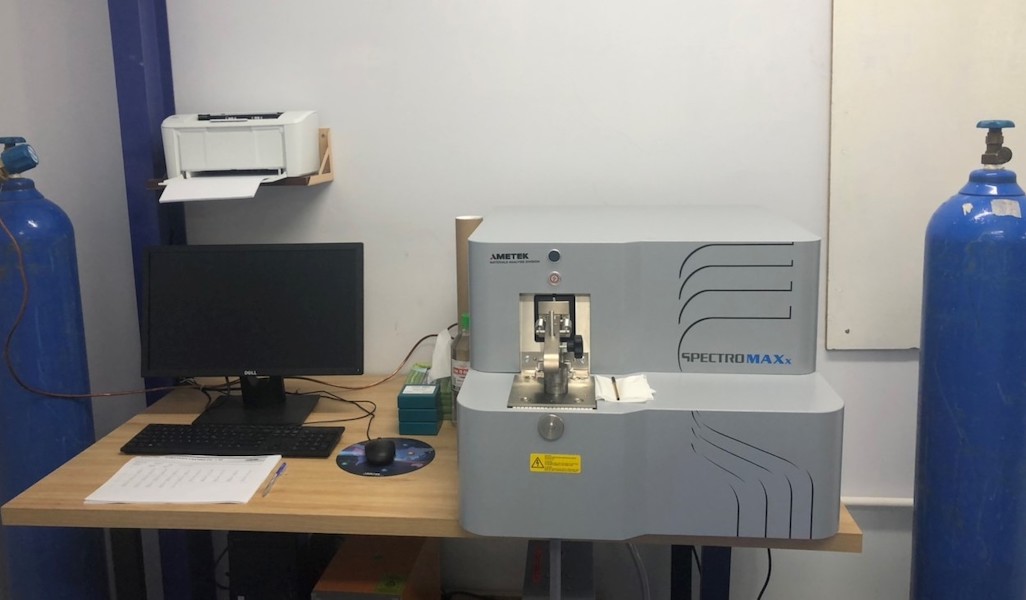
- Chemical composition certificate
- Material grade per casting batch
- Batch traceability
- Dimensional inspection results
- Mechanical property testing when required by drawing
- Dye penetrant inspection for surface defects
- Leak or pressure testing for valve bodies and pump casings
- Heat treatment records for SUS630 or special materials
- Surface treatment records when required
Beyond the material, the ability to meet food industry requirements also depends on detailed design, surface finish, cleanliness level, and post-casting treatment methods.
Kobayashi Casting Viet Nam's stainless steel investment casting capabilities
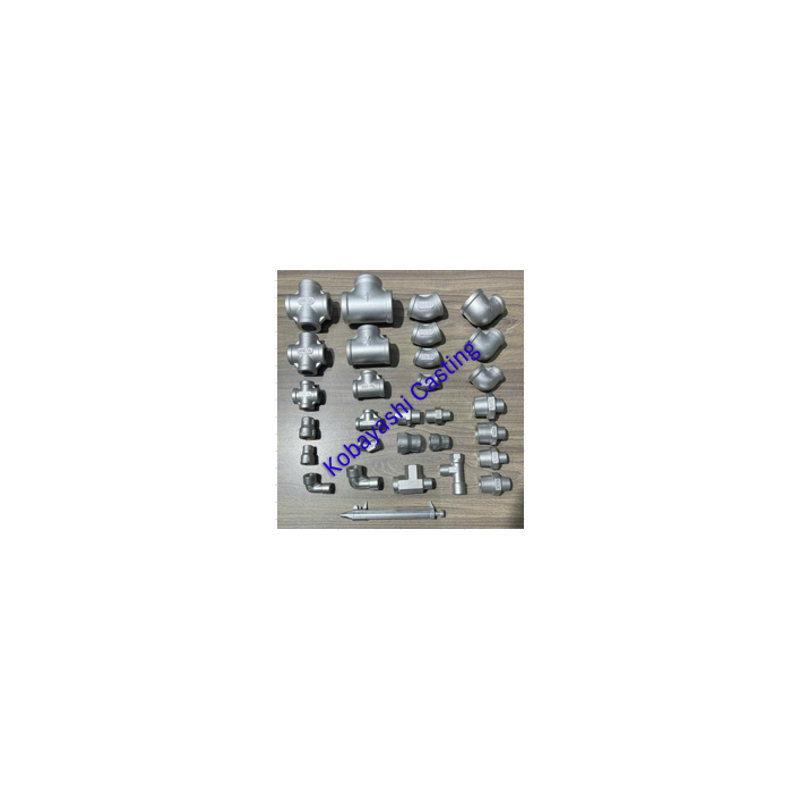
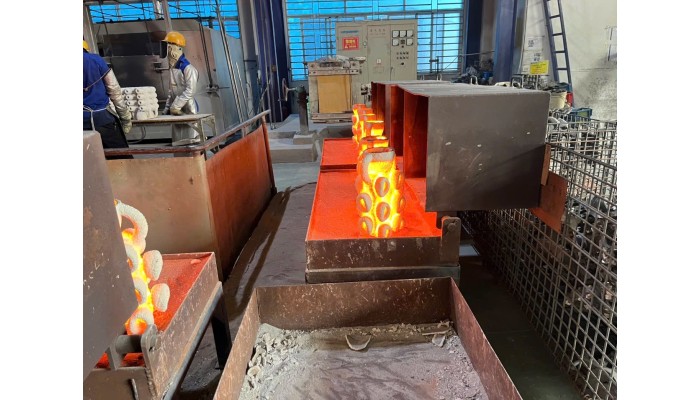
Kobayashi Casting is capable of casting various stainless steel grades such as SCS13, SCS14, CF8, CF8M, CF3, CF3M, and 17-4PH. To meet the requirements of each material grade, the company controls chemical composition per melt, manages raw materials separately, establishes melting-pouring conditions, and applies appropriate heat treatment processes. Specifically, low-carbon grades like CF3 and CF3M require strict control of carbon content, while 17-4PH requires heat treatment to achieve specified strength and hardness.
Kobayashi Casting serves sectors such as food equipment, medical, semiconductor, and industrial machinery. The company can receive drawings to evaluate material grades, casting shapes, tolerance requirements, and finishing machining options. Furthermore, the company holds relevant certifications such as PED 2014/68/EU, AD 2000-W0, and EN 764-5, aligning with its commitment to meeting technical and traceability requirements in international supply chains.
Businesses seeking a supplier for stainless steel investment casting, lost wax casting for food processing machinery, beverage equipment, or packaging machines in the food industry can send drawings, production volume, and operating conditions to Kobayashi Casting Viet Nam for material option and production capability evaluation.
Company Information
Machine tools / Industrial machinery / Medical equipment
Steel precision casting / Stainless-steel precision casting / machining precision mechanical parts
Founded in 2019, Kobayashi Casting specializes in precision casting of stainless steel products using lost wax casting technology. The company currently operates a factory in Binh Duong Province, Viet ...
PICKUP
Technology & Services
CONTACT
Contact