


Zirconia Welding Jig
MK CERA Zirconia Welding Jig is a product in the field of zirconia welding jig / ceramic welding fixture / precision positioning jig / welding support fixture / ceramic welding jig / welding positioning jig / precision zirconia component, manufactured and supplied by Japan's MK CERA Corporation according to customer requirements.
The product is used to hold, support, stop, or position components during welding, contributing to maintaining the position, orientation, and distance between parts before and during the welding process. The jig can be integrated into automatic welding machines, jig assemblies, assembly equipment, or production lines requiring stable product positioning control.
MK CERA does not offer a fixed model of Zirconia Welding Jig. The product is developed based on 2D drawings, 3D data, existing samples, dimensions, tolerances, shapes, quantities, and specific operating conditions of each project.
Zirconia is an engineering ceramic material with high hardness, wear resistance, electrical insulation, and relatively good toughness compared to many common ceramic types. The material is suitable for parts that frequently come into contact with metal components, need to maintain a stable shape, or are installed near electrodes and heat-generating areas.
The actual performance of the jig depends on the type of zirconia, product structure, welding method, temperature, load, impact force, operating frequency, and mounting method into the equipment assembly.
1. Product Highlights
A highlight of the MK CERA Zirconia Welding Jig is the combination of precise positioning capability, electrical insulation, and wear resistance in a custom-designed ceramic component.
During the welding process, components need to be held in the correct position to maintain distance, mounting angle, contact direction, and correlation between parts. If a part shifts or tilts during welding, the joint position may change, affecting the assemblability and stability of the finished product.
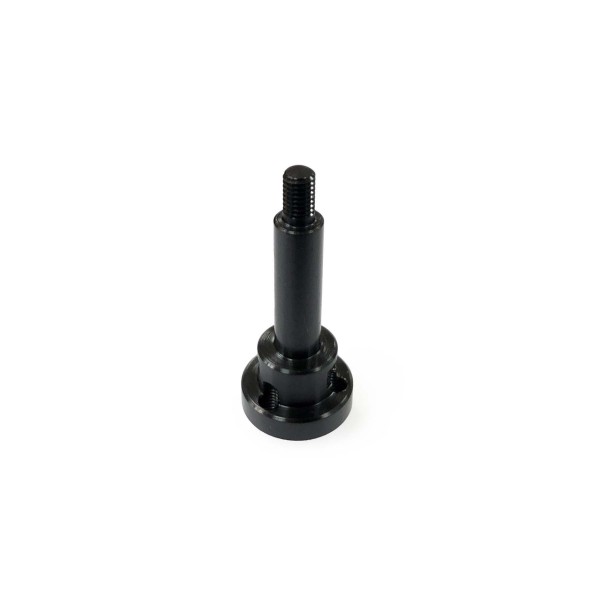
Zirconia jigs can be designed as positioning pins, guide pins, stoppers, support parts, or product contact points. The shape is adjusted according to the actual machine structure, including cylindrical bodies, conical tips, rounded tips, stepped faces, shoulders, center holes, grooves, or special profiles.
Zirconia's electrical insulation capability helps limit current transmission through the positioning component. This characteristic is suitable for jig assemblies with electrodes, welding tips, or conductive parts, where the use of metal components could affect operation.
Zirconia has high hardness and wear resistance, which helps limit dimensional changes at repetitive contact surfaces. This is an important factor for stoppers or guide positions that need to maintain a stable shape after many usage cycles.
Compared to some other ceramic types, zirconia has relatively good toughness, making it suitable for small parts or products with complex shapes. However, zirconia is still a ceramic material, so strong impacts, concentrated loads, excessively sharp angles, and very thin walls should be avoided.
Jigs can be supplied from a single trial part to repetitive production orders. Customers can order samples to check assemblability, positioning, and compatibility with equipment before confirming larger-volume production.
2. What needs is the product suitable for?
MK CERA Zirconia Welding Jigs are suitable for:
- Positioning small components in the welding process.
- Holding parts in automatic welding machines.
- Guiding electrodes or welding tips.
- Creating support points and stop positions in jig assemblies.
- Electrical insulation between the welded part and the equipment body.
- Replacing metal parts in wear-prone locations.
- Use in electronic component production lines.
- Use in automotive component manufacturing equipment.
- Positioning parts in precision assembly machines.
- Manufacturing trial jigs for new products.
- Manufacturing replacement parts based on existing samples.
- Producing single parts or small quantities.
- Machining zirconia stoppers, pins, guides, and support parts.
- Applications where electrical transmission needs to be limited.
- Use in environments requiring wear-resistant ceramic materials.
The product is suitable for welding machine manufacturers, automation companies, electronic component manufacturers, automotive factories, precision machining companies, and specialized jig and fixture design firms.
For research and development departments, Zirconia Welding Jigs can be used to test positioning structures before standardizing the production line. Customers can adjust dimensions, contact surfaces, or mounting methods after evaluating initial samples.
For factories using imported welding equipment, MK CERA can consider manufacturing replacement parts based on drawings or actual samples. Reproducibility depends on the sample condition, material information, tolerances, function, and operating conditions of the product.
For repetitive production lines, zirconia jigs can be used as independent replacement parts. When the ceramic part is damaged or worn, customers can replace only this component instead of the entire jig assembly, depending on the system's design.
3. Key Technology and Structure
MK CERA Zirconia Welding Jigs are primarily machined from engineering zirconia material. The specific structure is designed according to the product's function within the equipment assembly and may include:
- Positioning pin/tip.
- Guide pin/tip.
- Component contact surface.
- Cylindrical body or multi-step body.
- Shoulder stop.
- Center hole.
- Mounting hole.
- Positioning groove.
- Reference surface.
- Conical tip or rounded tip.
- Part connecting to the jig body.
- Precision ground surface.
- Lapping or polishing area.
Not all products include all of the above structures. The shape, dimensions, and position of each part are determined based on customer drawings and usage requirements.
MK CERA can accept 2D drawings, 3D data, or existing product samples. After reviewing the shape, material, tolerances, and quantity, the company selects appropriate blanks, equipment, grinding tools, fixturing methods, and machining sequences.
For cylindrical surfaces, external cylindrical grinding can be used to control diameter, roundness, and concentricity. This process is suitable for jig bodies that need to fit into holes or holding parts with precise dimensions.
Center holes and internal surfaces can be finished by internal grinding. This method helps control the internal diameter and concentricity relationship with the external surface, especially when the product is assembled with pins, shafts, or guiding mechanisms.
End faces, shoulders, and steps can be ground to control length, perpendicularity, and assembly position. Positioning pins with curves, grooves, or special profiles can be processed using profile grinding technology.
Lapping and polishing are applied when surfaces require high smoothness, reduced friction, or limited scratching of contacting components. The scope of processing and roughness requirements must be specified on drawings or technical documents.
Due to zirconia's high hardness, machining conditions must be carefully selected to prevent cracks, chipping, and surface defects. Grinding speed, feed rate, cooling method, machining allowance, and operation sequence directly affect product quality.
After machining, parts can be inspected for diameter, length, roundness, concentricity, flatness, perpendicularity, profile shape, and surface condition. MK CERA uses coordinate measuring machines (CMMs), vision measuring systems, roundness testers, roughness testers, and digital microscopes depending on inspection requirements.
Customers should provide key information including:
- 2D drawings or 3D data.
- Existing samples if no drawings are available.
- Required zirconia type.
- Dimensions and tolerances.
- Surface roughness.
- Component contact position.
- Mounting method into the jig body.
- Welding type.
- Expected operating temperature.
- Impact force and impact conditions.
- Number of operating cycles.
- Order quantity.
- Inspection requirements and measurement reports.
4. Benefits for Customers and Businesses
MK CERA Zirconia Welding Jigs help customers create positioning components tailored to the specific structure of their welding machines. Instead of using standard products with unsuitable dimensions or shapes, businesses can order jigs based on drawings and actual operating requirements.
Zirconia's electrical insulation capability helps limit current transmission through the positioning component. This supports applications where the jig tip is installed near electrodes, welding tips, or current-carrying parts.
Wear resistance helps the contact surface maintain a more stable shape during repetitive use. When the dimensions of the positioning pin are maintained, the component's position during the welding process also becomes more stable.
Zirconia's hardness is suitable for stoppers, guides, or support surfaces that need to resist deformation. The material does not plastically deform like common metals, although the product still needs to be protected from loads and impacts exceeding design conditions.
Customers can order a sample product to check installation capability before moving to repetitive production. This approach helps reduce risks when developing new machines or improving existing jig assemblies.
The ability to accept both drawings and actual samples helps MK CERA support projects replacing old components, even when the product is no longer supplied by the original equipment manufacturer. However, technical specifications still need to be defined as completely as possible to ensure reproducibility.
For machine manufacturers, zirconia components can be designed as detachable parts. This option allows for replacing only the ceramic tip when maintenance is required, helping to limit the cost of replacing the entire mechanism.
For manufacturing plants, maintaining drawings, inspection standards, and machining processes after the initial order facilitates placing additional product orders in the future.
For businesses developing new products, MK CERA can support from single parts to small batches, facilitating design evaluation before confirming final production volume and standards.
5. Highlights and Suitable Customers
Highlights of MK CERA Zirconia Welding Jigs include:
- Machined from engineering zirconia material.
- Manufactured according to drawings, 3D data, or actual samples.
- Not limited to a standard model.
- Electrically insulating.
- High hardness and wear resistance.
- Suitable for repetitive positioning surfaces.
- Can be machined with cylindrical bodies, conical tips, steps, shoulders, holes, and grooves.
- Supports external cylindrical grinding and internal grinding.
- Supports end face grinding and profile grinding.
- Lapping and polishing can be performed.
- Supports dimensional and shape inspection using specialized measuring equipment.
- Accepts orders from a single trial product.
- Suitable for diverse, small-quantity orders.
- Repetitive production is possible after customer sample approval.
- Suitable for welding machines and automation equipment.
- Can be used as replacement parts as required.
- Supports machining of small parts and special profiles.
The product is suitable for:
- Welding machine manufacturers.
- Automation system design companies.
- Electronic component manufacturers.
- Automotive component manufacturing plants.
- Precision machining companies.
- Test equipment manufacturers.
- Jig and fixture design firms.
- Research and development departments.
- Factories needing to replace ceramic components.
- Businesses requiring electrically insulating components in jig assemblies.
- Customers needing to test samples before repetitive production.
- Entities requiring custom zirconia machining based on their own drawings.
MK CERA Zirconia Welding Jigs are a ceramic solution for processes requiring precise positioning, electrical insulation, and wear reduction at contact surfaces.
With experience in fine ceramics machining, specialized grinding equipment, and the ability to accept orders from a single part, MK CERA supports customers in developing jigs tailored to specific shapes, dimensions, and usage conditions.
Through Zirconia Welding Jigs, MK CERA aims to provide ceramic components with stable quality, flexible production options, and the ability to collaborate from the trial phase to repetitive orders.
Jigs / Manufacturing facilities / Others
CONTACT
Inquiry for the above productCompany Information

Fine ceramic components / Hard alloy components / Prototypes, single-piece parts, and new material components
MK CERA Corporation (株式会社エムケーセラ) is a Japanese company based in Nagano Prefecture, specializing in precision machining of fine ceramics, cemented carbides, glass, and difficult-to-machine materials. E ...
Related Technologies/Services
-
 Lathe Machining for Shaft Co ...
YAMAGUCHI VIETNAM JSC
-
 Reliable Wire Harness Techno ...
Prec Co.,ltd
-
 High-Precision Machining at ...
Ohnoseiko Viet Nam co.ltd
-
 OEM Vietnam | Assembly and r ...
LEO ELECTRONICS (VIETNAM) Ltd
-
 Japanese Quality Mold Manufa ...
CNC TECHNOLOGY SOLUTIONS JOINT ...
-
 Heat treatment and cam angle ...
Ohashi Tekko Vietnam Inc.