


Screws with Pre-applied Threadlocker Kiyota & Sanohatsu
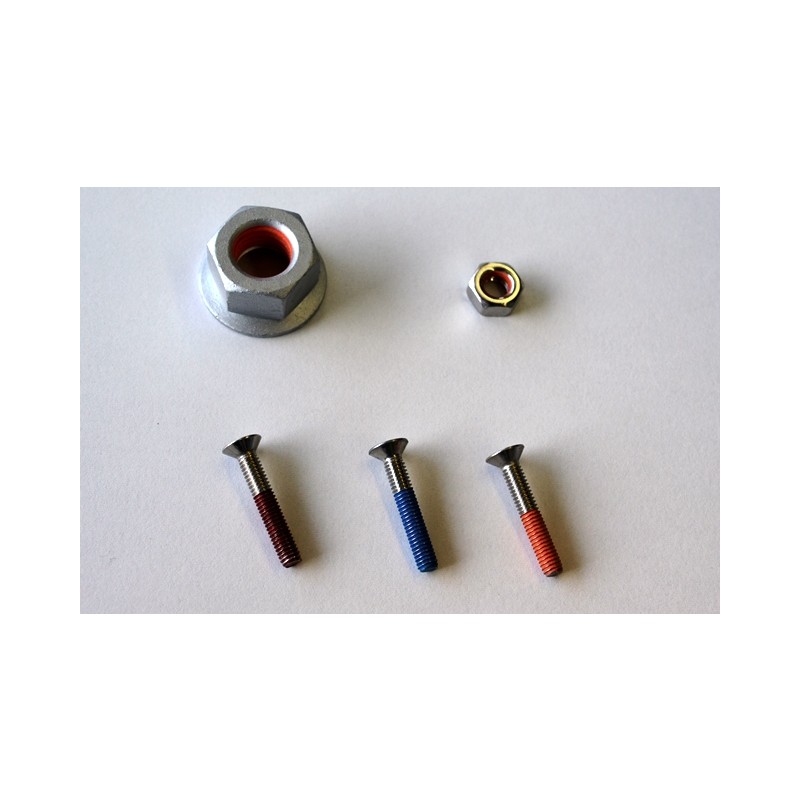
Kiyota & Sanohatsu Pre-Applied Threadlocker Screws are a typical product within the group of pre-applied threadlocker screws / adhesive-coated screws / thread locking fasteners / seal-lock screws / nylon patch screws / microencapsulated adhesive screws / locking screws / sealing fasteners / anti-loosening screws / adhesive-coated sealing screws / nylon-coated anti-loosening screws / pre-applied threadlocker bolts / anti-vibration fasteners, provided by Kiyota & Sanohatsu through Sanohatsu's system of screws, bolts, nuts, and industrial fastening components. This product group is used in activities such as office equipment assembly, electrical and electronic equipment manufacturing, engine production, automotive component assembly, precision machinery manufacturing, mechanical assembly, industrial equipment manufacturing, preventing loosening for threaded joints, supporting thread sealing, reducing manual adhesive application, and enhancing product stability during operation.
Kiyota & Sanohatsu is an engineering trading company established as a joint venture in 1996, operating in the field of supplying products and components to the Japanese market as well as international markets. For the pre-applied threadlocker screw group, Sanohatsu's product system offers two typical options: the high-strength adhesive-coated type and the reusable nylon-coated type.
In modern industrial manufacturing, screws, bolts, and nuts directly affect the stability, precision, assemblability, and safety level of finished products. Equipment assemblies such as engines, drive mechanisms, printers, photocopiers, electrical equipment, control panels, automotive components, and automated machinery often operate under conditions of vibration, fluctuating loads, repetitive motion, or temperature variations. These factors can reduce the clamping force at the joint, causing screws to self-loosen, creating gaps, or displacing components from their designed positions.
If businesses do not have an appropriate anti-loosening solution, products may face risks such as noise generation, increased vibration, reduced precision, component damage, leakage through threaded connections, frequent maintenance, or operational failures. Manual application of threadlocker adhesive on the production line can also lead to inconsistent adhesive amounts, incorrect application locations, adhesive overflow, or extended assembly times. Therefore, Kiyota & Sanohatsu Pre-Applied Threadlocker Screws are a suitable solution for businesses that need to enhance anti-loosening capabilities, support sealing, and standardize the assembly process for threaded joints.
Product Highlights
The strength of Kiyota & Sanohatsu Pre-Applied Threadlocker Screws lies in the anti-loosening or sealing material being pre-applied to the threads before the product is introduced to the assembly line. Instead of having to apply adhesive directly to each screw during production, operators can use fasteners that have been pre-coated according to technical requirements.
According to information from Sanohatsu, applying adhesive, threadlocking material, or sealant to screws and nuts can create an anti-rotation loosening effect at the threads. When a seal-lock effect is added, the product can also help increase sealing capability in the gap between external and internal threads.
The product is suitable for businesses that need to maintain stable fastening force under conditions where equipment is frequently subjected to vibration, motion, or repetitive loads. The coating on the threads creates additional resistance to reverse rotation, thereby helping to limit screws or nuts from self-loosening after a period of operation.
A typical option is the high-strength adhesive-coated type. Sanohatsu states that this type uses microencapsulated adhesive coated on the threads. When the screw is installed into a component with internal threads, the threadlocking material system operates according to the coating mechanism, helping to increase the fastening capability at the thread surface. This option is suitable for joints that prioritize strong locking and do not require frequent disassembly.
The second option is the nylon-coated type. Nylon-based plastic is positioned in the thread groove or root to create additional frictional resistance when the screw is tightened into the internal thread. Sanohatsu positions this as a reusable anti-loosening solution, suitable for locations where screws need to be removed for inspection, maintenance, or component replacement.
Depending on usage requirements, the coating can be applied to a portion or a specific area of the thread. The coating position must be chosen so that the material properly contacts the engagement area between the external and internal threads when the screw is fully installed. Incorrect positioning can reduce the anti-loosening effectiveness or prevent the coating from fully engaging in the joint.
Pre-applied threadlocker screws can help businesses reduce manual adhesive application on the production line. Operators do not have to prepare separate adhesive bottles, applicators, dispensing tools, or perform an additional processing step on each product. This helps shorten the process, limit operational errors, and keep the assembly area cleaner.
The product is also suitable for production lines using screw feeders, screw tightening robots, or automated assembly equipment. When the anti-loosening material is pre-applied, businesses can standardize input components and reduce reliance on the adhesive application step after screws have been brought to the assembly position.
Another strength is the ability to improve consistency among products. When the coating is applied through a controlled process, the position and coverage of the material on each screw can be more consistent compared to manual application. This is an important factor for mass production lines, where each joint needs to maintain relatively consistent characteristics.
In addition to anti-loosening capabilities, some coating materials also have the function of filling small gaps between two threaded surfaces. This effect can help restrict moisture, air, or media from passing through the threaded connection in suitable applications. However, actual sealing capability needs to be verified according to the pressure, temperature, type of media, and specific standards of each system.
The product can be applied to screws, bolts, or nuts with various sizes, materials, and surface treatment methods. The specific configuration needs to be determined based on the drawing, strength grade, thread pitch, engagement length, tightening torque, material of the mating component, and actual operating conditions.
What industries is the product applied to?
Kiyota & Sanohatsu Pre-Applied Threadlocker Screws are applied in many fields such as:
- Office Equipment Industry: Used in printers, photocopiers, scanners, paper feed mechanisms, drive assemblies, machine frames, and components frequently subjected to motion or vibration.
- Automotive and Automotive Components Industry: Suitable for electrical assemblies, sensors, protective covers, interior components, control mechanisms, auxiliary motors, and locations requiring stable threaded joints.
- Electric Motor Industry: Used in motors, fans, pumps, gearboxes, and equipment assemblies with continuous vibration during operation.
- Electrical Equipment Industry: Suitable for electrical cabinets, control panels, equipment housings, component mounting frames, cooling fan assemblies, and joints requiring anti-loosening.
- Electronics Industry: Applied to device housings, small mechanical assemblies, electronic modules, measuring equipment, and products with limited assembly space.
- Precision Machinery Industry: Suitable for assemblies that need to maintain their installed position, limit displacement, and control stability during long operating periods.
- Automation Industry: Used in automated machines, industrial robots, testing equipment, conveyors, actuators, and components with repetitive motion.
- Industrial Machinery Industry: Suitable for production equipment, processing machines, fixtures, drive systems, and mechanical assemblies frequently subjected to loads or vibrations.
- Home Appliance Industry: Used in fans, washing machines, kitchen appliances, vacuum cleaners, and products with motors or rotating mechanisms.
- Transportation Equipment Industry: Suitable for trolleys, mobile equipment, wheel assemblies, locking mechanisms, and components frequently subjected to vibration during transport.
- Pumps, Valves, and Fluid Handling Equipment Industry: Can be considered for joints requiring both anti-loosening and thread sealing support, after a full evaluation of compatibility with media and operating pressure.
- Outdoor Equipment Industry: Suitable for equipment housings, technical boxes, and joints requiring moisture restriction through threaded connections under appropriate usage conditions.
- OEM Manufacturing Industry: Used by businesses that need screws, bolts, or nuts with pre-applied coatings according to specific drawings, production volumes, and assembly requirements.
- Industrial Product R&D Industry: Suitable for projects that need to evaluate anti-loosening solutions, test tightening torque, and optimize joint structures before mass production.
- FDI Enterprises and B2B Supply Chains: Suitable for factories that need a fastener component supplier capable of meeting technical requirements, production volume, and stable supply plans.
Product Technology and Usage Process
Kiyota & Sanohatsu Pre-Applied Threadlocker Screws are typically implemented and used according to processes such as:
- Joint Requirement Definition Process: Includes screw function, installation location, load, vibration level, temperature conditions, exposure to moisture or chemicals, and maintenance requirements.
- Fastener Type Selection Process: Defining the type of screw, bolt, or nut; thread diameter; thread pitch; length; head style; material; strength grade; and surface treatment.
- Anti-Loosening Solution Selection Process: Determining whether to use a high-strength adhesive type or a reusable nylon type based on operational requirements.
- Coating Area Definition Process: Selecting the length and position of the coating so that the material is within the engagement area of the joint when the screw is fully tightened.
- Material Evaluation Process: Checking compatibility between the coating and the screw material, plating, internal thread, lubricant, and environmental conditions.
- Sample Production Process: Preparing the necessary number of samples to test assembly capability, tightening torque, and anti-loosening effectiveness before mass production.
- Installation Torque Testing Process: Evaluating the force required to tighten the coated screw into the internal thread, ensuring the product does not cause excessive obstruction during assembly.
- Removal Torque Testing Process: Determining the thread retention capability after assembly and the force required to remove the screw under specified conditions.
- Vibration or Repetitive Load Testing Process: Assessing the stability of the joint when the equipment operates under conditions of continuous vibration or motion.
- Sealing Capability Testing Process: Performing leak tests according to pressure, media, temperature, and specific standards of each application when the product is used for seal-lock purposes.
- Multiple Disassembly/Assembly Testing Process: Applied to nylon-coated types to evaluate the ability to maintain resistance after multiple disassembly and reassembly cycles.
- On-Line Testing Process: Testing screw feeding capability, compatibility with tightening tools, robots, assembly machines, and actual cycle speed.
- Sample Approval Process: Technical, production, and quality departments evaluate results before confirming the product configuration.
- Incoming Quality Control Process: Inspecting screw dimensions, coating condition, coating position, appearance, quantity, and batch information.
- Storage Process: Storing the product according to supplier-specified conditions to limit the effects of temperature, humidity, dust, or oil on the coating.
- Mass Production Transition Process: After product approval, screws are added to the material list and supplied according to the customer's production plan.
The product is used in many activities such as:
- Assembly of screws, bolts, and nuts for equipment assemblies requiring anti-vibration and self-loosening prevention capabilities.
- Improvement of threaded joints, where businesses need to address screw loosening after a period of operation.
- Manufacturing of motorized equipment, where components are frequently subjected to vibration or rotational motion.
- Thread sealing activities, where the coating is used to help restrict air, moisture, or media from passing through the thread gap.
- Automation of assembly lines, where businesses want to eliminate manual adhesive application before tightening screws.
- Cycle time reduction activities, where using pre-treated screws helps reduce the number of steps in the assembly process.
- Quality control activities, where businesses need to maintain consistent coating condition and anti-loosening capability among products.
- Equipment maintenance activities, where the nylon-coated type is used for joints that require periodic disassembly and reassembly.
- New product development activities, where engineers need to evaluate various anti-loosening options before finalizing the design.
- OEM manufacturing activities, where screws are prepared according to each customer's dimensions, material, coating, and technical requirements.
- Replacement of on-site adhesive application methods, where businesses want to reduce the amount of chemicals and auxiliary tools on the production line.
- Reduction of operational errors, where the pre-applied coating helps limit instances of forgetting to apply, insufficient application, or incorrect application.
- Optimization of production costs, where businesses need to reduce assembly time, re-inspection, and limit joint failures.
- Supply chain upgrade activities, where businesses need to purchase screws with finished coatings through a single supplier.
- Technical problem-solving activities, where the product is tested to address issues related to vibration, screw loosening, or leakage at threaded connections.
Regarding usage methods, Kiyota & Sanohatsu Pre-Applied Threadlocker Screws must be selected based on the specific technical requirements of each joint. Businesses need to clearly define the screw drawing, thread type, material, strength grade, surface treatment method, tightening torque, engagement length, vibration level, temperature, operating environment, disassembly/assembly requirements, and sealing objectives.
Subsequently, businesses select the adhesive or nylon type, define the coating area, prepare samples, and conduct tests on actual components. Results regarding installation torque, removal torque, anti-vibration capability, reusability, and sealing capability must be evaluated before transitioning to mass production.
Correct process implementation ensures that pre-applied threadlocker screws not only meet initial anti-loosening requirements but also align with assembly equipment, operating conditions, and product maintenance plans. Businesses should not choose coatings based solely on color, as coating color does not necessarily represent the same locking strength across all manufacturers.
Product Structure and Main Components
Kiyota & Sanohatsu Pre-Applied Threadlocker Screws are typically evaluated through key factors such as:
- Base Fastener Component: Can be a screw, bolt, or nut selected according to drawing, size, strength grade, and assembly requirements.
- Screw Head: Can use various head styles such as round head, flat head, pan head, hex head, or special designs depending on installation space.
- Screw Shank: The main load-bearing part that transmits tightening force from the screw head to the joint.
- Threaded Portion: Creates mechanical connection with the internal thread and is the area where anti-loosening or sealing material is applied.
- Adhesive Coating: May contain microencapsulated adhesive system, used for joints requiring high anti-loosening capability.
- Nylon Coating: Positioned in the thread groove to create frictional resistance and support repetitive disassembly/assembly.
- Coated Area: A defined position along the thread length, which must be within the engagement area with the internal thread when the product is fully installed.
- Coated Area Length: Selected based on engagement length, screw size, and required anti-loosening level.
- Surface Treatment: Can affect friction, corrosion resistance, tightening torque, and adhesion of the coating material.
- Internal Thread or Mating Component: The component that directly interacts with the coating and affects the product's anti-loosening capability.
- Tightening Torque and Clamping Force: Factors that determine the stability of the joint in addition to the coating's function.
- Sealing Capability: Depends on material type, coating coverage, thread precision, pressure, temperature, and media used.
- Disassembly/Assembly Capability: Determined by the coating type; high-strength adhesive type and nylon type have different usage objectives.
- Identification Features: The coating may have colors or shapes to help the production department identify treated screws.
- Traceability Information: Includes product code, batch, processing date, quantity, and necessary inspection data as per customer requirements.
- Storage Packaging: Protects screws and coatings from dust, oil, impact, moisture, or conditions that could reduce quality before use.
Depending on their needs, businesses can order products with various configurations regarding screw type, size, thread pitch, length, material, strength grade, plating, coating area, adhesive type, nylon type, and packaging requirements. Choosing the correct configuration helps businesses balance anti-loosening capability, disassembly/assembly capability, assembly speed, and production costs.
For joints that are rarely disassembled and prioritize strong retention, the high-strength adhesive-coated type can be considered. For locations requiring opening for maintenance or component replacement, the nylon-coated type may be more suitable. The final decision should be based on actual testing rather than solely on general material descriptions.
Benefits for Businesses and Factories
The use of Kiyota & Sanohatsu Pre-Applied Threadlocker Screws helps businesses build more stable fastening solutions for equipment frequently subjected to vibration, motion, or fluctuating loads. The coating helps increase resistance at the threads, thereby limiting the risk of screws self-loosening during operation.
The product helps businesses reduce manual adhesive application. Instead of preparing threadlocker adhesive, dispensing tools, and personnel to process each product, screws can be supplied with the material pre-applied. This helps shorten the process and reduce the number of steps at the assembly station.
For the production department, screws with pre-applied coatings help standardize the tightening process. Operators only need to feed screws and perform assembly according to the defined torque, limiting instances of forgetting to apply adhesive, insufficient application, or excessive application.
For automated lines, the product helps simplify equipment. Businesses may not need to integrate an additional adhesive dispensing system immediately before the screw tightening step in suitable applications, thereby reducing the number of equipment and maintenance points on the line.
For the quality department, pre-applied coatings make incoming inspection clearer. Businesses can evaluate appearance, coating position, coated area length, thread condition, and torque test results according to a unified process.
For the R&D department, the product provides additional options when designing joints. Engineers can test different adhesive types, nylon types, coating lengths, and tightening torques to find the configuration suitable for actual operating conditions.
For the maintenance department, the nylon-coated type helps balance anti-loosening requirements with disassembly needs. This is suitable for machine covers, control panels, or component assemblies that require periodic inspection.
For the purchasing department, ordering screws and coating application within the same supply chain helps reduce the number of suppliers to manage. Businesses do not have to purchase screws from one supplier and then send them to another for coating if the supplier can coordinate all requirements.
In mass production projects, the product can help businesses optimize long-term costs. When the coating area, material type, and assembly process are appropriately defined, businesses can reduce operation time, assembly errors, re-inspection, and limit troubleshooting costs due to loose screws.
The product also helps enhance equipment reliability. A stable joint helps limit noise, vibration, component displacement, and secondary damage arising from loose screws during use.
For sealing applications, the seal-lock coating can help businesses add leak prevention functionality at the threads without an additional material application step on the production line. This effectiveness needs to be confirmed by leak testing under actual conditions.
Pre-applied threadlocker screws also help businesses enhance production control across multiple factories. When the same screw code, coating area, and inspection standards are used at different facilities, businesses can maintain a more unified assembly process.
Through Kiyota & Sanohatsu's engineering trading network, customers can submit requests regarding drawings, screw types, materials, surface treatments, threadlocking methods, production volume, and delivery locations. The product is suitable for factories seeking anti-loosening screws, sealing screws, or fasteners processed according to specific requirements.
Kiyota & Sanohatsu Pre-Applied Threadlocker Screws are a suitable choice for office equipment businesses, automotive and automotive component manufacturers, motor companies, electrical and electronic businesses, precision machinery manufacturers, automation businesses, OEM factories, and organizations needing to enhance the stability of threaded joints.
With two typical options, including high-strength adhesive coating for strong anti-loosening and nylon coating for reusability, the product can meet the needs of both long-term secure locking positions and equipment assemblies requiring disassembly for maintenance. The pre-application capability also helps businesses reduce manual operations, standardize production lines, support sealing, and enhance manufacturing efficiency in the modern industrial era.
Jigs / Building component / Building materials
CONTACT
Inquiry for the above productCompany Information
Sintered parts / Gear, leadscrew / Interior components
Kiyota & Sanohatsu Co., Ltd., with its Japanese name 清田・佐野初商事有限公司, is a technical trading company specializing in supplying mechanical components, metal products, steel materials, non-ferrous metals, ...