

What is screen glare (Screen Glare)? AG/AR anti-glare glass solutions for industrial and outdoor touchscreens
What is screen glare?
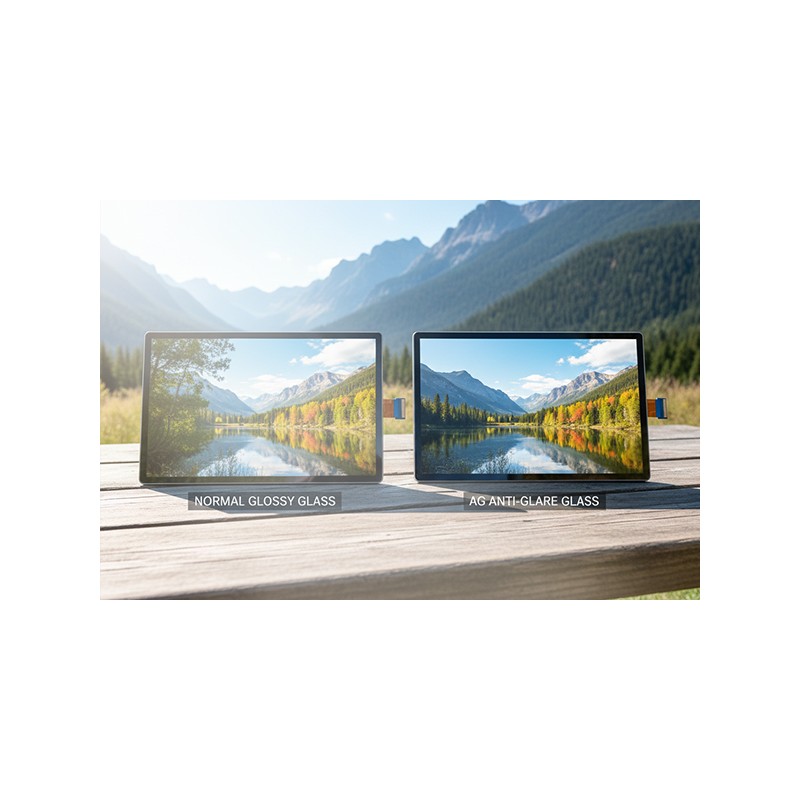
Screen glare is the phenomenon where ambient light reflects off the screen surface or protective glass, causing the displayed content to appear washed out, reducing contrast, and making it difficult to view.
This phenomenon often occurs when screens are used in brightly lit environments such as outdoors, factories, areas near glass windows, construction sites, EV charging stations, self-service kiosks, or public devices. For industrial touchscreens, HMIs, medical devices, payment terminals, or outdoor displays, screen glare can directly affect:
- Readability of information on the screen.
- Accuracy of touch operations.
- Operator processing speed.
- Safety in production environments or equipment operation.
- Long-term user experience.
Therefore, controlling screen glare is not just a display issue, but also a crucial factor in the design of cover glass, touch glass, and touch display modules.
Why are industrial and outdoor touchscreens prone to glare?
Touchscreens typically have a multi-layered structure, including:
- Cover glass: the outer protective glass.
- Touch panel: the touch-sensitive layer.
- Display panel: the internal display panel.
These layers typically have high light transmittance to ensure clear image display. However, when ambient light hits the glass surface, some of the light is reflected back to the user's eyes. This is what causes screen glare.In real-world environments, this phenomenon is often more severe due to:
- Direct sunlight.
- High-intensity factory lighting.
- Light reflected from glass, metal, concrete, or light-colored surfaces.
- Constantly changing user viewing angles.
- Screens needing to operate under various lighting conditions throughout the day.
This is why the clearer, glossier, and more layered a screen is, the more carefully it needs to be designed for reflection reduction and anti-glare capabilities.
Why doesn't increasing screen brightness fully solve glare?
Many believe that simply increasing screen brightness can improve outdoor visibility. However, in reality, increasing brightness does not eliminate light reflected from the glass surface.When ambient light reflection is too strong, the displayed content is still “overpowered.” Users may see reflections of the sky, lights, windows, machinery, or even themselves operating the screen.Simply put:
- Increasing screen brightness is increasing the “signal.”
- Reducing surface reflection is reducing the “noise.”
In brightly lit environments, the crucial factor is not just high brightness, but the ability to reduce reflection and control glare. Therefore, the current trend in display design is shifting from “high brightness display” to “low reflectance display,” meaning not only increasing brightness but also optimizing the glass structure and display surface.
3 Major Impacts of Screen Glare on Industrial Displays
Reduced Information Readability
When the screen is glaring, the actual contrast is reduced. Users find it difficult to identify text, numbers, icons, warnings, or operating statuses.This is particularly important for:
- HMI screens in factories.
- Medical devices.
- Testing and measurement equipment.
- Machine control panels.
- Traffic control displays.
In these applications, displayed information needs to be read quickly and accurately. If the screen is glaring, operators might miss critical signals or take longer to confirm information.
Reduced Operational Efficiency
With touchscreens, users not only view but also interact directly with the glass surface. When glare occurs, users often have to:
- Change their viewing angle.
- Lean or change posture.
- Shield the screen with their hand.
- Re-check information multiple times.
- Re-operate due to accidental presses or incorrect selections.
In manufacturing environments, kiosks, ATMs, payment terminals, or EV charging stations, these redundant actions can reduce operational efficiency and cause user frustration.
Causes Eye Strain and Reduces Concentration
When viewing a glaring screen for extended periods, the eyes must constantly adjust to distinguish actual content from reflected light. This easily causes eye strain, reduces concentration, and makes it difficult for users to maintain precise operations.For industrial or medical devices, this is an issue that needs to be considered from the design stage, especially when operators must use the screen continuously for many hours.
Common Screen Glare Reduction Technologies Today
To reduce screen glare, manufacturers can combine various solutions depending on the usage environment, display requirements, and product structure.
Anti-Glare treatment: AG coating
AG, short for Anti-Glare, is a surface treatment technology that diffuses reflected light, thereby reducing the sensation of glare when looking at the screen.Advantages of AG treatment:
- Reduces glare in brightly lit environments.
- Improves outdoor screen readability.
- Suitable for HMI screens, kiosks, EV chargers, ATMs, vending machines.
- Can create a glass surface with a paper-like feel, supporting premium designs.
AG coating is particularly suitable for devices that need to be used in environments with direct or constantly changing light.
Anti-Reflective coating: AR coating
AR, short for Anti-Reflective, is a coating that helps reduce the amount of light reflected from the glass surface.Advantages of AR coating:
- Reduces reflections on the screen.
- Increases image clarity.
- Improves actual contrast.
- Suitable for screens requiring sharp display.
AR coating is often used for devices requiring high transparency and clarity, such as medical devices, control displays, measurement equipment, traffic displays, or products with high display quality requirements.
Anti-Fingerprint coating: AF coating
AF, short for Anti-Fingerprint, is a coating that prevents fingerprints. This coating helps limit oil, sweat, and fingerprints from adhering to the glass surface.Advantages of AF coating:
- Keeps the glass surface cleaner.
- Easy to clean.
- Improves touch operation feel.
- Suitable for multi-user devices.
AF coating is often combined with AG or AR in touch glass products, especially for kiosks, payment terminals, smart home devices, EV chargers, or public displays.
Optical bonding
Optical bonding is a technology that bonds display layers with optical materials to eliminate the air gap between the cover glass, touch panel, and display panel.Benefits of optical bonding:
- Reduces internal reflections between display layers.
- Increases contrast.
- Improves outdoor readability.
- Increases the mechanical durability of the display module.
- Limits dust, moisture, or condensation between layers.
Optical bonding is often used for displays requiring high stability, especially in industrial, transportation, medical, and outdoor equipment.
Low reflection glass
Low reflection glass is a type of glass designed to reduce light reflection on its surface. Depending on product requirements, this type of glass can be combined with AG, AR, AF, or bonding to optimize display performance.
How do AG coating and AR coating differ?
Both AG and AR help improve screen visibility, but their operating mechanisms differ.
| Technology | Primary Role | Suitable for Applications |
| AG coating | Diffuses reflected light, reduces glare sensation | Outdoor displays, HMI, kiosks, EV chargers, ATMs |
| AR coating | Reduces reflected light, increases image clarity | Medical devices, displays requiring high transparency and contrast |
| AF coating | Anti-fingerprint, easy to clean | Frequently operated touchscreens |
| Optical bonding | Reduces internal reflections between display layers | Touch modules, display modules, premium outdoor displays |
In many cases, AG and AR can be combined to both reduce glare and reflection. If the device involves frequent touch operations, AF coating should also be considered to improve user experience.
Should outdoor displays use AG, AR, or a combination of AG/AR/AF?
The choice of surface treatment technology should be based on the actual usage environment.
If the screen is placed outdoors or in direct sunlight, AG coating is an important choice as it significantly reduces glare. If the product requires clear, sharp images with fewer reflections, AR coating should be considered. For touchscreens with multiple users, AF coating helps limit fingerprints and keeps the glass surface cleaner.Some selection suggestions:
| Usage Environment | Recommended Solution |
| Outdoor EV charging station | AG + AF, AR can be combined depending on display requirements |
| Self-service kiosk | AG + AF |
| ATM and payment terminals | AG or AR + AF |
| Factory HMI screen | AG or AR depending on installation location |
| Medical devices | AR + AF, depending on transparency and hygiene requirements |
| Traffic displays, marine vessels, specialized vehicles | AG + AR + AF or optical bonding |
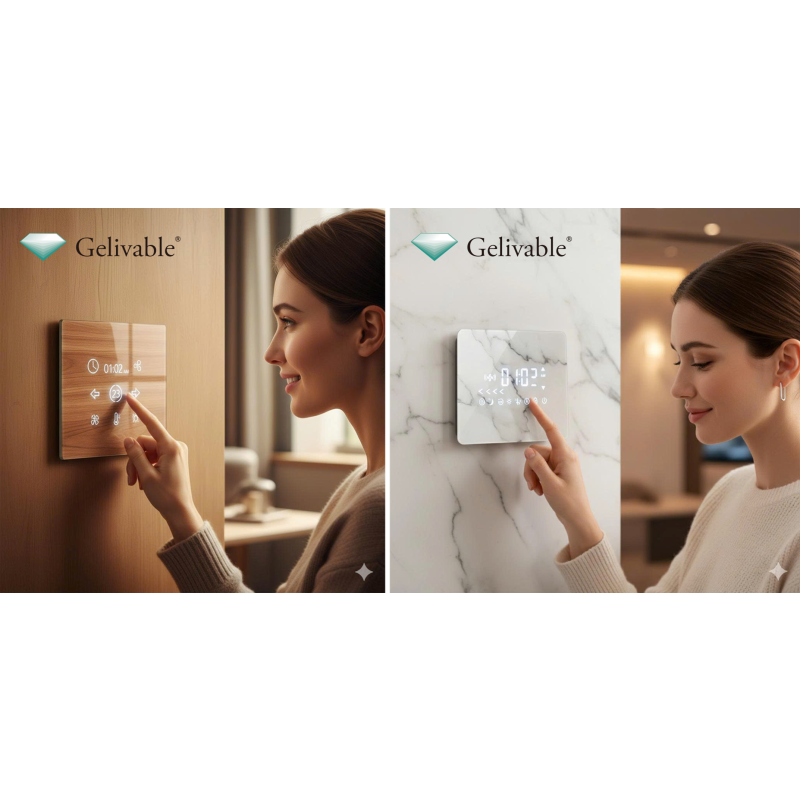
| Premium smart home | AR or AF, combined with decorative printing as per design |
The important point is not to choose glass based on a single parameter. It is necessary to simultaneously evaluate light transmittance, reflectivity, haze, surface durability, impact resistance, touch requirements, and the usage environment.
Applications Requiring Special Attention to Screen Glare
Screen glare is often most noticeable in devices with screens placed in brightly lit environments or where users interact directly.Applications requiring attention include:
- EV charging stations.
- Industrial HMI control screens.
- Medical devices with touchscreens.
- ATMs and financial devices.
- Payment terminals.
- Self-service kiosks.
- Vending machines.
- Subway card readers.
- Automotive control displays.
- Displays on marine vessels, transportation vehicles.
- Construction machinery control panels.
- Smart home devices.
In these applications, cover glass is not just a protective pane. It is a component that directly affects display quality, durability, tactile feel, and the overall image of the product.
What to Consider When Designing Cover Glass for Anti-Glare Screens?
To effectively reduce screen glare, businesses should consider technical factors right from the product design stage.
Glass Material
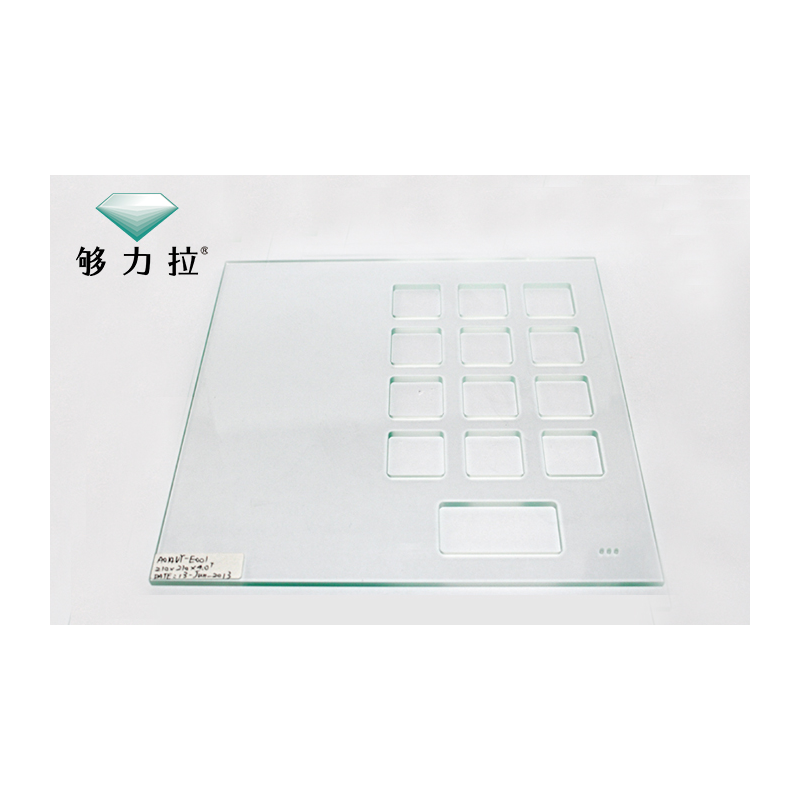
Depending on requirements for durability, transparency, cost, and application, types of glass such as soda lime glass, high alumina silicate glass, high borosilicate glass, Corning Gorilla Glass, Panda Glass, or other specialized glass materials can be chosen.
Glass Thickness
Glass thickness needs to be appropriate for the screen size, installation location, and strength requirements. Public or outdoor devices typically require glass with higher durability compared to indoor devices.
Surface Treatment Method
AG, AR, AF, or other treatment layers need to be selected according to the usage environment. For outdoor displays, anti-glare and anti-reflection should be prioritized. For touchscreens, anti-fingerprint is also very important.
Ink Durability
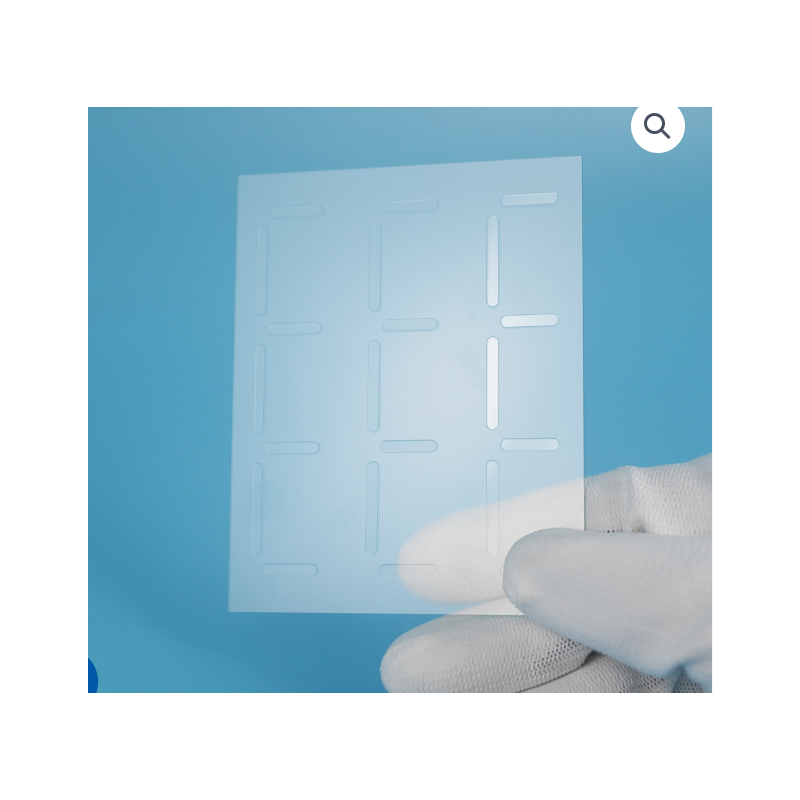
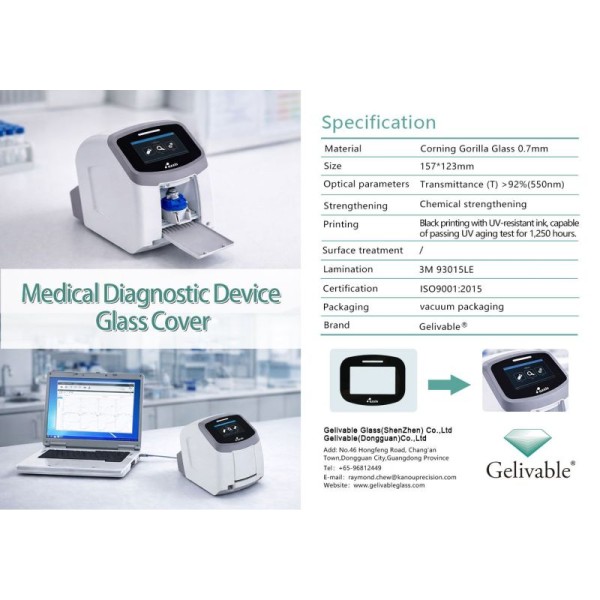
For cover glass with printed borders, logos, symbols, or light-shielding areas, ink durability is a crucial factor. If the product is used outdoors, the ink needs to have UV resistance to prevent fading, peeling, or aesthetic degradation during use.
Impact Resistance
Devices such as EV chargers, kiosks, vending machines, or payment terminals are often placed in public areas. Therefore, the cover glass needs to be designed to withstand mechanical impacts during actual use.
Bonding and Module Assembly
If the product is a touch glass or touch/display module, bonding options with the touch panel, display module, anti-shatter film, thermal insulation film, or 3M adhesive should be considered to ensure long-term stability.
Kanou Precision – Cover Glass, Touch Glass, and AG/AR Anti-Glare Glass Solutions for Industrial Devices
KANOU Precision is a provider of customized component solutions for commercial and industrial equipment, with a network in China, Japan, Vietnam, Singapore, Hong Kong, and a strategic direction to expand its supply chain in Asia.In the field of protective display glass, KANOU, together with Gelivable Glass, focuses on cover glass, touch glass, touch/display module, and AG/AR/AF surface treatment solutions for industries such as:
- Medical devices.
- Industrial control.
- Smart home.
- New energy.
- Transportation.
- Payment terminals.
- Outdoor displays.
- Custom commercial and industrial equipment.
KANOU's strength lies in its ability to support customers from the design stage, material selection, surface treatment, glass processing, printing, strengthening, quality inspection, to bonding and mass production.Key capabilities include:
- AG anti-glare, AR anti-reflective, AF anti-fingerprint surface treatments.
- Custom cover glass, touch glass, and touch/display module processing.
- Support for various glass materials such as soda lime glass, high alumina silicate glass, high borosilicate glass, Corning Gorilla Glass, Panda Glass.
- Glass thickness from approximately 0.2 mm to 4.0 mm.
- Closed-loop production process including cutting, CNC, ultrasonic cleaning, chemical strengthening, tempering, silk printing, drying, inspection, packaging, and bonding.
- Production capacity up to 350,000 pieces/month.
- Reference lead time of approximately 15 days depending on product conditions.
- 100% visual inspection.
- Testing equipment system includes 2.5D profilometer, colorimeter, spectrophotometer, UV aging chamber, gloss meter, stress meter, drop ball tester, haze meter, abrasion tester, electron microscope, roughness tester, and pencil hardness tester.
- ISO 9001 and ISO 13485 certifications.
- Experience serving over 260 customers, including more than 20 Fortune 500 clients.
For outdoor applications such as EV charging stations, card readers, payment terminals, vending machines, or industrial displays, KANOU can support cover glass design according to requirements such as anti-glare, anti-reflection, anti-fingerprint, UV resistance, impact resistance, and ensuring the product's aesthetic appeal.Specifically, for EV charging station applications, KANOU has experience manufacturing soda lime or ultra-clear glass with a thickness of 3.0 mm or 4.0 mm, using UV-resistant ink and meeting impact resistance requirements such as the IK08 test. This is a significant advantage for outdoor devices, where screens need to be durable, readable, and stable for extended periods.
Screen glare is a common phenomenon but significantly impacts the display quality of industrial touchscreens and outdoor displays. If not properly controlled, glare can reduce readability, cause incorrect operations, decrease operational efficiency, and affect user experience.Instead of merely increasing screen brightness, businesses should optimize reflection reduction right from the cover glass and touch glass design stage. Solutions such as AG coating, AR coating, AF coating, and optical bonding can help make screens more readable in complex lighting environments.With expertise in cover glass, touch glass, and touch/display modules for industrial equipment, KANOU Precision can assist businesses in selecting the appropriate AG/AR anti-glare glass solution for their actual usage environment.If your business is developing outdoor displays, EV chargers, kiosks, HMIs, medical devices, payment terminals, or industrial control screens, KANOU Precision can provide consultation on cover glass / touch glass solutions based on specific technical requirements, drawings, and operating conditions.Send your drawings, technical requirements, or usage environment information to KANOU Precision for consultation on the suitable AG/AR anti-glare glass solution for your product.
Light electrical/Home electrical appliance / Manufacturing facilities
CONTACT
Inquiry for the above productCompany Information
Industrial machinery / Office automation equipment / Medical equipment
Glass cover for medical equipment / Optical bonding
From a strong foundation in precision machining built over 20 years, KANOU has grown into a technology-driven company, now delivering advanced custom solutions for cover-glass used in touchscreens and ...
Related Technologies/Services
-
 End-to-end support from sand ...
SONG CONG DIESEL ONE MEMBER CO ...
-
 VA/VE Proposals for Plastic ...
AKEBONO KASEI VIETNAM CO.,LTD.
-
 【BUY】Resin molded product
Ohashi Tekko Vietnam Inc.
-
 SKD11 High-performance holde ...
Ohnoseiko Viet Nam co.ltd
-
 Japanese Quality Mold Manufa ...
CNC TECHNOLOGY SOLUTIONS JOINT ...
-
 Thick plate compatible oil t ...
LILAMA 10 Joint Stock Company