Steel in Industry – Selection Standards and Practical Applications
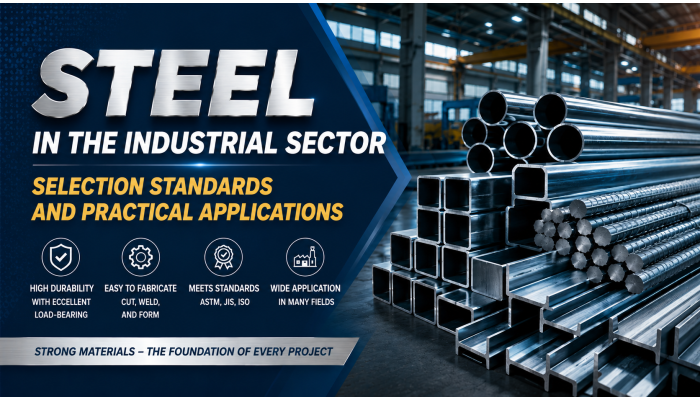
“Every durable industrial product starts with choosing the right steel.”
⛑ In the B2B manufacturing industry, steel quality not only affects product durability but also determines safety, service life, and brand reputation. For OEM/ODM manufacturers, selecting the right material is a critical factor in optimizing production costs and meeting international standards.
🚀 Today, steel is a core material widely used in mechanical engineering, logistics, warehousing, scaffolding, and industrial equipment thanks to its high load-bearing capacity, easy fabrication, and versatile applications.
🌟 Common steel grades such as Q195, Q235, and Q345 are widely used for industrial products due to their excellent strength and stable welding performance. Meanwhile, stainless steel is preferred for humid environments or applications requiring corrosion resistance.
💯 When selecting steel for industrial manufacturing, businesses often focus on:
- Load-bearing capacity
- Welding and fabrication stability
- Resistance to deformation
- International quality standards such as ASTM, JIS, and ISO
With these outstanding advantages, steel is widely applied in:
- Industrial steel ladders
- Ringlock scaffolding
- Material handling trolleys
- Warehouse storage systems
- Logistics equipment
- OEM/ODM metal fabrication
In addition to high durability, steel also helps optimize production costs and offers recyclability, making it suitable for sustainable manufacturing trends in modern industry.
✅ LIPHOCO is an OEM mechanical manufacturer in Vietnam specializing in steel fabrication solutions for the U.S., Japanese, and European markets with modern production systems and strict quality control processes.