


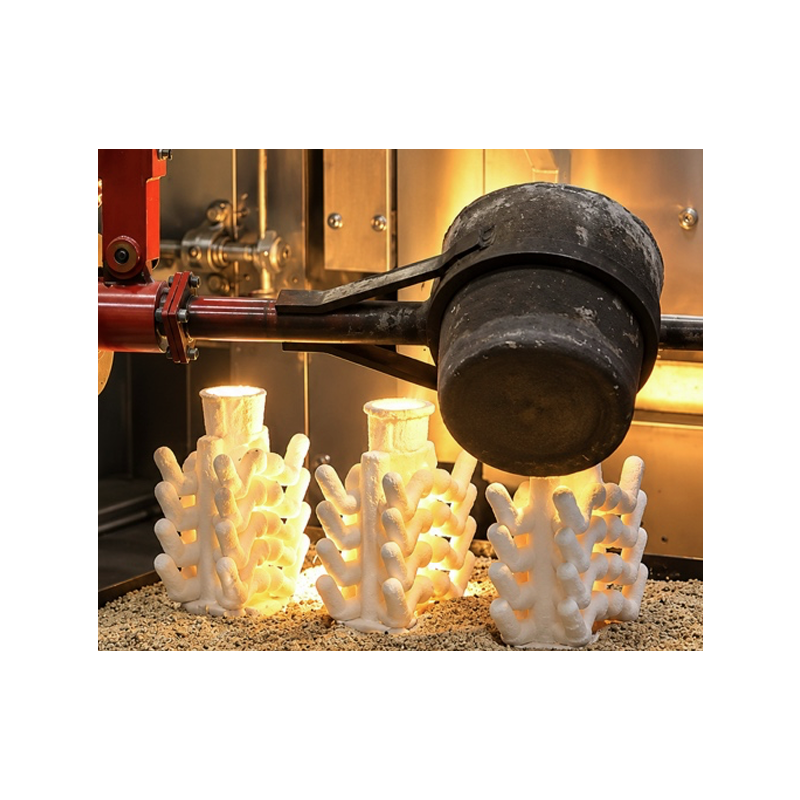
Precision Investment Cast Components
RICO Precision Investment Casting Components are a representative product group in the fields of precision investment casting / lost-wax casting / precision metal casting / architectural hardware casting / glass hardware components / complex precision components / custom OEM metal parts / precision investment casting / precision metal casting / precision cast glass hardware / architectural components / complex metal parts / custom OEM metal components, manufactured and supplied by RICO Precision Technology Co., Ltd. According to the company's catalog, RICO's precision investment casting capabilities focus on three main application groups: architectural and glass hardware, complex precision components, and custom OEM solutions based on customer requirements.
This product group is used in activities such as manufacturing glass door hardware, glass partition hardware, shower cabin hardware, railing hardware, staircase hardware, metal connection components, brackets, connectors, hinge bodies, lock components, industrial equipment components, and products requiring complex metal forming. The product is particularly suitable for projects that need to convert drawings, 3D models, or design samples into metal parts capable of mass production, subsequent machining, surface finishing, and assembly into complete product units.
In the modern glass hardware, architectural, and mechanical manufacturing industries, metal components directly affect the durability, stability, load-bearing capacity, assembly precision, aesthetic quality, and operational capability of the final product. Products such as glass hinges, glass clamps, connectors, lock handles, brackets, railing hardware, and connecting parts often feature numerous curved surfaces, cavities, ribs, transition angles, mounting holes, and geometric structures that are difficult to produce using simple machining methods.
If a business does not choose an appropriate blank forming method, the product may encounter issues such as high material consumption, requiring too many CNC operations, difficulty maintaining shape consistency between batches, dimensional deviations, uneven surfaces, or increased production costs. These problems not only affect component costs but also increase product development time, prototyping time, and risks when transitioning to mass production.
Therefore, RICO Precision Investment Casting Components offer a suitable solution for businesses needing to produce glass hardware, architectural hardware, and OEM metal parts with complex shapes, good formability, and suitability for subsequent finishing processes. Instead of machining the entire product from a large metal block, investment casting technology helps create blanks with shapes close to the finished part, thereby allowing machining to focus on critical functional areas.
1. Product Highlights
The strength of RICO Precision Investment Casting Components lies in their ability to create metal parts with relatively complex shapes. Precision investment casting technology is suitable for products with many curves, reinforcing ribs, cavities, transition surfaces, decorative details, or structures difficult to produce by conventional forming methods.
According to the catalog, RICO directs its precision investment casting technology towards the Architectural & Glass Hardware group. This group includes accessories used in glass doors, glass partitions, shower cabins, glass railings, staircases, and architectural systems that require metal parts to meet both mechanical requirements and aesthetic quality suitable for the usage environment.
The product is also oriented towards the Complex Precision Components group, meaning precision components with complex structures. This group may include component bodies, brackets, connectors, ring-shaped parts, connecting lugs, levers, mechanism components, or products developed according to customer's specific drawings. After the casting stage, critical positions can be further processed by mechanical machining to meet requirements for holes, threads, grooves, mating surfaces, and functional dimensions.
Another important feature is the ability to provide Custom OEM Solutions. RICO can undertake production projects based on drawings, product samples, 3D models, or specific technical requirements. This is an advantage for hardware brands, equipment manufacturers, and businesses developing new products that need a supplier capable of transforming designs into actual metal products.
Investment casting technology allows for the creation of blanks close to the final shape of the product. This can help reduce the amount of material to be removed during cutting, reduce the number of machining steps for some structures, and help optimize costs when the product is implemented with appropriate volumes.
Post-cast components can be further CNC machined at positions requiring high precision. Operations may include drilling holes, thread tapping, milling mating surfaces, grooving, processing shaft mounting positions, or adjusting dimensions directly affecting assembly and operation.
Besides dimensional accuracy, surface quality is also a crucial factor for architectural hardware. Products may need to undergo further processes such as grinding, polishing, aesthetic treatment, and surface finishing depending on the design and customer requirements. Combining blank forming, machining, and finishing helps businesses better control both the mechanical function and the aesthetics of the product.
RICO positions itself as an integrated OEM manufacturing partner, from design to delivery. Therefore, customers can work with a single point of contact for multiple stages such as design evaluation, blank forming method selection, prototyping, product casting, machining, finishing, inspection, and preparation for delivery.
Combining multiple stages within the same production chain helps limit information discrepancies when semi-finished products have to pass through many suppliers. When issues arise with dimensions, surfaces, or assembly, businesses also have better conditions to trace the root cause compared to a model using separate foundries, CNC shops, and finishing facilities.
The product is suitable for both new component development needs and production method transformation needs. For parts currently machined entirely from solid blanks, businesses can evaluate the possibility of switching to investment cast blanks combined with CNC to reduce material removal volume and improve production efficiency.
Depending on each project, material, dimensions, tolerances, heat treatment methods, surface requirements, and inspection standards will be determined based on actual functional use. This factor needs to be agreed upon from the initial stage to ensure the cast product is suitable for machining, assembly, and operating conditions.
2. Product Applications by Industry
RICO Precision Investment Casting Components are applied in various fields such as:
- Glass Hardware Industry: Used to manufacture hinge bodies, glass clamps, brackets, connectors, latches, and connecting parts for glass doors, glass partitions, or architectural glass systems.
- Shower Cabin Industry: Suitable for metal accessories requiring a combination of durability, resistance to the usage environment, surface quality, and aesthetics.
- Architectural Hardware Industry: Applied in metal products used for doors, partitions, railings, staircases, furniture, and commercial projects.
- Railing and Staircase Industry: Used to manufacture brackets, connectors, fixing components, connecting parts, and specially shaped parts.
- Lock and Door Hardware Industry: Suitable for lock bodies, levers, mechanism components, brackets, covers, and metal components requiring further precision machining.
- Metal Furniture Industry: Applied in handles, brackets, decorative accessories, connecting parts, and products requiring a consistent appearance.
- Industrial Equipment Industry: Used for brackets, connecting lugs, connectors, levers, component bodies, and complex mechanical components.
- Precision Machining Industry: Suitable for parts requiring blanks close to the finished shape before CNC machining functional surfaces.
- OEM Manufacturing Industry: Suitable for businesses needing to order metal components based on drawings, product samples, 3D models, or proprietary designs.
- Sanitary Ware Manufacturing Industry: Applied in bathroom accessories, brackets, connecting parts, and metal components requiring good surface quality.
- Industrial Product Development Industry: Suitable for R&D departments needing to test designs, evaluate blank forming methods, and transition from samples to mass production.
- Hardware and Building Materials Businesses: Suitable for brands, importers, and distributors needing to develop private-label metal products.
- FDI Businesses and B2B Supply Chains: Suitable for factories seeking OEM partners in Vietnam capable of combining casting, machining, and finishing.
3. Product Technology and Usage Process
RICO Precision Investment Casting Components are typically developed and implemented according to processes such as:
- Product Requirements Definition Process: Includes component function, usage environment, load conditions, assembly requirements, projected output, desired lifespan, and inspection standards.
- Technical Data Reception Process: Customers provide 2D drawings, 3D models, product samples, material requirements, and critical parameters to be controlled.
- Manufacturability Assessment Process: The part is analyzed for shape, wall thickness, curves, cavities, ribs, mating surfaces, hole positions, and suitability for investment casting technology.
- Design Optimization for Casting Process: The product may be adjusted in terms of transition radii, wall thickness, gating locations, or component structure to minimize risks during blank forming.
- Material Selection Process: Material is determined based on mechanical strength, load-bearing capacity, environmental conditions, machining requirements, finishing method, and project cost objectives.
- Pattern Making Process: Patterns are manufactured according to the component's shape and used to form the mold system for the casting process.
- Mold Making Process: Patterns are covered with multiple layers of mold material to form a mold cavity capable of reproducing the component's shape.
- Pattern Removal Process: The pattern is removed from the mold, creating a void corresponding to the shape of the product to be cast.
- Metal Pouring Process: Molten metal is introduced into the mold cavity and fills the complex shaped areas of the component.
- Cooling and Demolding Process: After the metal solidifies, the mold is removed to obtain the cast blank.
- Blank Cleaning Process: The product is separated from the gating system, cleaned, and necessary excess material is processed.
- Cast Blank Inspection Process: Blanks are evaluated for shape, surface defects, preliminary dimensions, and suitability for further machining.
- CNC Machining Process: Critical positions such as holes, threads, grooves, mating surfaces, flat surfaces, or shaft mounting positions are machined according to technical requirements.
- Grinding and Polishing Process: The product is processed to improve the surface, remove process marks, and prepare for the next finishing stage.
- Surface Finishing Process: The finishing method is chosen based on appearance, usage conditions, and customer's specific standards.
- Assembly Process: Cast parts can be combined with shafts, screws, gaskets, covers, CNC components, or other parts to form a product assembly.
- Quality Inspection Process: Products are inspected for dimensions, appearance, assembly capability, and functional requirements agreed upon in the project.
- Packaging and Delivery Process: Products are protected to minimize impact, scratches, and damage during storage or transportation.
The product is used in many activities such as:
- Glass hardware manufacturing activities, where businesses need complex metal parts to connect, fix, or support the movement of glass panels.
- Hinge and glass clamp manufacturing activities, where component bodies need to be pre-formed before machining shaft mounting positions, holes, threads, and contact surfaces.
- Railing hardware manufacturing activities, where brackets, connectors, and connecting parts need durability, stable shape, and suitable appearance.
- Shower cabin manufacturing activities, where metal accessories require good assembly capability, finished surface, and design synchronized with the glass system.
- OEM product development activities, where customers need to convert drawings or designs into metal parts capable of actual production.
- Precision machining activities, where cast blanks are used as a basis for CNC machining critical functional positions.
- Material optimization activities, where businesses want to reduce the amount of metal to be removed compared to machining entirely from solid blanks.
- Mass production activities, where products need to maintain relatively consistent shape, structure, and quality between batches.
- Mechanical assembly activities, where cast parts need to precisely combine with screws, shafts, washers, gaskets, or other components.
- Architectural hardware finishing activities, where products need further grinding, polishing, or aesthetic treatment before market release.
- Private label product manufacturing activities, where importers or distributors need an OEM factory handling multiple stages.
- Supply chain transformation activities, where businesses want to reduce the number of suppliers for casting, CNC, finishing, and assembly stages.
Regarding the implementation method, RICO Precision Investment Casting Components need to be developed based on the specific technical requirements of each product. Businesses need to clearly define the component's function, technical drawings, material, critical dimensions, tolerances, load conditions, assembly requirements, surface standards, projected output, and inspection methods.
Subsequently, the product will undergo castability assessment, design optimization when necessary, material selection, pattern making, trial production, and results verification. Positions that do not meet requirements can be adjusted before transitioning to mass production. Fully agreeing on data from the outset helps reduce the risk of mold rework, structural changes, or additional machining steps later.
For products with aesthetic requirements, customers should provide surface samples or clear acceptance criteria. Primary viewing areas, areas allowing process marks, gloss requirements, grain direction, and packaging methods need to be agreed upon to minimize discrepancies in product evaluation.
4. Product Structure and Main Components
RICO Precision Investment Casting Components are typically evaluated through key factors such as:
- Metal Material: This factor determines strength, hardness, load-bearing capacity, machinability, surface quality, and suitability for the usage environment.
- Overall Shape: Developed according to product function, it may include curves, ribs, cavities, connecting lugs, mating surfaces, hollow bodies, or special structures.
- Wall Thickness: Affects mold filling capability, cooling rate, component stability, and the risk of defects.
- Radii and Transition Angles: Help improve formability, reduce stress concentration, and assist molten metal flow into the mold cavity.
- Functional Surfaces: These are positions that need to contact, bear load, position, or mate with other components.
- Holes and Threads: Can be pre-formed or machined after casting depending on precision requirements.
- Mating Surfaces: Often require control over flatness, position, and dimensions for stable product assembly.
- Shaft or Pin Mounting Positions: A critical factor for hinges, levers, and moving mechanisms.
- Aesthetic Surfaces: Need to be controlled appropriately for the usage location, especially for glass and architectural hardware.
- Finishing Layer: Chosen according to aesthetic requirements, surface protection capability, and usage conditions.
- Accompanying Assembly Parts: May include screws, shafts, pins, gaskets, washers, decorative caps, or auxiliary components.
- Identification Marks: Can be used for product management, brand identification, component codes, or production batches as per project requirements.
- Packaging Method: Helps protect surfaces and minimize impact, especially for aesthetically finished accessories.
- Stability in Mass Production: Ensures product batches maintain shape, assembly capability, and quality consistent with agreed standards.
Depending on usage needs, customers can order components with various configurations regarding material, dimensions, shape, tolerances, CNC methods, polishing levels, surface finishes, assembly configurations, and packaging methods. Choosing the correct configuration helps balance production efficiency, technical quality, appearance, and product cost.
5. Benefits for Businesses and Factories
Using RICO Precision Investment Casting Components helps businesses access suitable forming solutions for metal parts with complex structures. Products can be formed into blanks close to the finished shape, thereby reducing reliance on machining entirely from large material blocks.
For R&D departments, investment casting technology provides engineers with additional options to realize designs featuring many curves, cavities, ribs, and difficult-to-machine shapes. Early design evaluation helps businesses identify areas needing adjustment before investing in samples and mass production.
For engineering departments, the product helps clearly differentiate surfaces that can be created by casting and those requiring further CNC machining. This approach helps optimize processes instead of applying the same machining method to the entire part.
For production departments, using blanks with shapes close to the finished product helps reduce a portion of material removal volume, machine time, and scrap for suitable parts. This can improve efficiency when products are implemented with stable output.
For assembly departments, components correctly controlled at functional surfaces help limit issues like difficult assembly, incorrect positioning, shaft misalignment, or lack of synchronization with related parts. Stable assembly capability also helps reduce rework operations on the production line.
For quality departments, an integrated production process makes it easier for businesses to identify root causes when issues arise with cast blanks, machined dimensions, or finished surfaces. Reducing the number of participating suppliers can also simplify coordination and error handling.
For purchasing departments, partnering with a supplier capable of combining casting, CNC, finishing, and assembly helps reduce the number of contracts and contact points to manage. Businesses can receive products at a higher level of completion instead of having to organize many external stages themselves.
For glass hardware and architectural hardware brands, the product helps develop unique designs, creating differentiation in shape and appearance. Businesses can build private-label product lines instead of only using common standard components on the market.
For OEM businesses, having a partner who can receive drawings, support design evaluation, prototyping, production, and finishing shortens the process of bringing products from concept to actual production. This is especially important for new projects, where design may require multiple adjustments before reaching a stable state.
In large-volume production projects, the product helps businesses optimize long-term costs when the design, blank forming method, and machining process are appropriately established from the outset. Reducing unnecessary operations, limiting scrap, and effectively controlling assembly capability enhance the overall efficiency of the production chain.
The product also supports businesses in diversifying their supply chain by accessing an OEM manufacturer in Vietnam. This is an advantage for brands, importers, and international businesses seeking new supply sources for custom glass hardware, architectural hardware, and metal parts.
RICO Precision Investment Casting Components are a suitable choice for glass hardware businesses, shower cabin manufacturers, railing and staircase businesses, hardware brands, furniture companies, industrial equipment manufacturers, OEM businesses, and R&D departments needing to develop complex metal parts.
With an application orientation for architectural and glass hardware, complex precision components, and custom OEM solutions, RICO provides a suitable production solution for businesses needing to convert drawings or designs into actual metal products. The ability to combine investment casting, machining, surface finishing, and assembly helps customers reduce the number of suppliers, enhance project control capabilities, and build a stable supply source for mass production.
Jigs / Manufacturing facilities / Others
CONTACT
Inquiry for the above productCompany Information

Glass door hinge / Door handle / OEM Metal Parts
RICO Precision Technology Co., Ltd. (Công ty TNHH Công nghệ Chính xác RICO) is a Taiwanese-invested enterprise, established in Vietnam in 2025, specializing in manufacturing architectural metal fittin ...