
NC Network Vietnam JSC
PRODUCT
Production Goods
What is B2B Marketing? Marketing Strategy for Manufacturing Businesses

B2B Marketing (Business to Business) is a crucial field in the development strategy of manufacturing businesses, helping to connect and build relationships with business partners. This article will clearly explain the concept of B2B Marketing, how to implement effective marketing strategies, along with the outstanding characteristics of B2B customer groups!
1. Overview of B2B Marketing

1.1 What is B2B Marketing?
B2B Marketing can be defined as all marketing activities a business undertakes to connect with other businesses, including providing products and services to business customers. Unlike B2C Marketing (Business to Consumer), which focuses on individual consumers, B2B Marketing requires an effective communication platform and closer relationships with partners.
The characteristic of B2B Marketing is its specialization and detail in each product or service. Purchasing decisions in a B2B environment are often made by multiple individuals and are more critical, requiring marketing campaigns to be profound and in-depth, closely tied to the specific needs of the industry in which the business operates.
1.2 Key Characteristics of B2B Marketing
1.2.1. Customers are not end-consumers
Customers in B2B Marketing are not individual end-consumers but organizations, businesses, or departments that need to purchase goods and services. These customers often require extensive information and quality assurance before making a purchasing decision. They can be purchasing departments, technical engineers, business owners, or manufacturing partners.
Therefore, a clear understanding of the needs and behaviors of this customer group is a decisive factor in building an effective B2B Marketing strategy. Without thorough preparation, businesses may miss many important cooperation opportunities.
1.2.2. Target Customers
In B2B Marketing, the target customers for businesses are not merely buyers but also purchasing departments in large enterprises, manufacturing plants, trading companies, foreign direct investment (FDI) companies, distributors, and other manufacturing partners.
Each of these target groups has its own requirements and evaluation criteria for suppliers. For example, purchasing departments often focus on cost and stable supply capability, while manufacturing plants may prioritize product quality and technical features. Therefore, businesses need to grasp and analyze the specific requirements of each customer group to develop appropriate marketing strategies.
2. Effective B2B Marketing Channels for Manufacturing Businesses

To enhance the effectiveness of B2B Marketing, manufacturing businesses need to maximize the use of appropriate marketing channels. These channels not only help increase customer reach but also build brand and trust from partners.
2.1 Company Website
A company website is one of the important online channels that helps customers learn about the company before contacting or making a cooperation decision. For manufacturing businesses, a website not only introduces products and services but also showcases capabilities through information on technology, machinery, production processes, typical products, certifications, and completed projects.
However, the reality in Vietnam shows that many small and medium-sized manufacturing businesses still do not have their own websites. Some businesses have built websites, but the content is rudimentary, rarely updated, or not optimized for customers to easily find through Google and other search engines.
Meanwhile, the behavior of B2B customers searching for suppliers is increasingly shifting to the online environment. Therefore, in addition to investing in their own websites, many manufacturing businesses also choose to build profiles on reputable B2B platforms to increase their online presence and create more opportunities for buyers to find them.
These profile pages typically provide relatively comprehensive information about the business, such as its field of operation, products, technology, machinery, production capacity, and contact information. EMIDAS is an example of a platform that allows manufacturing businesses to build a capability profile page to present information to buyers and partners looking for suppliers.
2.2 B2B SEO
SEO (Search Engine Optimization) is an indispensable element in a B2B marketing strategy. An effective SEO campaign helps businesses easily be found on search engines like Google using keywords relevant to their industry.
When potential customers search for product or supplier information, appearing high in search results can provide a significant competitive advantage for businesses. Therefore, optimizing website content with keywords related to products, services, and industries is a very important task.
2.3 B2B Content Marketing
B2B content marketing is not like B2C content marketing. The content needs to be rich, in-depth, and specialized, such as writing research papers, technology analyses, production processes, or successful case studies from completed projects.
Quality content not only helps businesses demonstrate their expertise but also builds credibility within the industry. These articles will help maintain connections with customers and can attract buyers who are researching the solutions provided by the business.
2.4 B2B Platforms / B2B Marketplaces:
B2B platforms or B2B marketplaces are becoming increasingly popular, serving as places for businesses to build capability profiles and connect with buyers and suppliers. These platforms not only provide space to showcase products but also facilitate connections and trade between businesses.
Presence on these platforms helps businesses increase customer reach, thereby enhancing cooperation opportunities and market expansion, especially in the context of growing international economies and increasingly fierce competition.
2.5 Industrial Exhibitions
Industrial exhibitions are an important B2B marketing channel where businesses have the opportunity to meet, interact, and connect with customers, partners, and suppliers. Through these events, businesses can not only introduce products and services but also listen to market feedback and seek new cooperation opportunities.
This is an indispensable event in B2B marketing strategies, helping to enhance brand recognition and strengthen relationships with potential partners.
2.6 Business Matching: 1:1 Connection based on Actual Needs
Business Matching is an effective method to create suitable cooperation opportunities between buyers and suppliers. Instead of just running vague, mass marketing campaigns, organizing 1:1 meetings helps both parties better understand actual needs and cooperation potential.
This connection process often requires thorough preparation from both sides, from correctly identifying the problem to be solved to preparing the necessary data information.
2.7 Email Marketing / LinkedIn / Zalo / Industry PR
In B2B Marketing, customer care is extremely important. Channels such as Email marketing, LinkedIn, Zalo, or industry PR are useful tools that help businesses maintain contact and nurture leads effectively.
When using email marketing, the content sent must be personalized and targeted to the specific needs of each customer. Through platforms like LinkedIn or Zalo, businesses can interact and update information quickly, helping to increase recognition and strengthen their reputable image in the industry.
3. Characteristics of Customers in B2B Marketing

Identifying and analyzing customer characteristics in the B2B environment will help businesses build effective marketing plans to optimize the process of finding and reaching this target audience.
3.1 B2B Customer Persona
B2B customers can include various types, from official purchasing departments in large enterprises to small manufacturing plants, trading companies, FDI (Foreign Direct Investment) companies, or OEM/ODM manufacturing partners.
Each customer will have different criteria and requirements in the purchasing process. For example, while purchasing departments often almost exclusively consider pricing and cooperation terms, the technical department may request more detailed product information before making a decision. Therefore, clearly understanding customers in each segment will help businesses convey the right message to them.
3.1.1 Buyer
Buyers in the B2B environment are often the actual decision-makers involved in purchasing. They are responsible for seeking information, verifying quality, and comparing various options before making a final decision.
Therefore, providing adequate information and wise consultation will help buyers easily decide to cooperate with your business.
3.1.2 Purchasing Department
The purchasing department is a crucial unit in any organization, responsible for negotiating and signing sales contracts. To persuade the purchasing department, clear information must be provided regarding product supply capability, warranty, production process improvements, and after-sales services.
Any supplier who can demonstrate stable supply capability will be a reliable choice for the purchasing department.
3.1.3 Technical Department
The technical department often plays a crucial role in evaluating and deciding on product selection for the business. They will focus on product quality, technical compatibility, and production processes.
To satisfy this department, businesses need to thoroughly prepare detailed product information, technical documents, capability profiles, and international quality certifications if available.
3.1.4 Business Owner
Business owners are often the decisive voice in selecting suppliers. They will be interested in the reputation, reliability, and long-term development potential of the partner.
To make a good impression on these leaders, businesses need to clearly demonstrate their core values, sustainable development vision, and contributions to the overall development of the industry.
3.1.5 Manufacturing Plant
Manufacturing plants consume a large volume of raw materials and intermediate products from external suppliers. Therefore, clearly understanding their needs and learning about their production processes will help suppliers meet those needs promptly and accurately.
Additionally, a clear understanding of production schedules will help suppliers be more proactive in delivering goods.
3.1.6 Trading Company
Trading companies often act as intermediaries connecting suppliers and customers. They typically seek popular products to supply to the market. Suppliers can cooperate with trading companies to expand their product distribution network.
Trading companies generally care about the supply process and the ability of manufacturers to respond quickly.
3.1.7 FDI Businesses
FDI businesses often face significant pressure to optimize costs and improve product quality. They typically seek suppliers capable of meeting international quality standards.
Proposing and supplying products that meet these standards will be a significant competitive advantage for manufacturing businesses.
3.1.8 OEM/ODM Partners
OEM (Original Equipment Manufacturer) or ODM (Original Design Manufacturer) partners typically seek suppliers capable of meeting the production needs for their brands. This not only requires proactive production but also responsibility in ensuring product quality.
To build good relationships with these partners, businesses need to demonstrate efficient and flexible production capabilities to meet changing market demands.
3.2 Behavioral Characteristics
B2B customer behavior differs significantly from that of individual consumers. They often require extensive specific information before deciding to cooperate.
B2B customers consider not only price but also quality, reliability, and resilience. Therefore, suppliers must have complete documentation and certifications to prove their capabilities, from product catalogs to clear capability profiles.
3.2.1. Need extensive information before contacting
B2B customers tend to search for and gather detailed information before deciding to contact a supplier. They want to clearly understand the products, services, production capabilities, and reputation of the business.
This requires manufacturing businesses to invest in providing professional and comprehensive information on online channels to facilitate customers' information search process.
3.2.2. Concerned with actual capabilities
B2B customers are often very discerning when evaluating supplier capabilities. They are not only attracted by appealing advertisements but also focus on the reality of production capacity, product quality, and actual commitments.
Building a brand based on clear and transparent reality will help businesses build trust and maintain long-term relationships with customers.
3.2.3. Company profile required
To decide on cooperation, B2B customers often request a detailed company profile, including product catalogs, images of the factory, machinery, and quality certifications if available.
This not only helps them better understand the supplier's capabilities but also reinforces their final decision. Thorough and professional preparation will increase the business's attractiveness in the eyes of customers.
3.2.4. Often compare multiple suppliers
B2B customers typically do not make hasty decisions. They tend to compare multiple suppliers based on quality, price, and service before making a final decision.
To stand out from competitors, businesses need to convey a clear message about the benefits they offer, along with demonstrating their capabilities and product differentiation.
3.2.5. Demand for long-term cooperation
If a business can deliver products and services as promised, B2B customers will not hesitate to establish long-term cooperative relationships. They will feel more secure choosing a partner they trust and understand well.
Therefore, maintaining product and service quality, as well as professionalism in transactions, will be a core factor in retaining B2B customers.
4. B2B Marketing Strategy for Manufacturing Businesses

Building a B2B marketing strategy is not simple, but if executed correctly, businesses can enhance their competitiveness and attract customers effectively.
4.1 Step 1: Identify Target Customers
Correctly identifying the target customer is the first and a very important step. Businesses need to clearly understand who the buyer is, who the decision-maker is, and conduct in-depth research into their needs and concerns.
Once target customers are identified, businesses can develop more appropriate marketing plans.
4.2 Step 2: Build a Professional Capability Profile
A professional capability profile is a very important factor in B2B Marketing. Businesses need to provide detailed information about their production capabilities, equipment, and existing technology.
Only when customers perceive confidence and professionalism in the profile can they consider cooperation. The capability profile needs to demonstrate the business's transparency and professionalism.
4.3 Step 3: Optimize Content by Industry
Each industry, such as mechanical engineering, molds, plastics, electronics, automation, OEM/ODM, etc., will have different requirements and criteria, making content optimization for each specific field essential.
Businesses need to grasp industry trends and demands to create relevant content, thereby attracting attention from customers in their target industry.
4.4 Step 4: Create Content that Addresses Buyer Needs
The content created should focus on addressing specific customer needs. Articles, videos, and case studies should provide concrete solutions to major problems that customers are facing.
In this way, businesses not only attract attention but also assist customers in their decision-making process.
4.5 Step 5: Combine SEO, B2B Platforms, and Business Matching
SEO (Search Engine Optimization) is the process of optimizing a website so that a business can appear better on search engines like Google when customers search for related products, services, or suppliers.
For B2B businesses, especially manufacturing companies, SEO not only helps increase the likelihood of being found by potential customers but also contributes to enhancing the business's credibility. When working with buyers or foreign partners, a website is often one of the first channels used to check a supplier's information, capabilities, and professionalism. A website with comprehensive, easily searchable, and well-optimized content will help the business create a more reliable impression right from the initial research phase.
In addition to website SEO, businesses should combine building profiles on B2B platforms to expand their reach to buyers. When there is a suitable need, businesses can also participate in Business Matching programs to meet and directly interact with potential partners.
Combining SEO, B2B platforms, and Business Matching helps businesses both increase their discoverability in the online environment and expand opportunities to reach the right buyers and build long-term B2B cooperative relationships.
5. Common Mistakes in B2B Marketing

Although there are many opportunities for success in B2B Marketing, many businesses encounter serious mistakes that lead to not achieving the desired results.
5.1 Superficial Introduction
One common mistake is that businesses often provide only general information about products without delving deeper to showcase actual capabilities. As a result, customers will not feel confident and will easily abandon the option.
Businesses need to concretize the value they bring to create differentiation.
5.2 Lack of Information on Website
The website is the first place customers look; if the information is incomplete or images are unclear, it will certainly affect their decision.
The quality of content and images presented will partly determine the customer's first impression of the business.
5.3 Content Not Targeting the Right Audience
Sometimes businesses have good content but fail to target the right potential customers. A lack of focus on specific needs can lead to customers not finding the product suitable for their requirements.
This means the business will miss many cooperation opportunities, both long-term and short-term.
5.4 Failure to Prove Capabilities
B2B customers need proof through data and practical examples. Failing to provide case studies or quality certifications can make customers doubt the business's actual capabilities.
Businesses need to be confident and thoroughly prepare relevant proofs and documents to persuade customers.
5.5 Running Only Short-Term Ads
Running only advertisements without investing in long-term capability profile building can boost short-term sales but does not bring sustainable value to the business.
To build a long-term brand, businesses need a clear plan, from assisting current customers to continuously developing and improving.
5.6 Not Optimizing SEO for Industry Keywords
Ignoring SEO can be a very significant mistake in a B2B marketing strategy. If not optimized for relevant keywords, businesses will find it difficult to reach potential customers in the industry.
Therefore, businesses need to have a clear SEO strategy to attract attention from search engines.
5.7 Not Participating in B2B Platforms
Not limiting opportunities on B2B platforms can cause businesses to miss many potential cooperation opportunities. Participating in these platforms not only enhances visibility but also helps businesses increase connections with suitable customers.
5.8 Neglecting Customer Care
Customer care is a crucial step in the conversion process. If a business lacks appropriate procedures to follow up and care for customers after they have expressed interest, there is a high probability that customers will not remain engaged long-term.
Therefore, businesses need to build clear and effective customer care policies to increase customer conversion rates.
6. NC Network Vietnam – Supporting B2B Marketing and Connections for Manufacturing Businesses
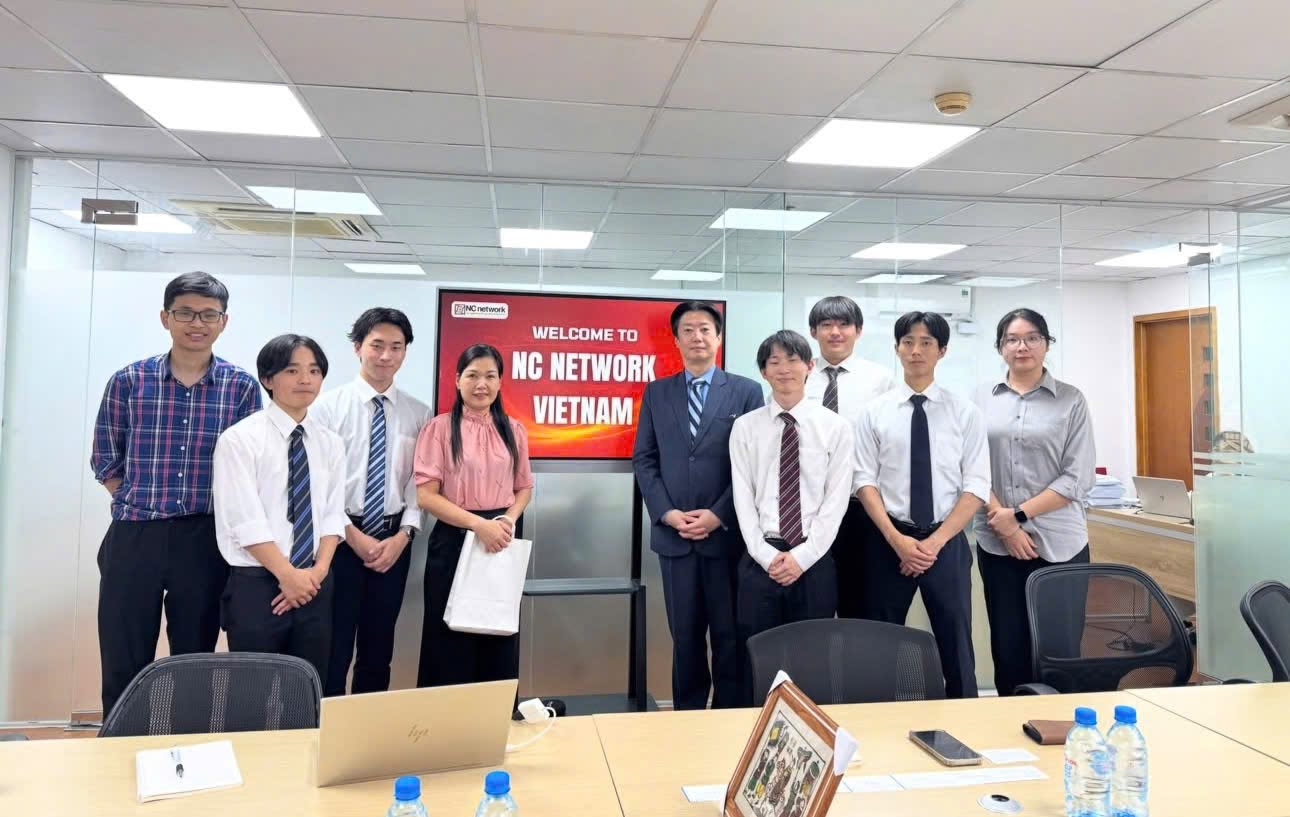
NC Network Vietnam applies optimal solutions in B2B Marketing, especially focusing on manufacturing businesses. Within the specialized B2B ecosystem, NC Network Vietnam helps connect businesses with buyers, suppliers, and potential partners.
Through building professional capability profiles and optimizing communication channels, businesses can more easily access trade opportunities and conduct effective commerce.
6.1 Role of NC Network for Businesses
6.1.1 Business Matching
NC Network actively organizes business matching events to facilitate 1:1 connections between businesses and buyers, suppliers, thereby creating cooperation opportunities.
6.1.2 Specialized B2B Communication
NC Network's professional team provides communication solutions to increase brand recognition and assertiveness for businesses.
6.1.3 Increase Opportunities to Reach Suitable Buyers
NC Network develops tools that help businesses find and reach buyers according to specific needs, thereby expanding cooperation opportunities.
6.2 Benefits of EMIDAS for Businesses
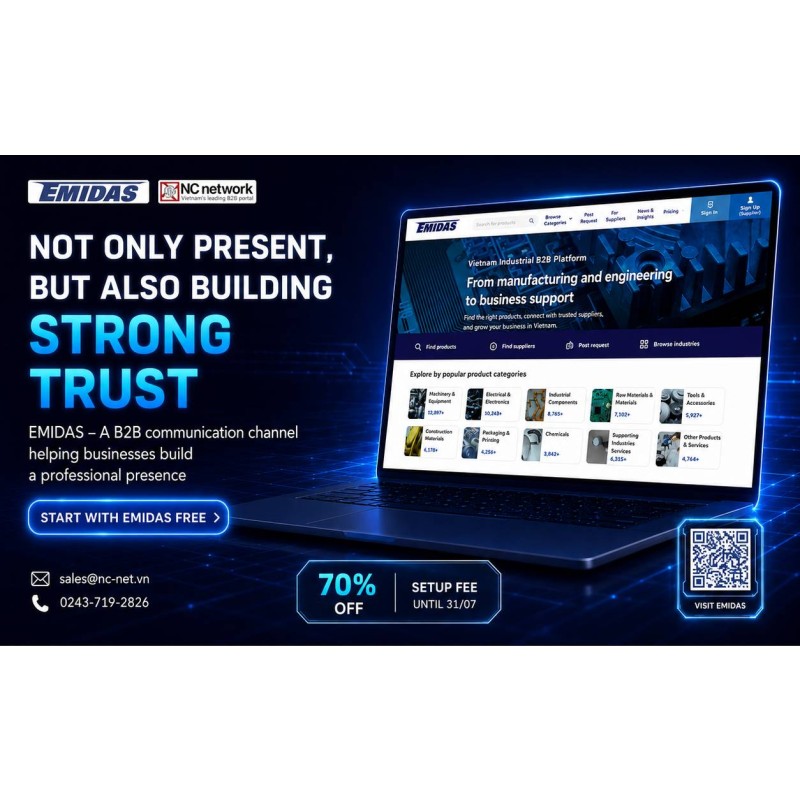
EMIDAS is a specialized manufacturing B2B platform that helps businesses build capability profiles, showcase products, technology, and strengths to buyers, suppliers, and potential partners. By maintaining a presence on the platform, businesses gain an additional channel to promote their capabilities, increase discoverability, and expand business networking opportunities both domestically and internationally.
For small and medium-sized manufacturing businesses that do not yet have their own website or whose websites are not fully developed, a profile page on EMIDAS also serves as an online business introduction channel, helping customers and partners quickly learn basic information before making contact.
6.2.1 Create Professional B2B Capability Profiles
Capability profiles built through EMIDAS help businesses easily present their products, services, and production capabilities. This transparency builds trust with customers.
6.2.2 Introduce Business Information
The platform is designed to help businesses clearly and professionally introduce the products and services they offer, thereby reaching suitable buyers.
6.2.3 Increase Discoverability by Partners
Being present on a popular platform like NC Network helps increase business visibility, thereby expanding trade and cooperation opportunities within the industry.
6.2.4 Build Business Image
NC Network helps businesses build a professional and reliable image by providing accurate and timely information.
6.2.5 Connect with Vietnamese, Japanese, FDI, and International Businesses.
NC Network aims to build a closely connected business community, helping to create effective cooperation and trade opportunities.
=> Refer to detailed information and register for free at: EMIDAS – Industrial B2B Platform Helping Manufacturing Businesses Establish a Professional Presence
7. Conclusion
B2B Marketing is a challenging yet potential field, offering significant opportunities for manufacturing businesses. From correctly identifying target customers and creating quality content to utilizing effective marketing channels, these factors can greatly influence success in establishing and maintaining B2B relationships. The key to success in B2B Marketing lies not only in good products but also in the ability to build long-term and reliable relationships with partners. NC Network Vietnam is proud to be an effective bridge, helping businesses showcase themselves and thrive in this competitive environment!
Company Information
Main 3 Products
FBC Asean / Emidas - B2B platform / Emidas Magazine
Phone Number
Homepage URL
NC Network Vietnam: A Sustainable Business Bridge Between Japanese and Vietnamese Enterprises ■ Introduction: Founded in 2010, NC Network Vietnam is a part of NC Network Group, a corporation specializ ...
CONTACT
Contact