
NC Network Vietnam JSC
PRODUCT
Production Goods
What Is a B2B Business? Company Characteristics, Products, and Operations

What is a B2B business? In today's Industry 4.0 era, the B2B (business-to-business) business model is becoming increasingly popular. This article will help consumers better understand the concept, characteristics, products, and operating methods of B2B businesses in today's market!
1. Overview of B2B Businesses

In the context of globalized business, the role of B2B businesses is increasingly affirmed. They not only contribute to economic development but also create significant value for society by providing specialized products and services.
1.1. What is a B2B Business?
A B2B (Business to Business) enterprise is a type of business that primarily operates to provide products and services to other businesses, rather than to individual consumers. This model often involves large, long-term, and sometimes more complex transactions.
B2B businesses can operate in various fields, from component manufacturing and logistics services to management software. The products and services these businesses provide are often highly specialized, requiring suppliers to possess sufficient capabilities, certifications, and clear documentation to demonstrate quality.
1.2. Examples of B2B Businesses
There are many specific examples of B2B businesses in the current market. These examples not only illustrate the operations of B2B businesses but also demonstrate the diversity of their operating fields.
1.2.1. Mechanical Engineering Company Supplying Components to Machinery Manufacturing Plants
One typical example of a B2B business is a mechanical engineering company specializing in manufacturing and supplying components to production plants. These companies often have complex production processes and high product quality requirements.
For machinery manufacturing plants, sourcing quality components from mechanical engineering companies is crucial to ensure smooth and efficient production processes.
1.2.2. Plastic Manufacturing Business Producing Components for Electronics Companies
Plastic businesses are also a clear example of B2B enterprises. They produce plastic components for electronics companies, serving as a reliable supply source for one of today's fastest-growing sectors.
From containers and machine casings to small electronic components, plastic businesses play a vital role in the global supply chain, supporting the production processes of large corporations.
1.2.3. Logistics Company Providing Transportation Services for Manufacturers
Another indispensable sector in the B2B model is the logistics industry. Logistics companies provide transportation services for manufacturers, helping them move goods from production sites to consumers or retailers.
The development of the logistics industry is crucial for optimizing supply chains, reducing time and costs for businesses, and thereby significantly improving operational efficiency.
2. What are the Characteristics of B2B Businesses?

B2B businesses possess distinct characteristics that B2C (Business to Consumer) businesses do not. These characteristics make the B2B model unique and different in its operational approach.
2.1. Customers are Businesses
One of the primary characteristics of B2B businesses is that their customers are primarily other businesses, not individual consumers. This makes the approach and sales process significantly different from the B2C model.
Since customers are businesses, persuading them is often more complex and time-consuming, requiring promotional and marketing strategies focused on expertise and credibility in products and services.
2.2. Highly Specialized Products/Services
The products and services provided by B2B businesses typically require extensive knowledge and high specialization. These products often have high value and are frequently integral to the customer's production processes or business operations.
This means B2B businesses must invest in research and development, and product improvement to meet the ever-increasing market demands and stringent customer requirements.
2.3. Complex Consultation, Quotation, and Negotiation Processes
Unlike the B2C model, the consultation, quotation, and negotiation processes in B2B businesses are often much more complex. This is because behind every purchasing decision of a business, multiple individuals and departments are typically involved in the decision-making process.
This also means that B2B businesses need to invest in building a competent sales team with strong negotiation skills, enabling them to negotiate effectively and successfully.
2.4. Requires Clear Capability Profile
In today's competitive environment, B2B businesses are required to have a clear capability profile to demonstrate their reliability and responsiveness to customers. A capability profile typically includes information about products, services, production processes, quality, compliance certifications, and strategic partners.
This not only helps businesses build reputation but also fosters customer trust, thereby encouraging decisions to collaborate with the business.
2.5. Business Relationships are Often Long-term and Sustainable
Finally, a typical characteristic of B2B businesses is that business relationships are often longer-lasting and more sustainable than in B2C businesses. This is not only due to the typically large order values but also because the solutions provided by businesses are often key to the customers' operational processes.
Therefore, long-term relationships will enhance reputation and future cooperation opportunities, as well as bring many benefits to both parties in sustainable development.
3. In Which Industries Do B2B Businesses Operate?
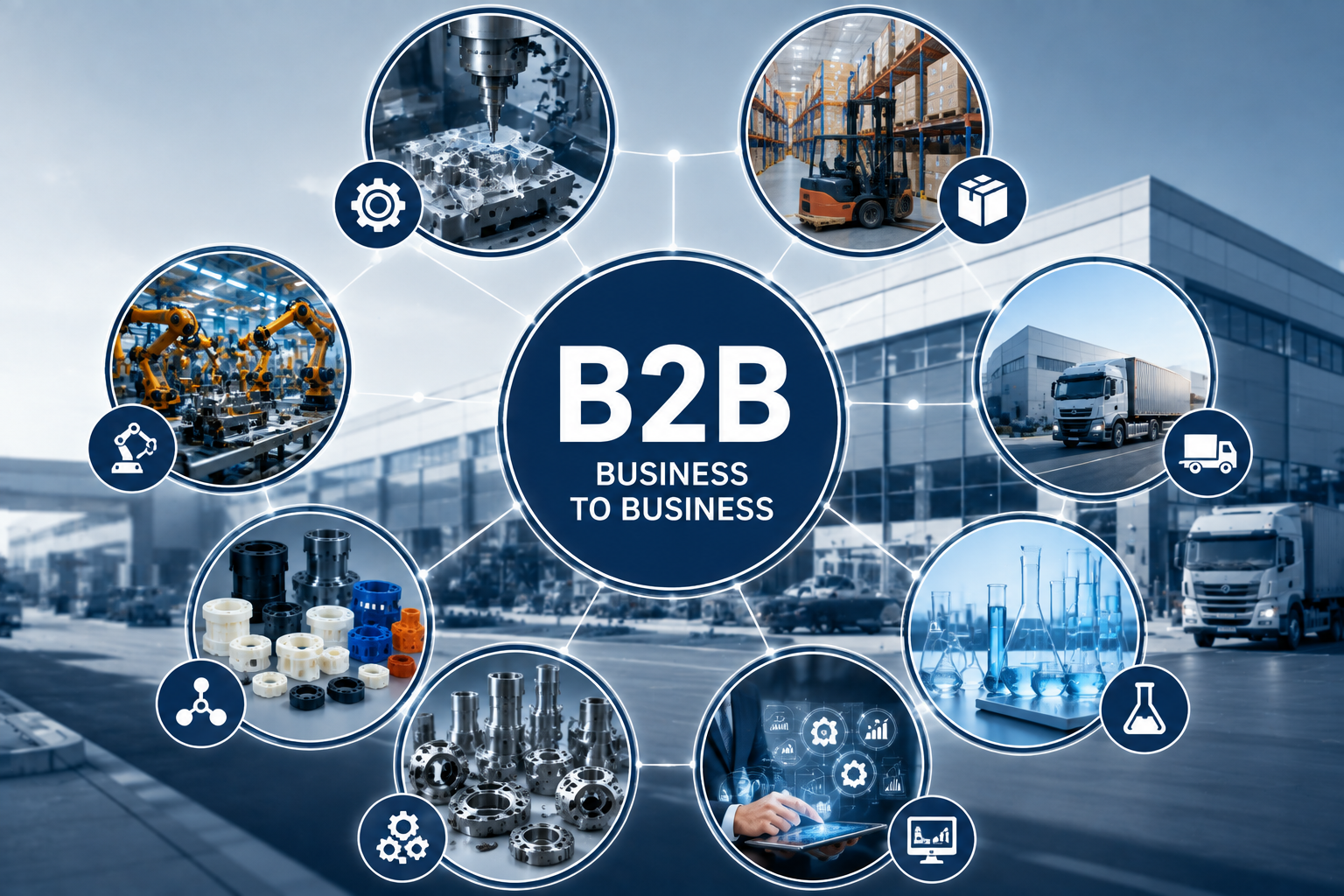
B2B appears in many different sectors, as any business activity occurring between businesses can be considered B2B. Some common industry groups include:
- Manufacturing and fabrication.
- Supporting industries.
- Mechanical engineering and metal processing.
- Plastics and rubber.
- Electrical and electronics.
- Machinery, equipment, and machine tools.
- Automation and technology.
- Raw materials and consumables.
- Logistics and supply chain.
- Software and technology solutions.
- B2B Marketing and communications.
- Consulting, inspection, and business services.
- Trade and distribution.
Among these, manufacturing and supporting industries are B2B sectors that play a particularly crucial role in the supply chain. Businesses in these industries typically supply components, raw materials, machinery, technology, or production services to other businesses instead of selling directly to consumers.
Some typical industry groups include:
3.1. Metal Processing and Forming
Includes businesses operating in mechanical processing, cutting, turning, milling, stamping, welding, casting, surface treatment, and manufacturing metal parts for machinery, automobiles, electronics, and many other industries.
3.2. Plastics and Rubber
Businesses in this group supply plastic components, technical rubber products, plastic injection molding, plastic molds, and various materials serving industrial production activities.
3.3. Automation and Technology
Includes businesses providing industrial robots, automation systems, control equipment, sensors, and technology solutions that help factories improve productivity and optimize production processes.
3.4. Machine Tools and Production Equipment
This group comprises businesses supplying CNC machines, processing machines, production equipment, cutting tools, and solutions for factory operations.
3.5. Raw Materials and Consumables
Includes metals, plastics, chemicals, engineering materials, industrial oils, tools, and various consumables regularly used in the production process.
3.6. Electrical and Electronics
Businesses supplying electronic components, circuit boards, wires, electrical equipment, sensors, and products serving the electronics industry, industrial equipment, and smart manufacturing.
3.7. AI and Digital Transformation
Businesses providing production management software, IoT, AI, data systems, factory digitalization solutions, and technologies supporting businesses to enhance operational efficiency.
3.8. Trade and Manufacturing Services
This group includes businesses providing logistics services, industrial distribution, consulting, inspection, technical support, and various supplementary services for manufacturing operations.
These are also industry groups frequently featured in B2B trade matching and specialized exhibitions like FBC ASEAN, where manufacturers, suppliers, and buyers can meet, showcase capabilities, and seek cooperation opportunities within the supply chain.
4. How Do B2B Companies Operate?
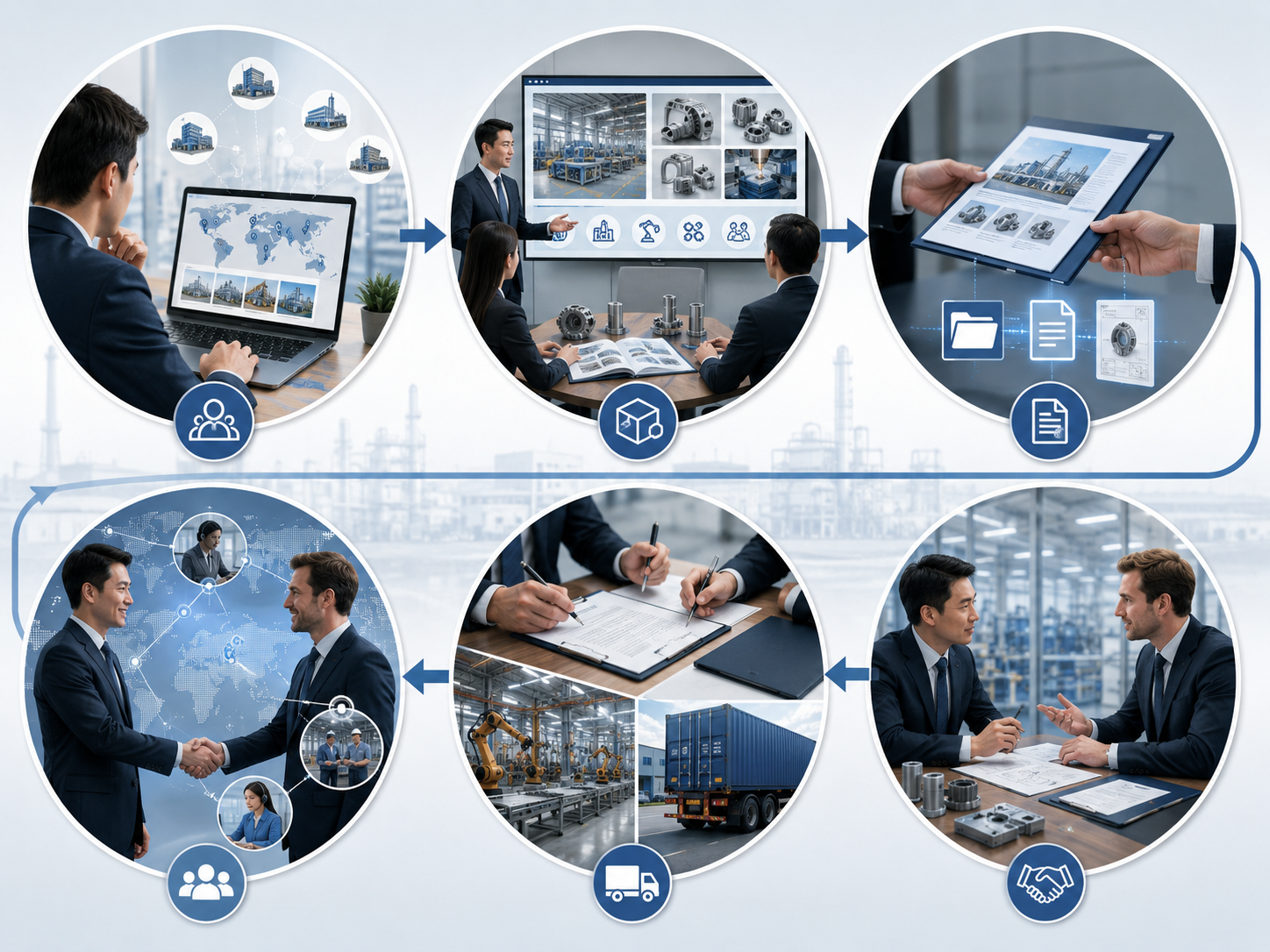
B2B businesses operate according to a specific process to acquire and retain customers. This process not only helps businesses improve business efficiency but also generates customer satisfaction.
4.1. B2B Business Operating Process
4.1.1. Identifying Business Customers
The first step in a B2B business's operating process is customer acquisition. This can be achieved through various methods such as participating in trade events, conferences, exhibitions, or using social media for promotion.
Correctly identifying the target customer and market will help businesses optimize their outreach strategy and save time.
4.1.2 Presenting Capabilities, Products, and Services
Once customers have been identified, the next step is to present the company's capabilities, products, and services. This is a crucial stage in the sales process, as failure to impress customers will significantly reduce cooperation opportunities.
Businesses need to meticulously prepare engaging and persuasive introductory content to make customers feel confident and eager to learn more about the products.
4.1.3. Sending Quotations, Capability Profiles, and Catalogs
After gaining customer interest, the business will proceed to send quotations, capability profiles, and product catalogs. This information needs to be presented clearly and in detail to build customer trust.
Quotations also need to be reasonably structured to ensure competitiveness while maintaining profitability for the business.
4.1.4. Negotiating Cooperation Terms
Once quotations and detailed information are available, the next step is to negotiate cooperation terms. This stage can be lengthy and requires patience from both sides.
Businesses need to listen and understand customer needs to propose the most reasonable cooperation terms, thereby building long-term and sustainable relationships.
4.1.5. Signing Contracts and Supplying Products/Services
Once cooperation terms have been agreed upon, both parties will proceed to sign a contract. This contract needs to be clearly drafted to ensure the rights of both parties during the cooperation process.
After signing, the business will proceed to supply products and services according to the agreement, while monitoring the implementation process to ensure quality and progress.
4.1.6. Maintaining Long-term Cooperative Relationships
Last but not least is maintaining long-term cooperative relationships with customers. Businesses need to regularly communicate and support customers during the use of products and services.
This also enables businesses to identify new customer needs, thereby guiding product improvement and development to suit the market.
4.2 Transaction Characteristics
4.2.1. Requires Proof of Capability and Credibility
In the B2B environment, demonstrating a business's capabilities and credibility is paramount. Customers will require more information and criteria for evaluation before deciding to cooperate.
Therefore, businesses need to have capability profiles, compliance certifications, and transparent supporting documents to build customer trust.
4.2.2. Order Value is Often Large
A prominent factor in B2B transactions is that the order value is often large. This implies that each purchasing decision by a customer typically involves multiple departments within their organization.
Therefore, businesses need to have stringent processes for quotation and negotiation to ensure successful approval.
4.2.3. Purchasing Decisions Involve Multiple Departments
Unlike B2C, purchasing decisions in B2B typically require the involvement of various departments within the client company. Persuasion skills and communication abilities will play an extremely important role during this stage.
Knowing how to effectively persuade and communicate with each department within the client business will help increase the chances of successful contract signing.
4.2.4. Longer Sales Cycle than B2C
The sales cycle in the B2B model is often much longer than in B2C. This is because the decision-making process in businesses is typically more complex and requires time for parties to conduct negotiations.
Businesses need to have a plan and, moreover, patience to pursue and retain customers during this period.
5. How Do B2B Businesses Differ from B2C Businesses?

The differences between B2B and B2C (Business to Consumer) businesses are significant, not only in processes but also in approach and ultimate goals.
5.1. B2B Businesses
5.1.1. Selling to Businesses
B2B businesses primarily focus on selling to other businesses, rather than to the individual consumer market. This model often involves high-value and complex products and services.
The B2B model requires businesses to develop specific strategies to effectively reach and serve business customers.
5.1.2. Large Order Value
The value of orders in the B2B model is often much larger than in B2C. This makes each purchasing decision significant and often involves multiple departments within the company.
Clear processes and selection criteria need to be established to gain consensus from decision-makers.
5.1.3. Long Purchase Cycle
The purchase cycle in B2B businesses is typically longer than in B2C. B2B businesses need to regularly update and nurture customers throughout this process to avoid losing opportunities.
To maintain a cooperative mindset, businesses need to make continuous efforts and have long-term plans to retain customers.
5.1.4. Requires Technical Consultation, Quotation, Contract
In the B2B model, a clear process for quotation, technical consultation, and contract signing is required. Customers often request numerous documents and detailed information to evaluate products before deciding to cooperate.
Therefore, businesses need to meticulously prepare relevant documents and content to facilitate the negotiation process.
5.1.5. Focus on Capability, Quality, and Delivery Schedule
Finally, B2B businesses typically focus on issues such as production capability, product quality, and delivery schedule. Customer trust often stems from the business's ability to meet requirements.
Maintaining product quality and on-time delivery is crucial for building customer trust.
5.2 B2C Businesses
5.2.1. Selling to Individual Consumers
Conversely, B2C businesses focus on selling to individual consumers with direct consumption needs. This typically involves products and services of lower value compared to B2B.
The B2C model often requires an outreach strategy through brand promotion, emotional appeal, and promotions.
5.2.2. Quick Purchase Decisions
Individual consumers tend to make quicker purchasing decisions, without needing to go through multiple departments like in B2B businesses. This allows B2C businesses to focus on creating impressions and building strong brands.
5.2.3. Smaller Order Value
The order value in the B2C model is often much smaller than in B2B. Therefore, B2C businesses need to sell more products to ensure profitability.
This creates a significant difference in the approach and marketing strategies of these two business models.
5.2.4. Relies on Brand, Emotion, Promotions
Finally, B2C businesses often rely heavily on brand, emotional appeal, and promotional programs to attract customers. This does not occur in the B2B model, where quality and credibility are prioritized.
B2B businesses need to develop relationships based on trust and understanding, whereas B2C businesses need to seek and attract customers by evoking emotions.
6. NC Network Vietnam – B2B Connection for Manufacturing Businesses
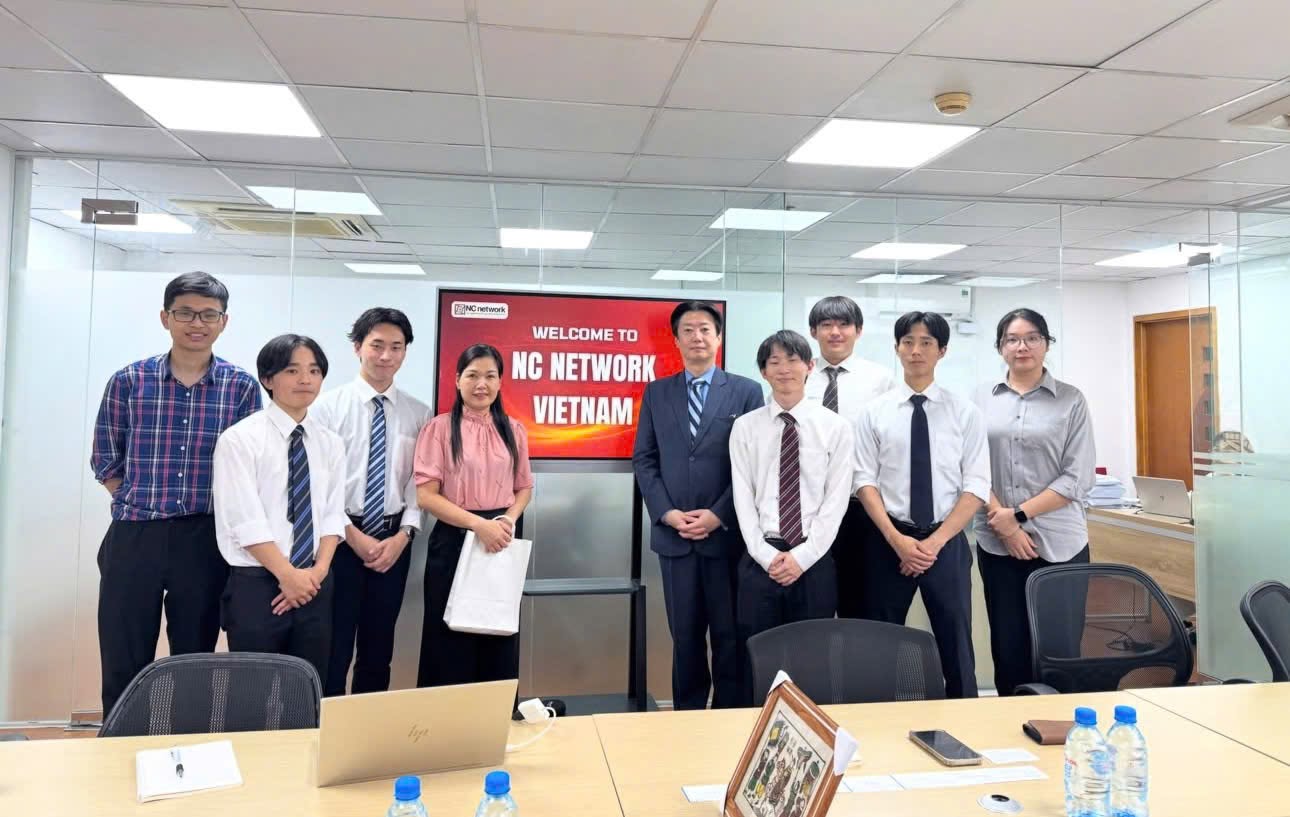
To support manufacturing businesses in connecting and developing within the B2B market, NC Network Vietnam offers perfect connection solutions to create more trade opportunities for businesses. It is not only a platform for connecting businesses but also a place for companies to find suitable partners for their production activities. Alongside trade activities, NC Network accompanies businesses in optimizing production processes and cost optimization.
6.1. Which Businesses is NC Network Vietnam For?
6.1.1. Mechanical Manufacturing
B2B businesses in the mechanical engineering sector can find many connection opportunities through NC Network. Building cooperative partnerships to share technology will help businesses improve production and quality.
6.1.2. Metal Processing
NC Network also provides a platform for metal processing businesses to find customers and partners, optimize supply chains, and enhance market competitiveness.
6.1.3. Molds
For mold manufacturing companies, participating in NC Network helps them further seek potential customers in the manufacturing industry, thereby increasing revenue and providing better customer support.
6.1.4. Industrial Plastics
Businesses in the plastics sector have great opportunities to connect with customers in the electronics and furniture industries, thereby helping to boost sales.
6.1.5. Electronics
NC Network Vietnam not only helps businesses in the electronics industry find connection opportunities but also provides necessary support to enhance product and service quality.
6.1.6. Automation
Companies in the automation sector can seek equipment manufacturing partners, thereby optimizing production processes and improving efficiency.
6.1.7. OEM/ODM
NC Network is an excellent solution for OEM/ODM businesses seeking global customers, thereby enhancing their potential for sustainable development.
6.1.8. Supporting Industries
Businesses in supporting industries will gain significant benefits from NC Network to optimize production, better access markets, and enhance product value.
6.2 EMIDAS Ecosystem of NC Network Vietnam
NC Network goes beyond mere connection, offering an EMIDAS ecosystem with numerous benefits for businesses. This ecosystem includes solutions ranging from building capability profiles to supporting customers in product development.
6.2.1. Creating Professional B2B Capability Profiles
The EMIDAS system helps businesses create professional and impressive B2B capability profiles, thereby attracting more partners and customers. A clear and comprehensive capability profile will help businesses build trust with customers.
6.2.2. Showcasing Products, Services, Machinery, and Production Capabilities
The EMIDAS ecosystem allows businesses to showcase their products, services, machinery, and production capabilities most effectively and optimally. This will help them easily reach potential customers.
6.2.3. Increased Access Opportunities
NC Network will help businesses access domestic buyers as well as Japanese buyers and FDI enterprises, enhancing cooperation opportunities and expanding their business network.
6.2.4. Finding Suppliers According to Needs
The EMIDAS ecosystem will help businesses find suppliers that match their actual production needs. This helps save time and costs, optimizing the supply chain for businesses.
6.2.5. Participating in Business Matching, 1:1 Trade Connections
Notably, NC Network Vietnam provides opportunities to participate in business matching events, helping manufacturing businesses connect and conduct 1:1 trade. This facilitates easier execution of cooperation deals.
6.2.6. Expanding Cooperative Relationships
Last but not least, NC Network will help businesses expand cooperative relationships within the manufacturing industry, thereby creating many new business opportunities.
=> Refer to detailed information in the article: EMIDAS – Industrial B2B Platform Helping Manufacturing Businesses Establish a Professional Presence
7. Conclusion
In the modern economic era, the B2B business model is gradually becoming a dominant trend. The concept of what a B2B business is is not merely a business model but also a method of connecting businesses, helping to create significant value for both buyers and sellers. We hope that through this article by NC Network Vietnam, customers will gain a more comprehensive overview of B2B businesses and apply it to their practical work!
Company Information
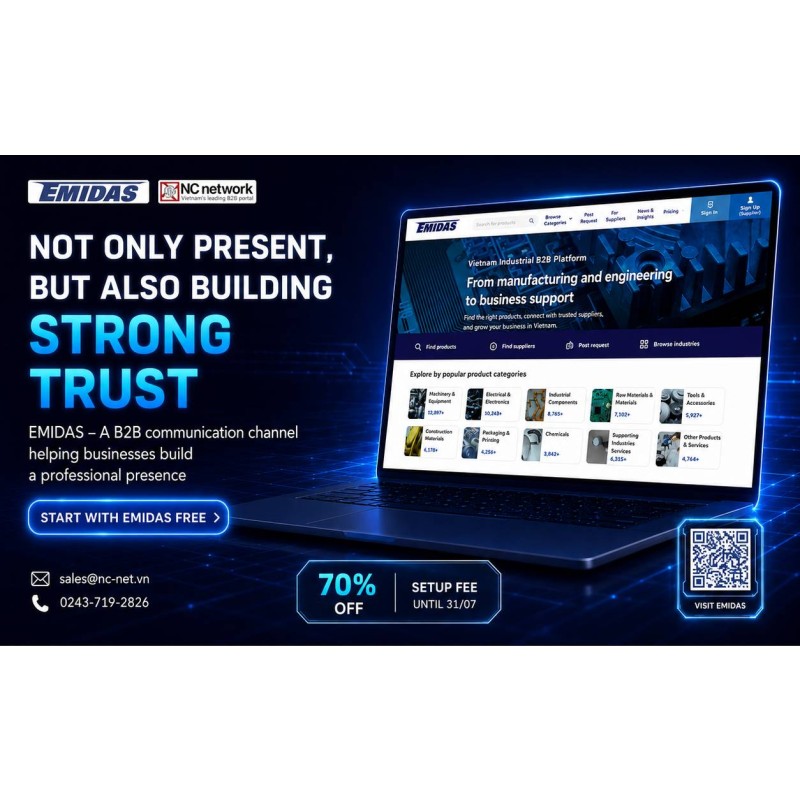
Main 3 Products
FBC Asean / Emidas - B2B platform / Emidas Magazine
Phone Number
Homepage URL
NC Network Vietnam: A Sustainable Business Bridge Between Japanese and Vietnamese Enterprises ■ Introduction: Founded in 2010, NC Network Vietnam is a part of NC Network Group, a corporation specializ ...
CONTACT
Contact