
NC Network Vietnam JSC
PRODUCT
Production Goods
What is B2B? Business-to-Business Model and Examples in the Manufacturing Industry

What is B2B? In today's modern economic landscape, a clear understanding of the B2B model not only helps businesses expand opportunities but also shapes effective operational methods in the manufacturing and service sectors. This article will delve deeper into B2B, how this model operates, and its practical applications in the manufacturing industry!
1. Overview of B2B
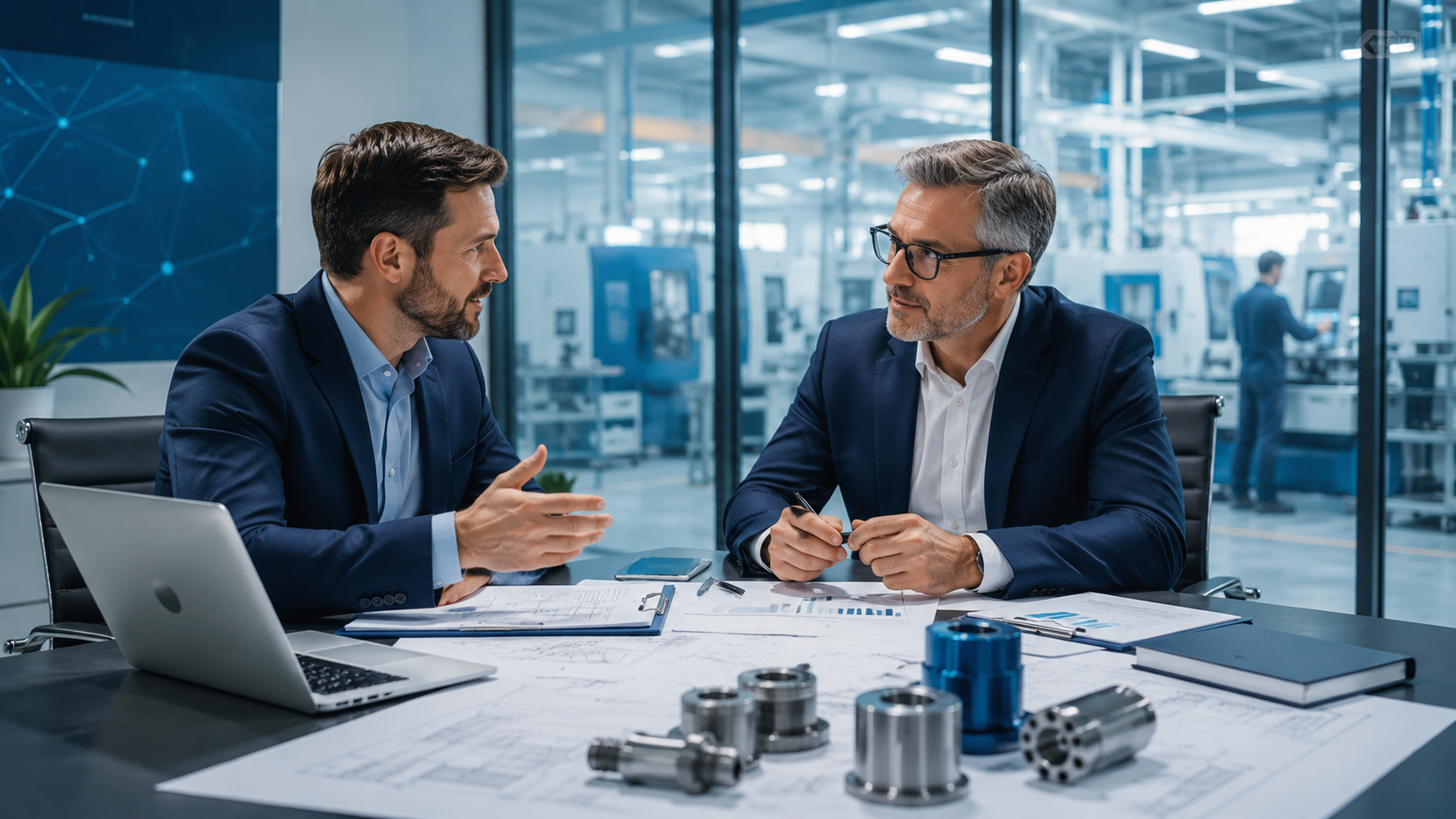
1.1 What is B2B?
B2B, short for Business to Business, is a business model where one business provides products, services, or solutions to another business, rather than selling directly to the end consumer.
B2B transactions typically involve high value, long decision-making cycles, and multiple steps such as supplier search, capability assessment, quotation, negotiation, and contract signing. Therefore, this model emphasizes professionalism, reliability, and long-term cooperative relationships between businesses.
1.2 Examples of B2B
1.2.1 Mechanical factory supplying components to machinery manufacturing companies
In the machinery manufacturing industry, many companies require precision mechanical components to assemble their final products. A mechanical factory can supply these components to assembly companies, helping to optimize production processes and reduce lead times.
1.2.2 Plastic company supplying components to electronics businesses
Plastic manufacturing companies can produce electronic components such as computer casings, connectors, or other parts. This not only helps reduce costs for electronics businesses but also creates opportunities for sustainable development in the industry.
1.2.3 Vietnamese businesses providing contract manufacturing for Japanese buyers
Many Vietnamese businesses are currently providing contract manufacturing for large companies in Japan. The cultural and technological exchange between the two countries not only opens up new opportunities but also drives the transformation of the domestic manufacturing industry.
2. How Does the B2B Model Operate?
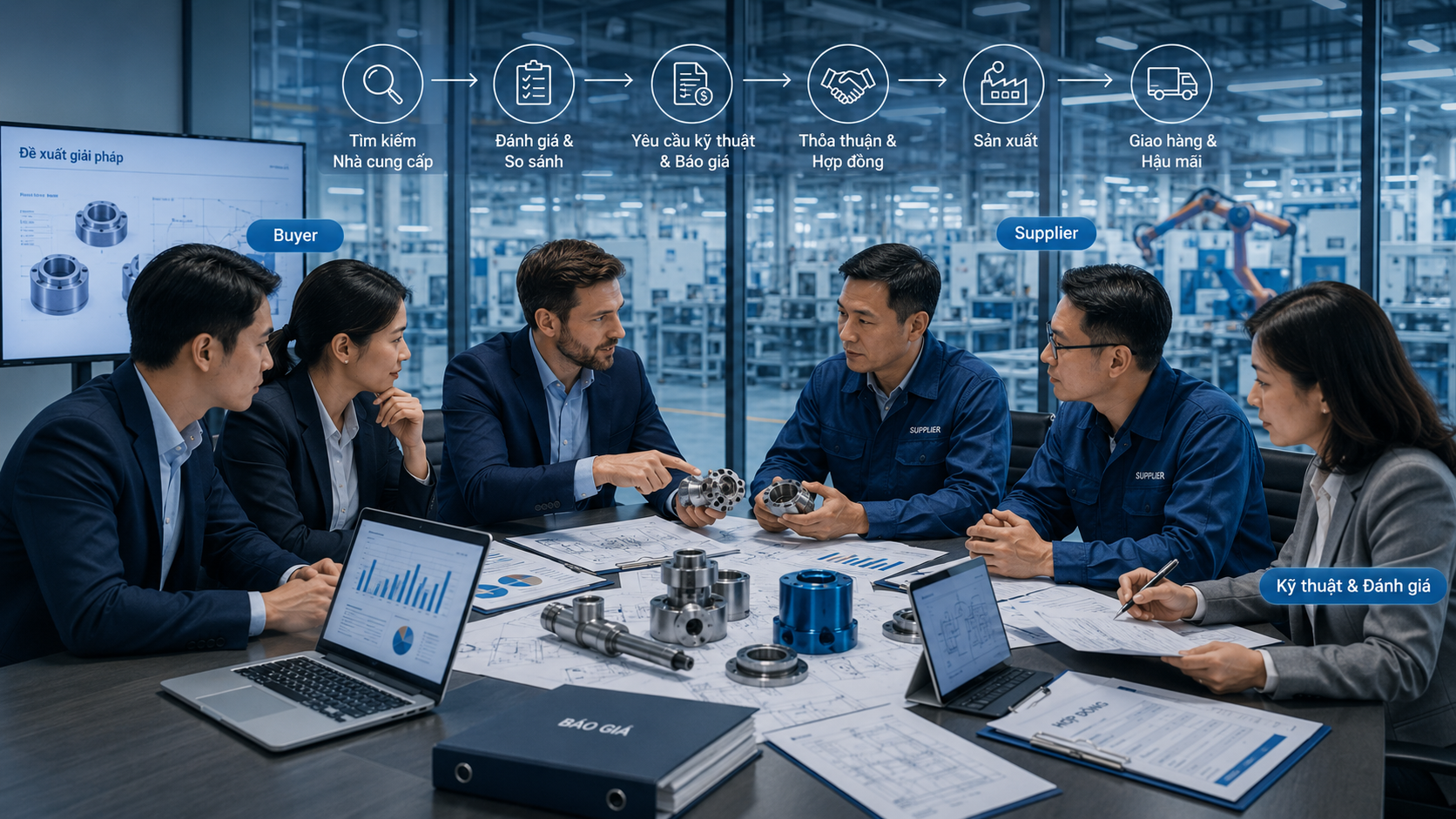
The B2B model is not merely about buying and selling goods but also involves complex business processes and strategies. To better understand how this model operates, it is necessary to identify the specific steps in the B2B process as well as the characteristics of B2B transactions.
2.1 Basic Process of the B2B Model
The operational process of the B2B model typically involves multiple steps, from a business identifying its needs to completing a transaction. To clarify further, here are the specific steps in this process.
2.1.1 Businesses with purchasing, manufacturing, or collaboration needs
Every business has its own specific needs, from purchasing raw materials for production to acquiring finished products. First, businesses need to identify their specific needs and seek solutions to meet them.
2.1.2 Businesses search for suitable suppliers, manufacturers, or partners
After identifying their needs, businesses will proceed to search for suppliers or partners who can meet those needs. This search is typically based on criteria such as product quality, price, supply capability, and supplier reputation.
2.1.3 Both parties exchange quotations, technical specifications, contracts, and timelines
Once both parties have found a suitable partner, they will proceed to negotiate on pricing, technical specifications, and delivery schedules. This is a crucial stage to ensure that all terms are agreed upon and that the interests of both parties are protected.
2.1.4 Transactions typically have high value, with longer sales cycles than B2C
Unlike the B2C model, B2B transactions typically involve high value and longer sales cycles. This means businesses require time to review, evaluate, and make decisions before executing a transaction.
2.2 Characteristics of B2B Transactions
B2B transactions have distinct characteristics that influence how businesses operate in this sector. Here are some notable aspects of B2B transactions.
2.2.1 Purchasing decisions involve multiple stakeholders
Unlike B2C, in a B2B environment, purchasing decisions are typically made by a group of people, not an individual. This makes the decision-making process more complex but also ensures the accuracy and quality of the final decision.
2.2.2 Supplier capability assessment is required
A crucial factor in B2B transactions is the assessment of supplier capabilities. Businesses must verify whether the supplier's ability to provide products or services meets their specified requirements and standards.
2.2.3 Business profile, certifications, and production capacity are required
During the partner search process in the B2B model, businesses often require documentation confirming the supplier's capabilities, such as a business profile, quality certifications, production capacity, and commitments to product assurance.
2.2.4 Cooperative relationships are often long-term
In B2B, relationships between businesses are typically longer-term compared to B2C. This creates opportunities for parties to build strong relationships and enhance mutual trust during collaboration.
3. Examples of the B2B Model in the Manufacturing Industry
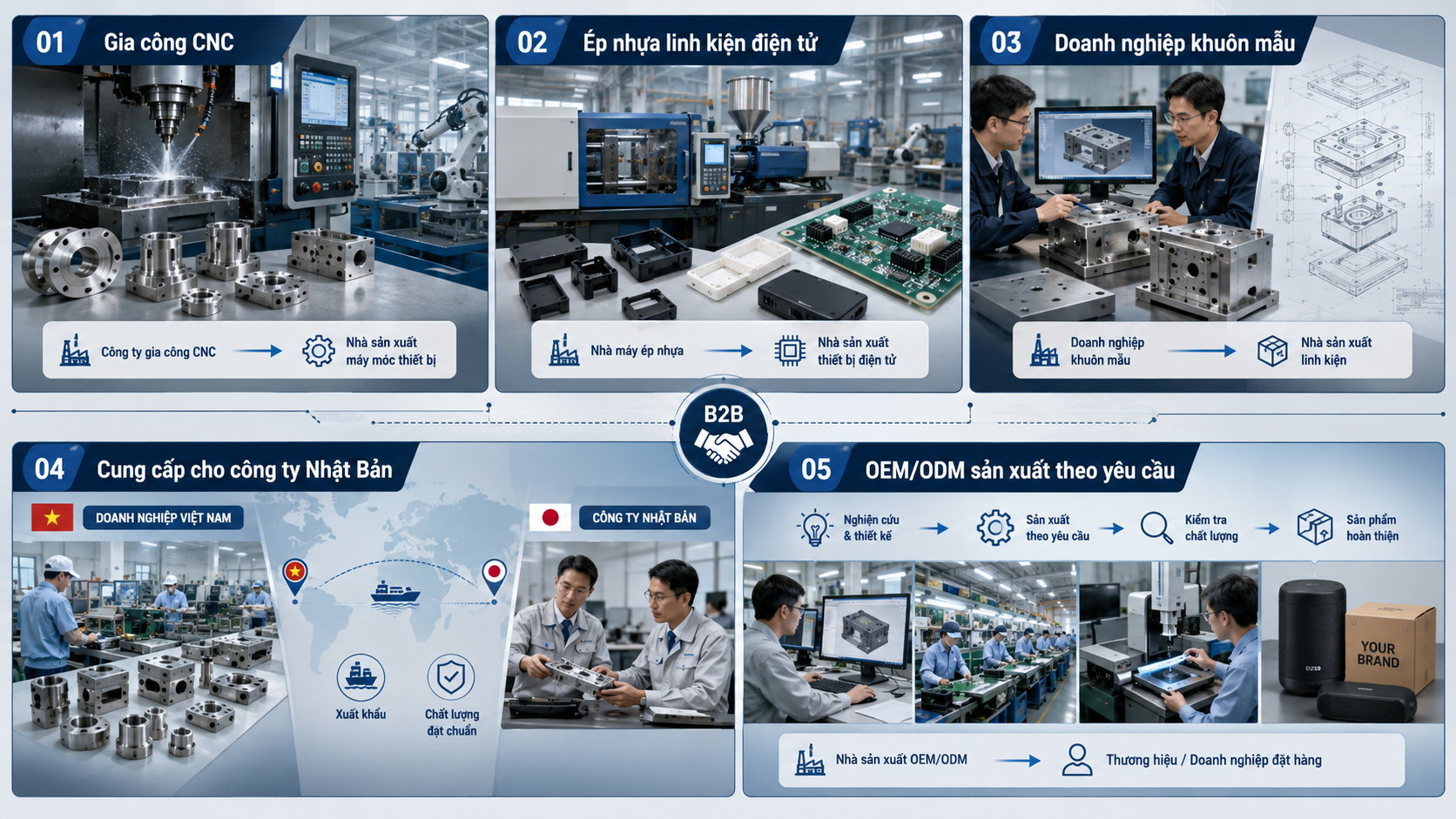
The manufacturing industry is one of the most common sectors for applying the B2B model. Businesses often collaborate to supply components, raw materials, molds, or custom manufacturing services.
3.1 CNC machining company supplying machine parts
A CNC mechanical machining company produces precision machine parts for machinery manufacturing businesses. This relationship helps ordering businesses save investment costs and improve production efficiency.
3.2 Plastic injection molding factory supplying electronic components
A plastic injection molding factory produces high-quality plastic components for electronics businesses. These components are used to complete modern electronic devices.
3.3 Mold manufacturing business supplying injection molds
A mold manufacturing business designs and produces precision injection molds for component manufacturing companies. This collaboration helps ensure product quality and accelerate the production process.
3.4 Vietnamese businesses supplying goods to Japanese companies
Many Vietnamese businesses have become suppliers for Japanese companies due to their ability to meet quality and precision requirements. This is a clear example of the B2B model in the international supply chain.
3.5 OEM/ODM businesses manufacturing on demand
OEM/ODM businesses manufacture products according to the specifications of other brands. This model allows the ordering party to leverage the expertise and production capabilities of their partner to bring products to market.
4. How Does B2B Differ from B2C, C2C, and B2B2C?
In addition to B2B, businesses need to understand B2C, C2C, and B2B2C to clearly distinguish transaction targets and the operation of each model.
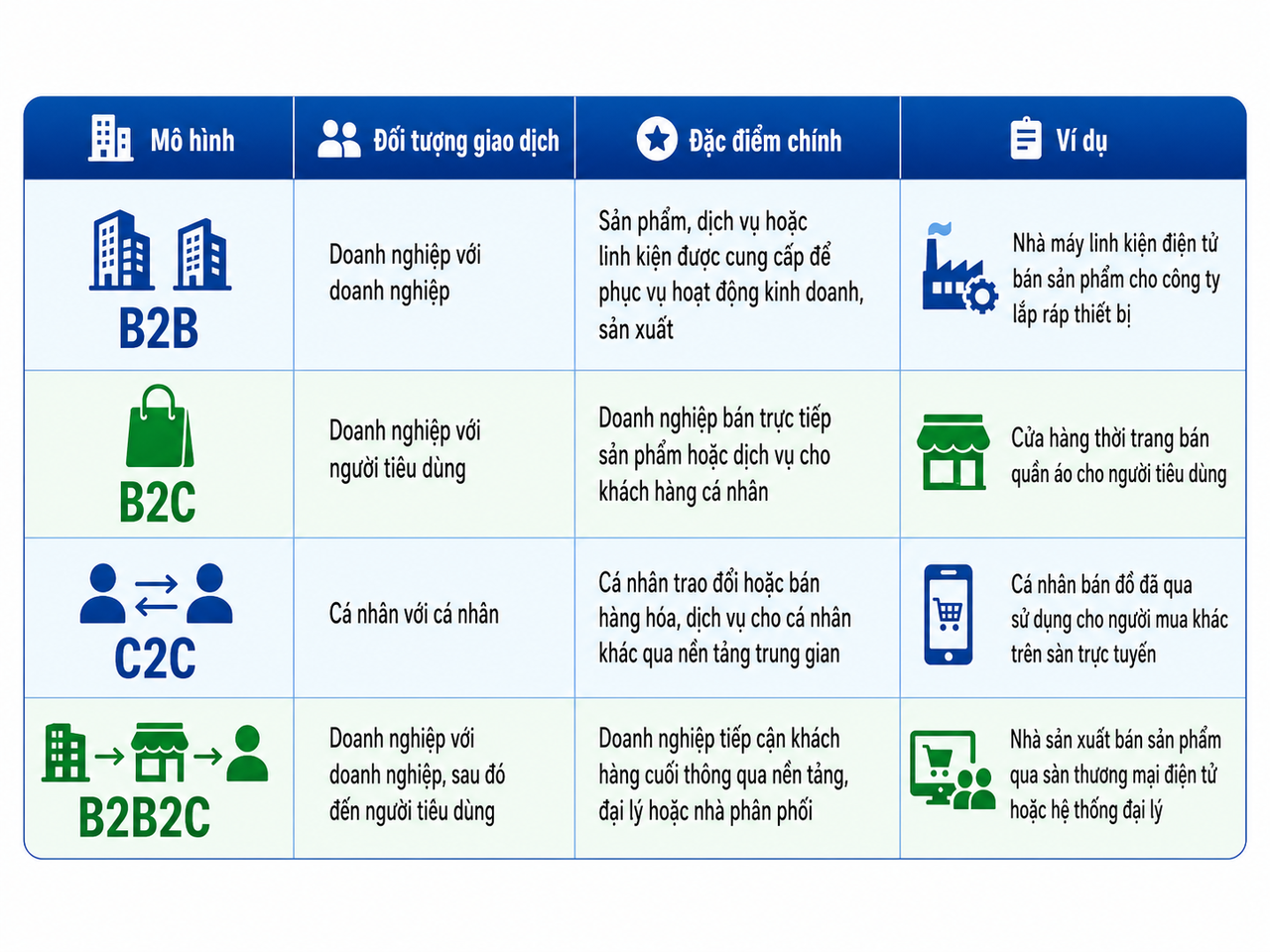
The main difference between these models lies in the target audience for transactions and how products reach the end customer.
5. Characteristics of B2B Businesses
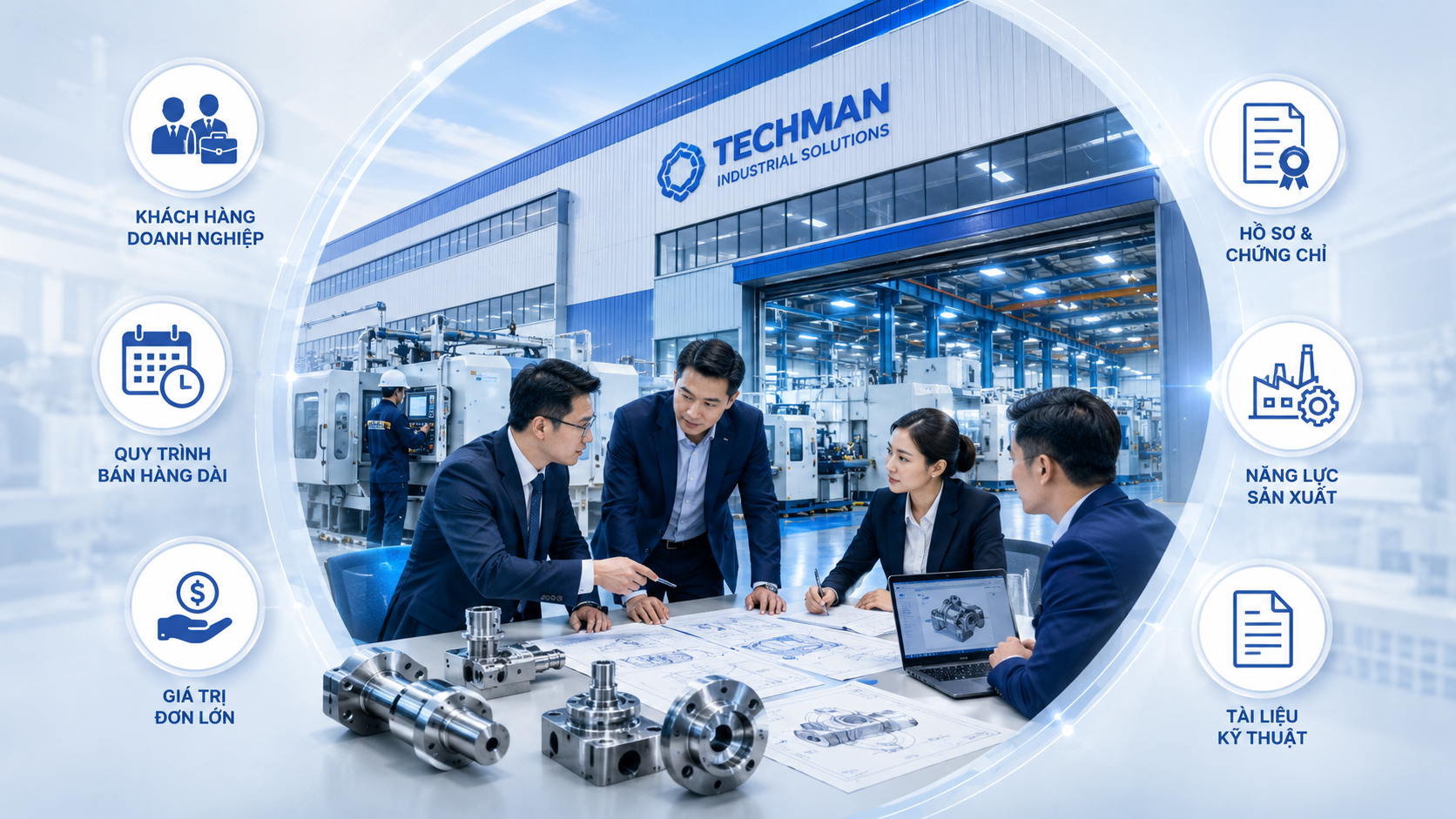
B2B businesses have distinct characteristics compared to B2C or C2C businesses. Here are some notable points to consider when studying B2B businesses.
5.1 Target Customers
The target customers for B2B businesses are typically other businesses, manufacturing plants, organizations, or distribution agents. Correctly identifying this customer group will help businesses focus their resources and marketing strategies more effectively.
5.2 Sales Process
The complexity of the purchasing decision-making process also means that the sales process for B2B businesses is often longer. Businesses need to prepare extensive documentation and details to advise customers thoroughly and accurately.
5.3 Order Value
In the B2B model, order values are typically much larger than in B2C. This means businesses must have sufficient capabilities and resources to execute transactions and ensure that the quantity of goods meets customer requirements.
5.4 Capability Demonstration
This is very important in B2B transactions. Businesses need to demonstrate their credibility and product supply capabilities through their company profile, quality certifications, and previously completed projects.
5.5 Sales Content Needs to Be More In-depth than B2C
5.5.1 Company Profile
Businesses need a detailed company profile, including information on history, scale, production capacity, and current product offerings.
5.5.2 Product Catalog
A detailed and professional product catalog will help customers easily identify the products a business offers, thereby enabling accurate purchasing decisions.
5.5.3 Technical Specifications
Providing clear technical specifications for products will help businesses make a good impression on customers, while also facilitating the product inspection and evaluation process.
5.5.4 Certifications
Possessing quality certifications from reputable organizations will help businesses enhance their credibility with customers.
5.5.5 Case Studies
Sharing previously completed successful projects will help businesses demonstrate their ability to meet customer needs.
5.5.6 Factory Images
Providing illustrative images of facilities and production lines will help businesses build customer confidence in product quality.
5.6 In the manufacturing industry, actual capability is a crucial factor.
In the manufacturing industry, demonstrating a business's actual capabilities is crucial for building trust and long-term cooperation with partners in the B2B model.
6. How B2B Businesses Find Customers, Suppliers, and Partners
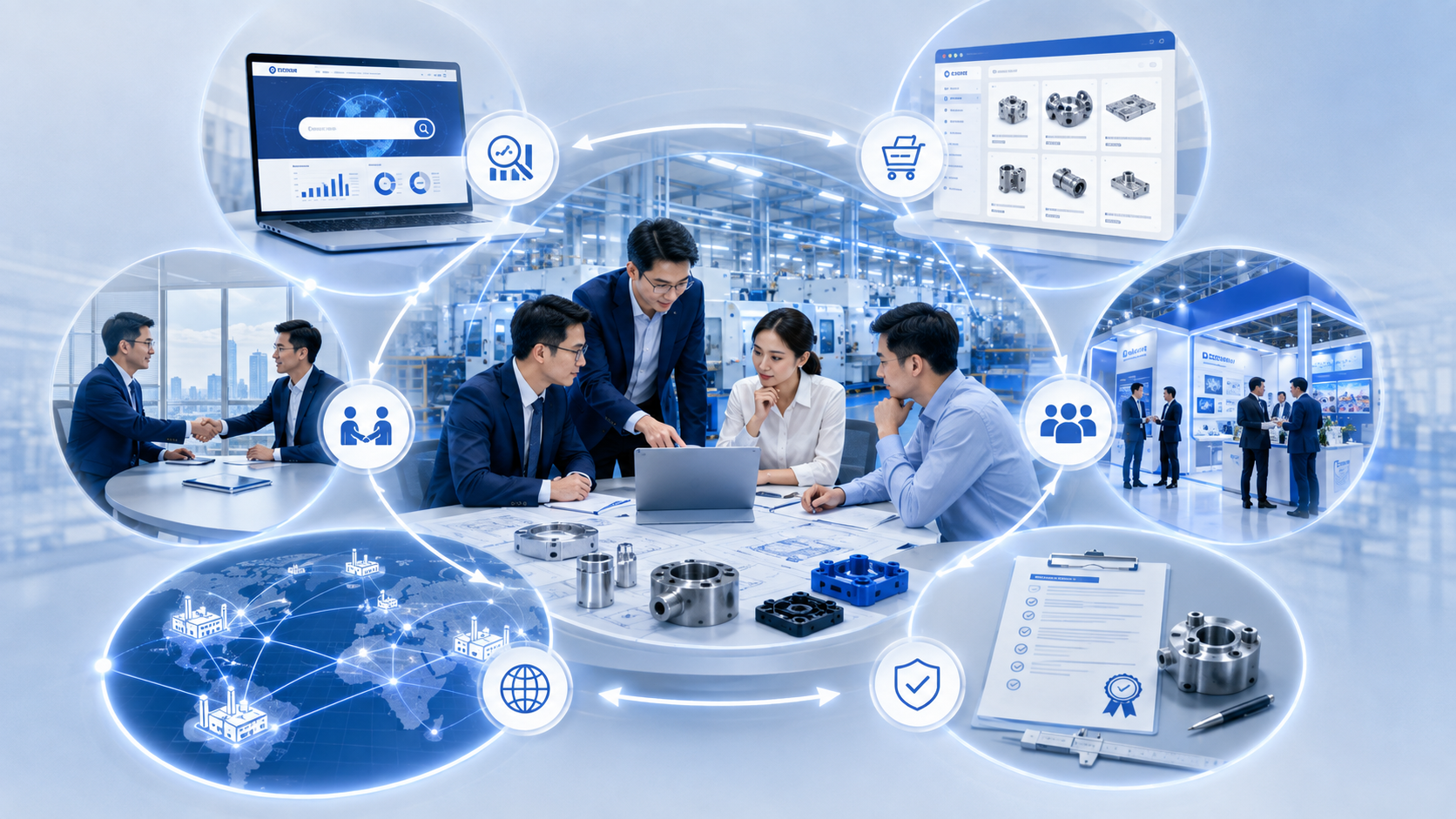
To operate effectively in the B2B model, businesses need to identify their target market as well as potential partners. Here are some ways businesses can find customers, suppliers, and partners.
6.1 B2B businesses can find customers through
6.1.1 Website SEO
Businesses should optimize their websites to attract customers through organic search. This requires an effective SEO strategy to increase visibility on search engines.
6.1.2 B2B Platforms
Many businesses currently use B2B trading platforms to connect with each other. These platforms help businesses easily find and transact with potential partners.
6.1.3 Industrial Exhibitions
Participating in trade exhibitions is a good opportunity for businesses to showcase their products and services, thereby finding potential customers.
6.1.4 Business Matching Events
Business matching events are opportunities for businesses to meet and discuss directly, laying the groundwork for potential collaborations.
6.1.5 B2B Connection Platforms
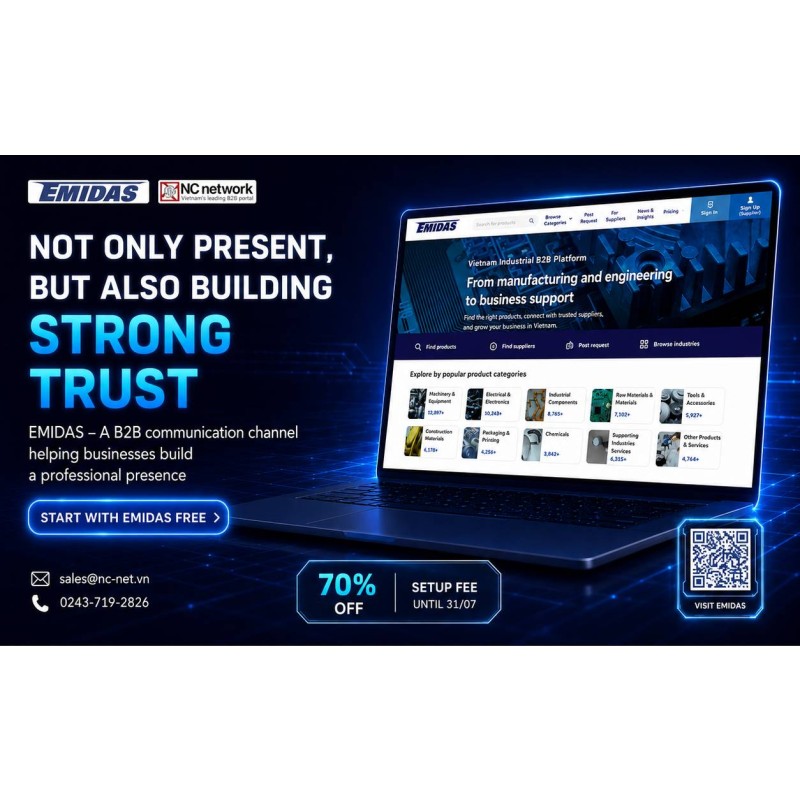
Many B2B connection platforms help businesses find partners and provide necessary information for parties to understand each other's capabilities and needs. Among these, EMIDAS is a specialized B2B platform for manufacturing and fabrication, helping businesses build capability profiles, showcase products, machinery, technology, and increase opportunities to connect with suitable buyers and suppliers.
=> See more: EMIDAS – An Industrial B2B Platform Helping Manufacturing Businesses Establish a Professional Presence
6.1.6. Buyer/Supplier Networks
Participating in buyer/supplier networks is also a way for businesses to find suitable partners. These networks create opportunities for interaction and mutual learning among businesses in the same field.
6.2 For manufacturing businesses, focus on
6.2.1 Finding buyers with genuine needs
Manufacturing businesses need to seek out buyers with genuine product needs to save time and costs for both parties.
6.2.2 Finding capable suppliers.
Clearly identifying capable suppliers helps businesses optimize production processes and enhance market competitiveness.
6.2.3 Finding OEM/ODM partners.
Manufacturing businesses can seek OEM/ODM partners to expand production scale and improve product quality.
6.2.4 Finding industrial suppliers.
Searching for suppliers in the industrial sector is essential, helping businesses secure sufficient resources to operate effectively in the manufacturing industry.
7. NC Network Vietnam – B2B Connection Solution for Manufacturing Businesses
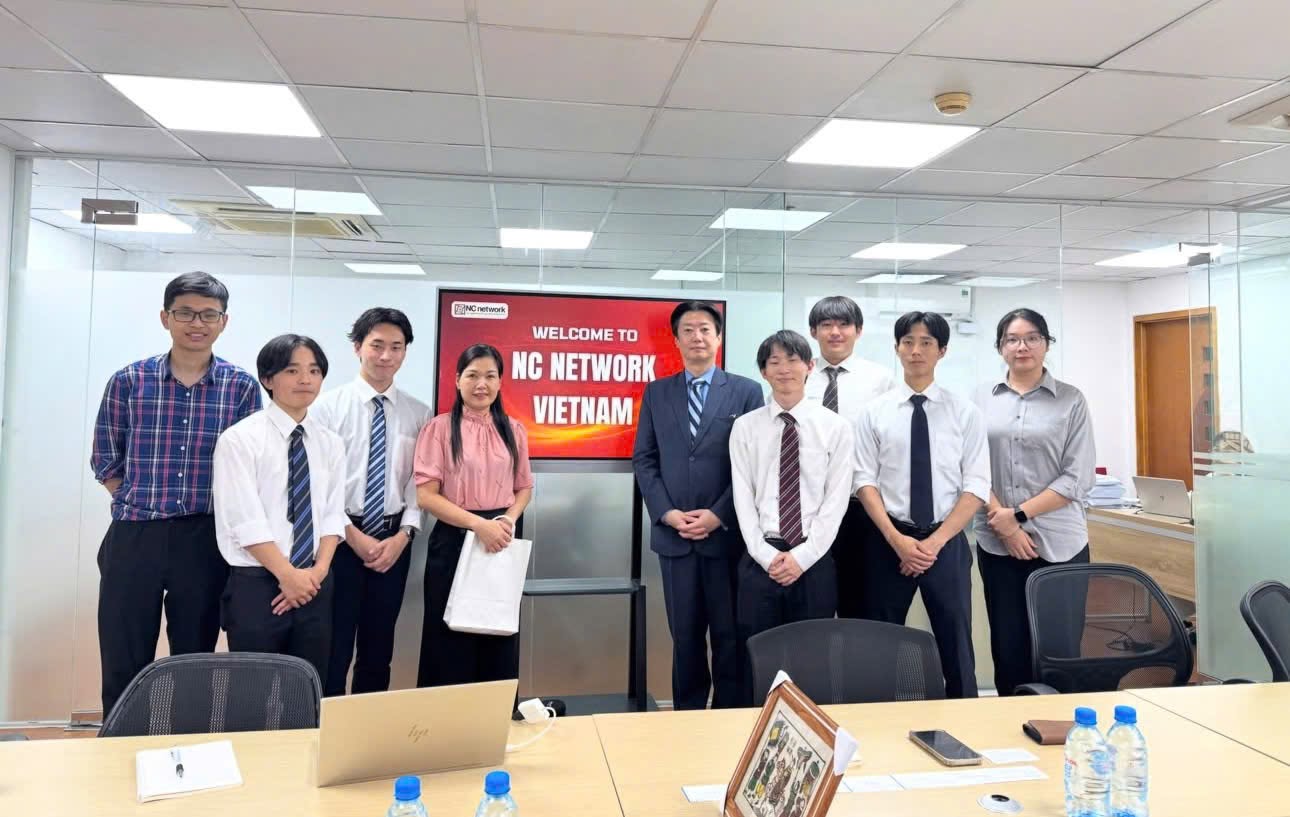
NC Network Vietnam supports manufacturing businesses in promoting capabilities, finding buyers and suppliers, and expanding domestic and international cooperation opportunities.
7.1 Supported B2B Connection Sectors
- Mechanical fabrication.
- Metal processing.
- Molds and dies.
- Industrial plastics.
- Electrical and electronics.
- Automation.
- OEM/ODM.
- Supporting industries.
7.2 NC Network Vietnam supports businesses by
- Introducing production capabilities to suitable buyers.
- Searching for industrial suppliers based on actual needs.
- Connecting Vietnamese businesses with Japanese businesses.
- Participating in business matching programs and 1:1 trade connections.
7.3 Suitable Business Groups
- Factories looking for new B2B customers.
- Suppliers wanting to access Japanese buyers or FDI businesses.
- Buyers needing to find suppliers in Vietnam.
- Businesses looking to expand their market in the manufacturing industry.
- Businesses needing to participate in exhibitions, trade connections, or 1:1 meetings.
8. Conclusion
A clear understanding of what B2B is helps businesses grasp the operation of the business-to-business model, thereby proactively seeking buyers and suppliers and building sustainable cooperative relationships in the supply chain. To reach the right partners and expand business opportunities in the manufacturing industry, businesses can contact NC Network Vietnam for consultation and connection support tailored to their needs!
Company Information
Main 3 Products
FBC Asean / Emidas - B2B platform / Emidas Magazine
Phone Number
Homepage URL
NC Network Vietnam: A Sustainable Business Bridge Between Japanese and Vietnamese Enterprises ■ Introduction: Founded in 2010, NC Network Vietnam is a part of NC Network Group, a corporation specializ ...
CONTACT
Contact